The following was posted as a comment on Steve blog. I think it needs to be spread around and illuminated. Without any further ado:So, what’s happening with Preservation Oklahoma?
We were inclined to stay out of the conversation this weekend, to lie low and let the wind blow around us. However, there have been so many questions and speculations about what has happened lately that I decided to post to clear the air.
Let me make it perfectly clear that I am posting as me, not as the official spokesperson for Preservation Oklahoma. When I say “we” in this post, I believe I am reflecting accurately things that our appeal group has seen together and consensus that we have reached.
On Tuesday of this week, Ralph McCalmont called POK to extend an invitation from SandRidge Energy to tour the buildings slated for demolition. He said that this would also be a good time to have a conversation about collaboration and compromise. We were a bit surprised to have the offer coming from McCalmont, because he has been known as a preservationist and was POK’s first president.
Katie Friddle accepted the invitation and asked for inclusion of Barrett Williamson, myself and Marva Ellard. No problem.
McCalmont later phoned Katie and said that he had invited others to join the tour, including two former POK presidents and another POK board member.
We reported for the tour at 8:00 AM on Wednesday, where we were greeted cordially by the SandRidge contingent, consisting of Marsha Wooden (VP, Administration), Rick Brown (Facilities Director), Allen Brown (architect, FSB), Aaron Young (architect, Rogers Marvel), Stan Lingo (structural engineer, construction manager) and Steve Ford (structural engineer).
We were supplied with flashlights and toured 107 Robert S. Kerr (India Temple), 125 RSK (YMCA) 135 RSK (Connector) and 300 N. Robinson (Oklahoma Savings and Loan or KerMac). We also toured the Braniff Building which is not on the demo list.
We were surprised to find the India Temple in quite good condition. It does not meet current code but that is to be expected of a building of that age and lack of maintenance. The building (and this is common to all of them except the Braniff) has been completely stripped. A great deal of original brick remains on the facade under the plaster panels. That brick is a beautiful warm brown color and is in good shape. Original window openings exist on the south, west and north sides of the building. There are no structural cracks around the windows. We are confident that this building is a strong candidate for mixed use. It was under contract for development at the time SandRidge acquired the buildings from Anadarko.
The YMCA could possibly be restored for mixed use but it would be a dilly of a project because prior owner removed about 15 feet from the front of the building. Ouch. There is really not much to work with here.
The Connector was built as such in 1959. As someone else who toured said, “This is a preposterous piece of crap.” Nothing at all to recommend it as a project.
The OK Savings and Loan is a great building. Certainly, it needs updating to meet current code but it would be a prime candidate for mixed use development. Except for window modifications made in the 1960′s, the original facade remains in good condition. In our opinion, it is in about the same condition as the Braniff Building.
There are only two real differences between the OK Savings and Loan and the Braniff:
(1) There is a bit of original crown molding, marble and signage left in the Braniff, whereas the OK Savings has been stripped.
(2) The Braniff is on the National Register.
During the tour, when we asked Mr. Ford about the buildings’ condition, he would only speak to the fact that they do not meet the current seismic code and would be seriously damaged during a significant seismic event.
After the tour, we were escorted to the executive conference room where we were offered refreshments.
Marsha Wooden began by indicating that SandRidge was surprised at POK’s opposition to the project because they thought they had covered all the bases, having contacted the SHPO and having had some sort of analysis done by Dian Everett.
Tom Ward came in at this point and said that SandRidge’s motto is “grow or die”. He said that accomplishment of their entire “master plan” was key to this strategy and that, if they do not get their entire plan approved, they would have to consider whether or not downtown Oklahoma City is the appropriate place to grow the company.
So, for those of you who wondered whether or not Frank Hill had the authority to say those words at the Board of Adjustment–yes, he did.
Aaron Young showed us a presentation about the planning process for the SandRidge Commons and showed some representations of the Braniff Building with a new glass wall with projections that would replace the back parti-wall.
We had the opportunity to ask some questions about the project. The dense landscaping plan had bothered me as a safety hazard so I asked if the company had a plan to secure the site from those seeking temporary housing. Marsha Wooden said that they have a competent security detail and will have a lot of cameras to keep the area secure. Their officers have already worked with OCPD to run off meth smokers.
POK sees several ways the company can grow on the existing site, without removing the India Temple and the OK Savings. Barrett asked if they would consider any compromise to their master plan.
We were told, unequivocally, “No.” Marsha Wooden repeated, in the nicest and most attractive way, that the company would consider moving out of downtown if their master plan is not approved.
We were surprised at this point when Ralph McCalmont addressed us and asked us to just, “Swallow the bitter pill” and cease our opposition to the project at that moment. He told us that Preservation Oklahoma would find itself “marginalized in the community” and that funding sources would dry up if we were to go forward with our opposition. He said that we would be seen as extremists and obstructionists and that it would be very difficult to be included in more important efforts, such as saving the First National Building, if we continued.
Marsha Wooden said that she hoped that we would not go forward as opponents, as that would “stress City resources more than they already have been.”
That pretty much concluded the event. We were grateful for the opportunity to tour.
Later in the day, Katie received a follow-up call from Mr. McCalmont repeating some of his comments, including his dire forecast for the future of POK if we continued in our position.
We found out that board members were receiving calls from Mr. McCalmont and others and that folks who had been friends and contributors to POK were receiving calls asking them to pressure us to stop.
For awhile we were worried that there may actually be a groundswell of support in the business and civic community for SandRidge. For a millisecond, we doubted ourselves.
Then, after a little due diligence, we found out that it’s just the same old folks behind the screen, tripping the little levers that release the smoke and mirrors. It turns out that this is what happened…
SandRidge hired a PR guy named Brent Gooden to wipe up the mess left by their inept handing of this project.
Gooden has been behind almost every statement or document that has been pro-SandRidge. The op-eds in the paper? The letters to the editor? Yes, Brent Gooden wrote those and had them signed by others. I’m not saying that Ford Price, Frank McPherson and others aren’t supporting the project. They obviously are. But, it appears they didn’t spend their own time and personal energy putting their viewpoints forward.
Frank Hill worked the phones and sent e-mails to some civic leaders giving them SandRidge’s perspective about the project. He urged them to get on the phone and pressure friends of POK to call off the dogs–us.
I’m sure you’ll recall the last Board of Adjustment hearing when Frank addressed the board and stated that, “City Staff approved EVERYTHING in our application.” Since POK’s position is to support the staff recommendation, which was to deny four demolitions, we were puzzled. We continue to be amazed that this is the information being conveyed to these prominent people in order to enlist them in the SandRidge “army.”
There has also been talk of “7500 jobs lost to downtown” if the project doesn’t go through. Who are these people? SandRidge’s “Linkedin” profile shows 2205 employees. Some of these are field personnel, not downtown office dwellers. Yes, SR just purchased Arena Resources. D&B lists Arena as having 71 employees.
One long-time civic leader, who has made innumerable contributions over the years, bought into the spiel and has been making lots of calls.
Others received the goods from Frank and Brent but did not drink the Kool-Aid.
So, the giant groundswell of opposition turns out to be 4 people, two of whom are paid by SandRidge.
Have there been threats? If you consider social and community marginalization to be threats, then surely there have been. I guess that’s the modern equivalent of shunning. They want us to take our buggy and go home.
Are we worried about losing our funding? We would hate to lose money but we are on our mission and message. Preservation Oklahoma’s duty is to advocate for the brick-and-mortar history of Oklahoma. We hope there are folks who see us hard at work and want to write a check to help us go forward.
And, unfortunately, we do have a business relationship that will terminate if we go to district court. I’m not going to name names here, but we have had a very successful partnership statewide that has been beneficial to both parties. We received a message that, if we go to court, we will be deemed to be “controversial and divisive” and the partnership will be over. That’s too bad because the small towns and cities where we do the projects don’t give two cents about the SandRidge Commons project in OKC.
Do I really believe that SandRidge will move out of downtown if they don’t get their way? They would have to hire two dozen Brent Goodens to clean up the public relations nightmare in the wake of such a move. Can you imagine how many people would accuse them of packing up their Barbies to go home and play alone?
I can’t imagine that it would be a good financial decision for them, either. They bought the complex of buildings on Robert S. Kerr for about $22/sq. ft. They have plenty of room to grow there. If they kept the India Temple and OK Savings, if they put their new recreation building north of the India Temple on Broadway and if they built a new tower at 120 RSK to mirror the existing one, they would be able to more than double the size of the company. Where else could they find prime office space for $22/sf?
What will happen Monday? We don’t know. We do not believe that due process at the Board of Adjustment has been corrupted at this time.
The two remaining buildings have been lumped together for one vote. We believe this is improper since the Downtown Design Ordinance gives the DDRC (and now, in its stead, the BoA) the authority to demolish A building larger than 20,000 sq ft per permit.
There will be four members of the Board present and voting. Jeff Austin is permanently recused because of his contract with SandRidge.
The only way that the 107 RSK and 300 N. Robinson buildings will be saved is if there is a 3-1 or 4-0 vote to reverse the decision of the DDRC.
The municipal counselor produced recommendations yesterday that we consider to be way off base. The document basically says that if the Board finds that the building(s) is/are economically feasible for SandRidge’s purposes, the Board can reverse the decision of the DDRC. It says if the Board finds that the building(s) is/are not economically feasible for SandRidge’s purpose, the Board can affirm the decision of the DDRC.
Yes, it really says that. Of course NONE of that is in the ordinance in ANY way. I wonder if the attorney has recovered from the thumbscrews yet.
SandRidge submitted a seismic/condition assessment of the remaining buildings only yesterday. In glancing through, we thought the report was pretty favorable.
Will POK appeal if things don’t go our way on Monday? We have scheduled a special meeting later in the week if we need to make that decision.


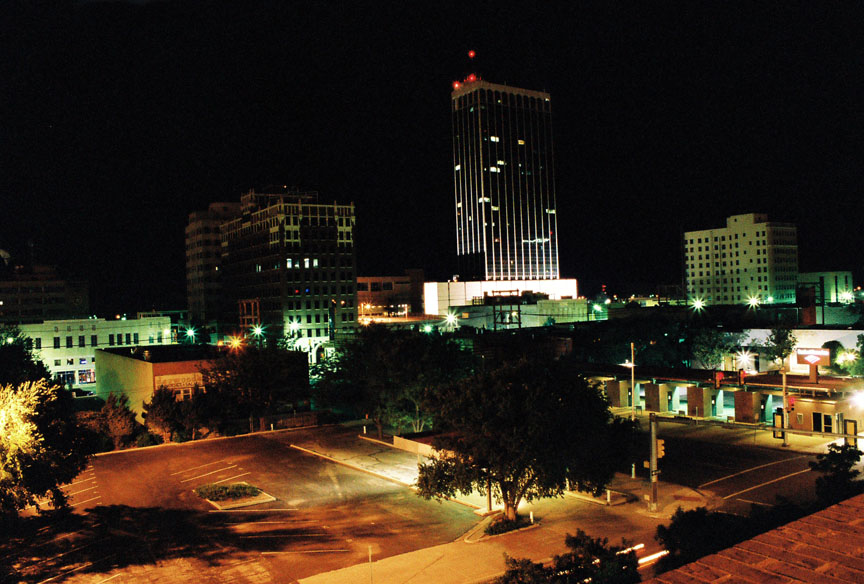
 That sucker I am referring to is Downtown Oklahoma City. SandRidge Energy's application for what is being dubbed as SandRidge Commons, which includes the largest demolition downtown has seen since the 1970s, proving to the world that urban renewal and downtown demolition is still alive and well in Oklahoma City. Maybe we can also put Urban Renewal Capitol of America in with the rest of our hokie promotional pitches--that is one that there would be virtually no other contender.