Wednesday, June 16, 2010

Awesome hotel to go in Maywood Park

I am so glad to see someone with the cajones to do something. Here is to Jim Thompson, OSU arch grad who develops hotels and insists on designing every one of his own projects himself. Here is the article that Steve wrote, which will grace the business section of tomorrow's Oklahoman (been a while since the business section had GOOD news).

I recognize that major projects are happening, Devon, and the public initiatives. The resign that projects like this Aloft Hotel are SO VITAL is because this represents private buy-in. The ratio cities typically strive for in return on investment for public projects downtown is 5-1. I would argue that happened after MAPS 1 was finished but when we began the new wave of public investments the private investment did not keep up.

Infill is also vital for non economic reasons. It is important just because you want the building stock. A $750 million Devon Tower doesn't make a downtown nearly as much as $750 million in smaller infill projects spread out over a dozen blocks or so definitely could, and that's the truth. This adds vitality, it adds buildings that interact, it adds complimentary uses, it adds sense of place and definition of space over a broader area and not just in front of a landmark, and it adds architectural diversity. Just take a look yourself:


For more details, check out Steve's story in today's Oklahoman. You'll find out how expensive it will be, how tall it will be, how many rooms it will have, what use will occupy space on the street, what corner in Maywood Park it will be built on, where the project currently stands, how the project came about, and get some more background information on Jim Thompson who is new to the downtown area, but certainly not OKC development (with several NW Expressway projects). Congrats again to Jim Thompson, who is taking a risk and doing something in order to add this beautiful asset to our community. I am certain that Jim will be rewarded with success, it looks like a great project, and I certain we will be talking about him and his project for a while to come..considering that aside from Devon and other things that have been talked to death already, that's all that's goin on right now.

Burn out?

I'm just feeling a little burnt out right now. And a little down on OKC, but this time I won't go on a rant about whatever bugs me. I'll keep my negativity to myself for a change. I don't have a good feeling about the SandRidge hearing this week, though. I'll try and keep my head up, though.

Tuesday, June 15, 2010

Paseo pics

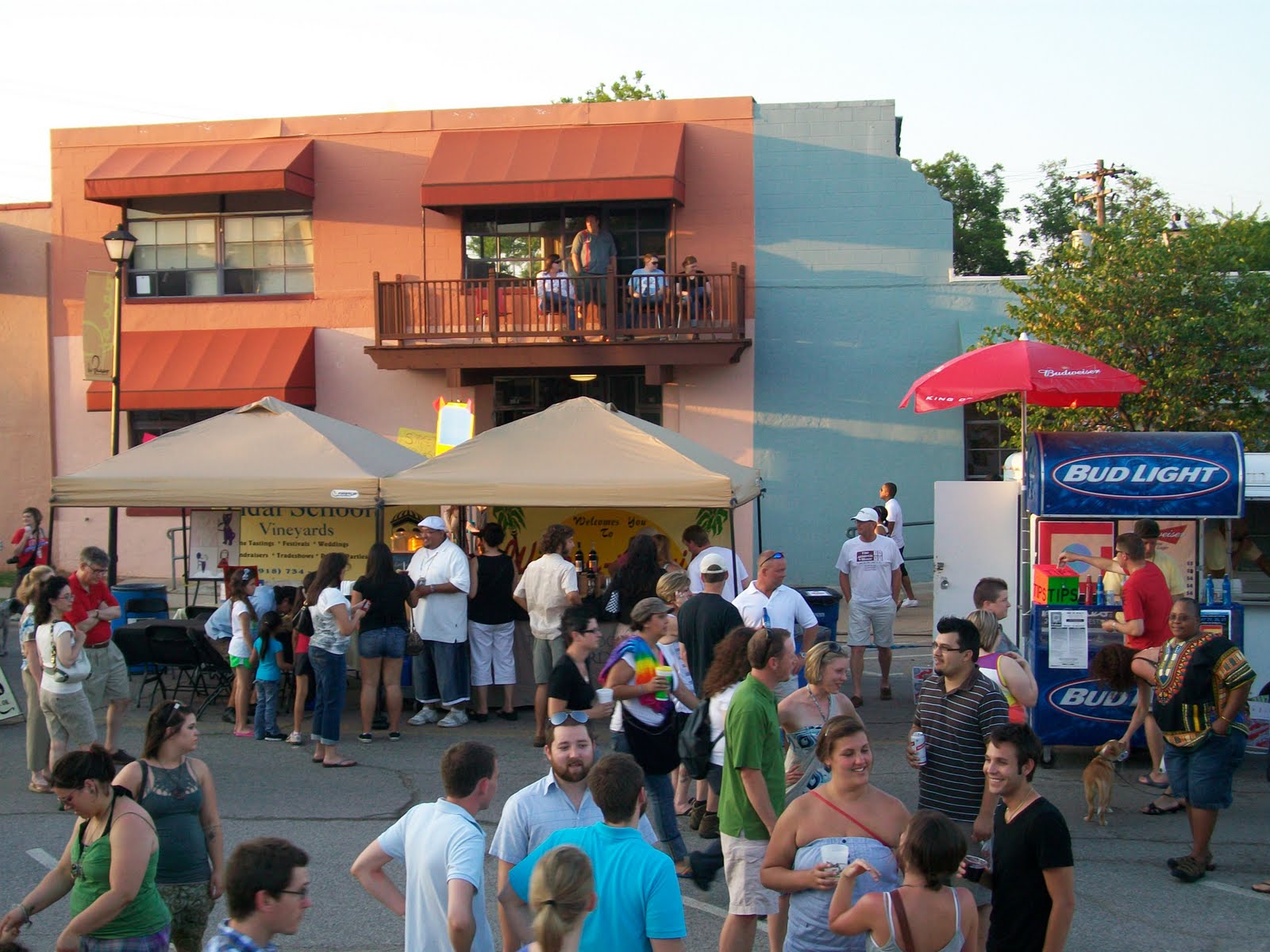
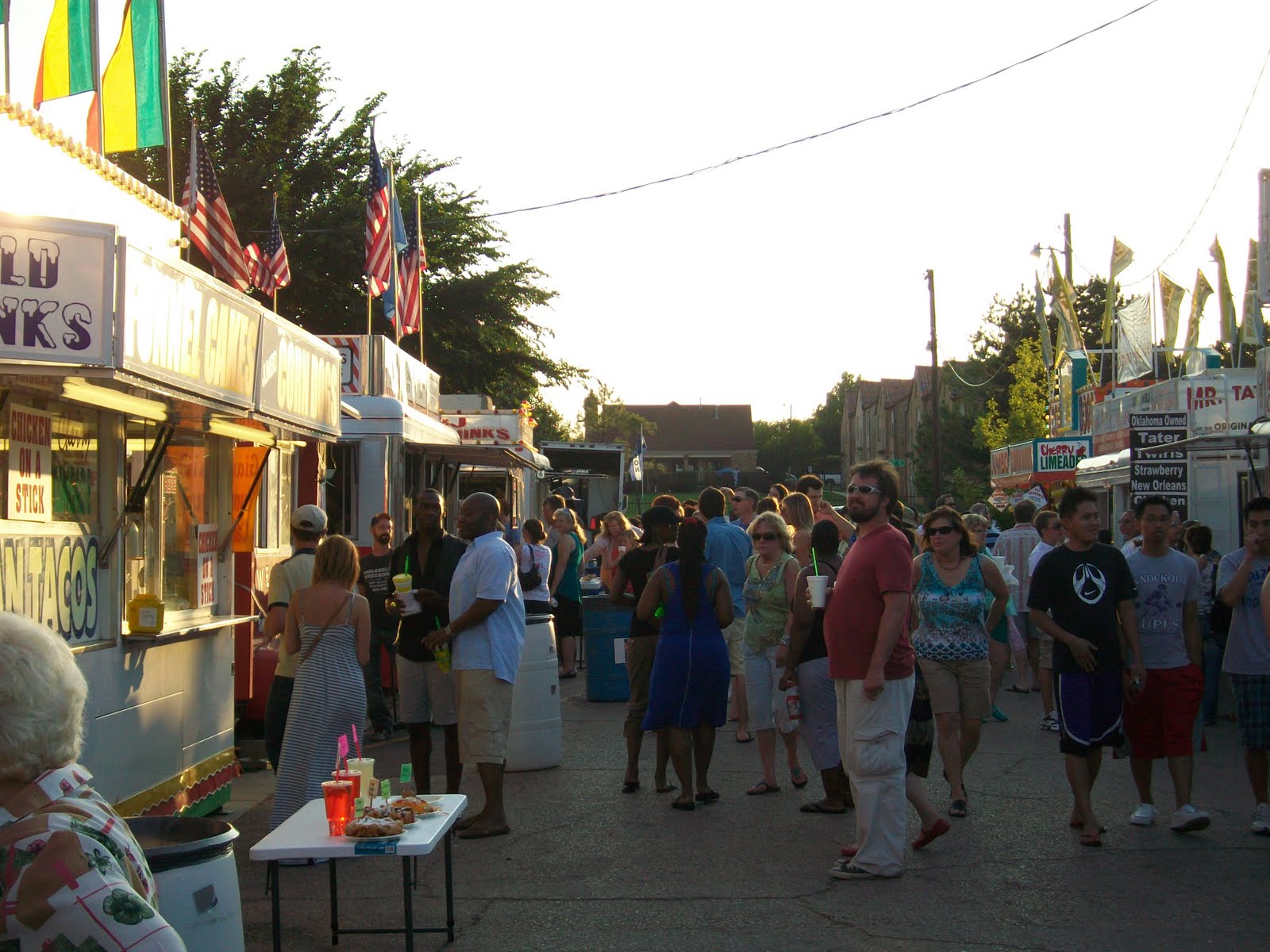
After how pleased I was with deadCENTER, I guess I might as well put up some of my pics from the Paseo Arts Festival. Took about 100, but here's some of the highlights. All can be viewed here. The Paseo district certainly looked really good. Always a great festival.


Wednesday, June 9, 2010

10th Annual deadCENTER Film Festival downtown


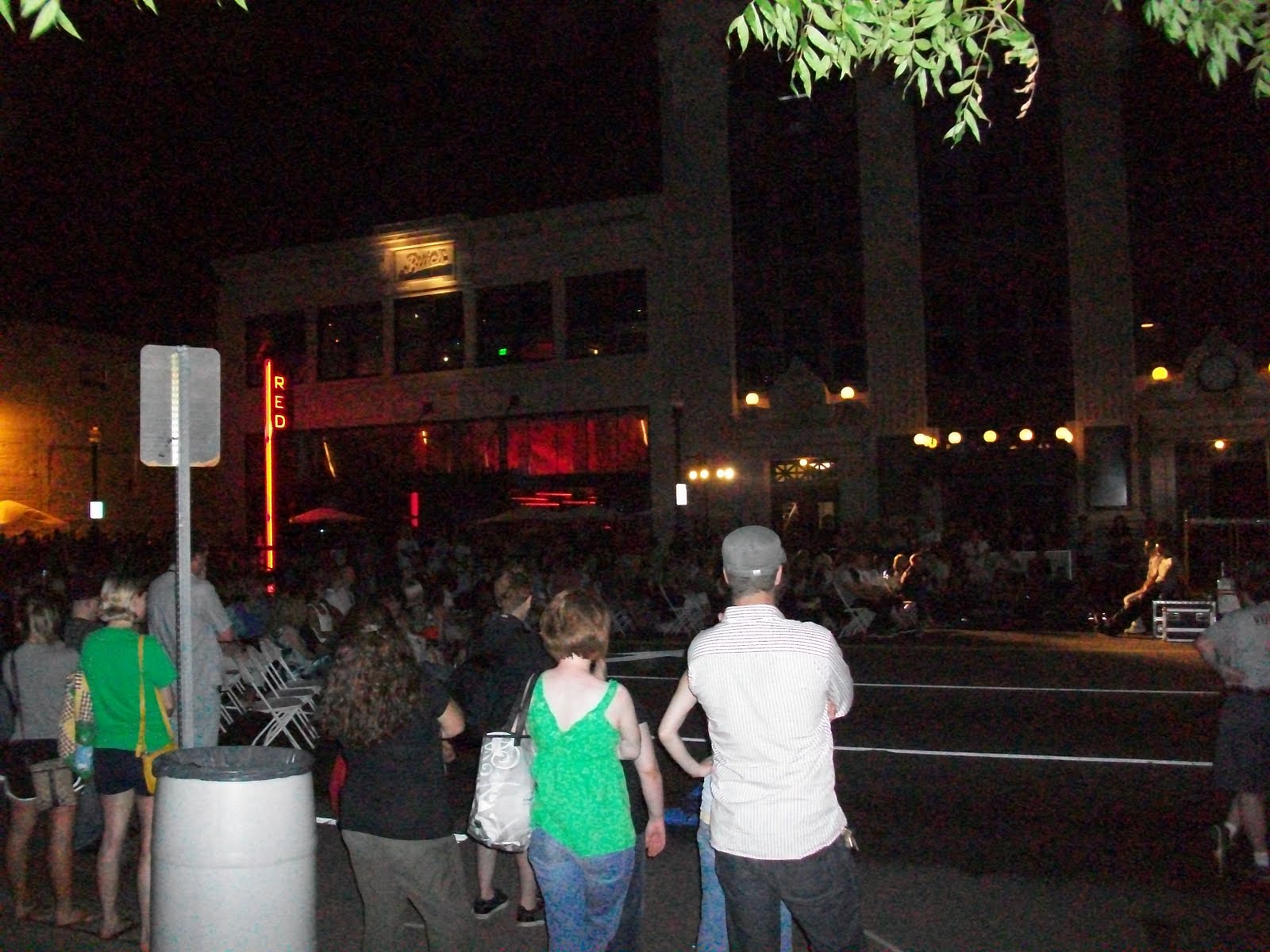
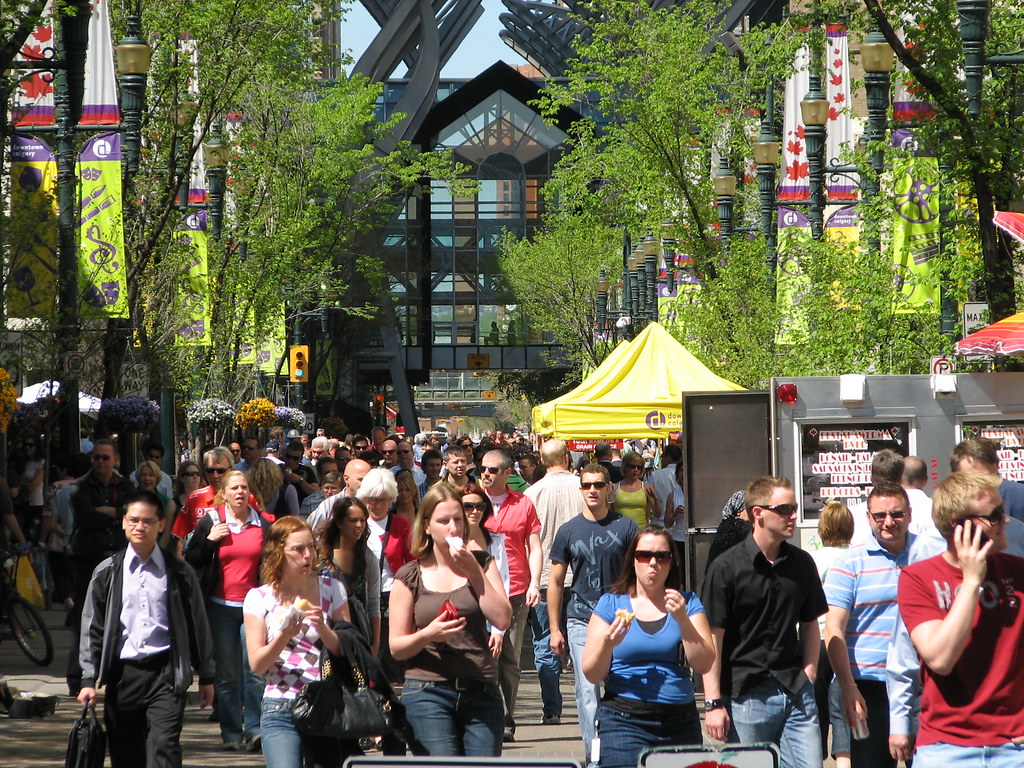
The pictures are worth a thousand words, even though I still have to preface these with mentioning the limitations of a crappy camera when the sun goes down. It was difficult to convey an en entire block full of people shoulder to shoulder.

And after tonight and running into so many old friends and seeing so many trendy people pack Broadway and revel in the story of Mat Hoffman..it was truly a celebration of Okies who honor Oklahoma by dreaming big and defying normative standards and stereotypes. I can't say it enough. There is just something cool and special that you can only get from being a part of the beginning of something. It's just that "well-kept secret" that makes Oklahoma's massive hip scene so unique. A lot of outsiders have commented on it, how here in this "new city" that nobody really hears or thinks about we've got all these quirky people and great bands and people that just hit it big.

Those of us who are a part of OKC's urban renaissance and the massive growth in local culture are part of something that is brand new and has the sense that we have already stumbled across something very big. And it will continue to get bigger. Is OKC the next "Austin"? No of course not, OKC is just the next..OKC. That will mean something soon, and it already does in a very real way to us.

Facts:
-10th year for the festival
-Will run 5 days, from June 9th to June 13th
-7 locations include the OKCMOA, IAO Gallery, Untitled Artspace, Kerr Auditorium, Norick Library, and outdoor locations.
-Attendance is expected to exceed 10,000 (after "The Birth of Big Air" tonight on Broadway, they're already well on their way.
-There will be over 100 movie screenings
-There will be 12 official deadCENTER party events as well]
-All-access pass is $125, all-screenings pass is $75, and individual screenings are $10
-Supporting this goes a LONG ways toward support the emergency of local culture and identity as well as a great event.

Before the Mat Hoffman and Spike Jonze took the stage to introduce the film at the beginning of the screening, there was actually a short-lived, albeit sweet, chant of "OKC! OKC! OKC!" OKC? Yeah. Like I said..I really feel like being here in OKC right now, we are on the verge of something big.

A heckuva argument..

Which of the following describe the environment you would rather have your business or investment located:

1. An area in the middle of the north side that was once hot and desirable and is still an alright location across from a mall that's held on despite the economy and despite the anti-mall trend. The downside though is that the mall you are located in has NOT held on and has lost every good retail tenant it once had, with Balliet's moving further north, and Talbot's moving across the street. The office space above you is also not leasing as well as it was. The only public investment in the area are some minor intersection upgrades in the Northwest Expressway.

2. The urban core of the city where office vacancy has plummeted from 34% to 24% and office space continues to remain strong despite the economy. A $750 million, 850 foot tall skyscraper is going up in the neighborhood, among other projects. In the last 15 years public investments have included everything in MAPS 1, several streetscapes including the MidTown/Saint Anthony's streetscape surrounding where your store is, and tons of new housing coming in..the allure is being part of an exciting new urban trailblazing lifestyle in Oklahoma. There are more public investments planned for your neighborhood, to the tune of nearly $777 million. There is also a new $600 million highway about to open, and all of the surrounding residential neighborhoods are also rejuvenated. In all, within blocks of you has been billions of dollars in public investment and even more in private investment. You're also now a lot closer to your clientele across the metro.

You tell me where you'd rather invest or put a business...

Tuesday, June 8, 2010

Dear Full Circle: Please come downtown!

We've said so much about what it will take to get downtown retail on solid footing. I've exhausted the current state of retail as well as any and every study that's every been done (and ignored). What if we could get well-established local retailers to come downtown, like it once was? I think that is going to be by far our best bet for bringing downtown retail back. Well-established local retailers have already built up a reputation and a loyal customer base, so they would not have the burden of having to establish their own business and a new market at the same time.

As Marty Dillon moves forward with renovations to the Tower Theater in Uptown, there is also the likelihood that he will move his longtime family-owned MG Novelty party store to the storefronts attached to the Tower Theater--which would be a huge boon for Uptown in addition to to the theater which will be a multi-use events center. There is also an emerging retail area developing in Bricktown where Oklahoma Avenue crosses the Bricktown Canal--we've recently seen the opening of the Bricktown Candy Co, Peachwave Frozen Yogurt, and the Red Dirt Marketplace, and Envy possibly moving across the tracks--joining the existing stores like the Red Dirt Emporium and Put a Cork In It. Here you will have 6 possibly more retailers in the same block. If retail takes over the languishing Bricktown Canal area (which has gone slightly downhill while the rest of the district has made huge improvement) it will go a long ways toward putting a retail foothold back in downtown.

So, is anyone in the mood for a slam dunk for downtown retail? What if we could get Full Circle Bookstore to move downtown? We all know 50 Penn is being abandoned by all of its respectable tenants and we expect Full Circle to be no different eventually. They can't be the lone holdout in what has essentially become an upscale Crossroads, they need to start thinking about relocating, and I am sure they're already on top of it..who knows, they might even be in talks already with Chesapeake for Classen Curve Phase 2. Personally though, I think Full Circle needs to buck the trend and avoid going to Classen Curve like everyone else. Full Circle NEEDS to do something outside the box in order to maintain its unique identity, and I can't see Rand Elliott preserving that. Full Circle needs downtown, not Classen Curve, not anywhere else. The advantages that downtown and only downtown can offer Full Circle are as follows:

1. The appearance of a legitimate bookstore in a building that looks comfortable and "worn in."
2. Proximity to an emerging demographic of young professionals calling OKC home instead of fleeing from here.
3. Proximity to OCU and the thousands of college students that will study in downtown within a few years (OCU Law, ACM, OBU MBA, etc).
4. Following the example of the other examples of great bookstores..Elliott Bay Book Co in Seattle, Powell's in Portland, Harvard Book Store, Book People in Austin, and so on. This could get Full Circle on lists of greatest bookstores.
5. The opportunity to be at the center of the community and trailblaze the return of downtown retail, and benefit from being first to the scene.
6. Better proximity to all of the affluent areas of OKC, including SW OKC and Norman, not just the north side. There is not a single bookstore between downtown and Norman, despite tons of affluent and educated areas. 73170 is highest income ZIP code in OKC metro.
7. How could you pass up the potential of the following building:

And it would be across the street from this:


I think Full Circle CAN sell some books here, if you ask me. I think this has potential to be incredibly successful. Downtown OKC Inc needs to bring everything they've got to the table in order to lure Full Circle. The MidTown Redevelopment guys need to do whatever it takes to make it happen. Downtown enthusiasts need to mount a good email campaign to Full Circle. Full Circle shoppers need to mention it to them every time they are in the store.

Cityshot LV


Light at the end of the tunnel for downtown..

Sunday, June 6, 2010

In the year 2010..

This post looks at goals for Downtown in 2010 that were made by the OKC Planning Department back in 2003. I think here you will see some pretty damning evidence of why downtown infill has lagged behind what was expected. (And as I always explain, a humongous earth-shattering project like Devon Tower doesn't count as "infill.")

The report that this is based off of is not the Downtown Housing Study (which suggests a certain amount of infill should be finished by now), nor the Fixed Guideway Study (which determined OKC needed to have downtown streetcar established by a date that has long since passed), and so on. I am also not going off of planning masterplans for neighborhoods such as MidTown or the Oklahoma Health Center that are a long ways from fruition. I am simply using a plan that I think we've all forgotten about, the Downtown OKC Strategic Action Plan (click me).

The plan also outlines different areas of downtown and makes recommendations specific to the district, and also makes projections of where the district could be by 2010. I will just run through these projections and grade the city based on how we've done, per this 2003 standard.

Arts District (Pg 29): "The existing amenities located in this sub-district provide a substantial foundation on which to build future similar uses, thereby solidifying the urban cultural experience. Additionally, if properly developed this sub-district is a logical location for high-end owner occupied residential uses and related support services." Translation: More cultural institutions and perhaps some high-end residential.
Grade: A-. Since 2003 we've seen The Legacy come to fruition and provide 300 units of upscale residential units, and despite being criticized for its bland design, I view it as a brilliant urban form because of how functional it is, and it brings the street level retail to downtown. This is one of downtown's only true mixed-use developments. We've also seen the new OKCMOA, a blossoming of arts at the Civic Center, the new library open, and more. A new sculpture is set to go up in front of City Hall, too.

Automobile Alley (Pg 29): "The sub-district provides tremendous potential to connect the Business District to the historic neighborhoods north of downtown. If revitalization continues in a proper way, Automobile Alley may become a significant and vital district within the central city." Translation: More surrounding neighborhood tie-in and return to its original function as the key entry point for downtown. They were also expecting A-Alley to become something big. There was also a separate study that identified 10th and Broadway as sort of a "keystone" to the continuation of downtown's renaissance.
Grade: C. Automobile Alley largely lacks the mixed-uses we had hoped it would develop, and that the building stock's nature naturally lends itself to. To this day it is dominated by office uses and basically just serves as an extension of downtown. Not to be all harsh, there is some fantastic new energy that came about toward the end of the decade in properties that Steve Mason was involved in, and he is continuing to do cool things, including the planned opening of a new high-end furniture store, Rawhide. There were two potential deals for housing that I believe fell through, one being for lofts over the bank on the east side of Broadway, and another for "The Chandelier" which got bought by MidTown Redevelopment (or "Renaissance") and has been slow for progress since. There is still a lot of work remaining to bring the district to "vital area" status, let alone to bring a buzz of mixed-uses to fruition.

Bricktown (Pg 30): "Potential for growth opportunities and a demand for specialized attractions in Bricktown are great and there is no reason to believe this trend will not continue in the years to come." Translation: Focus on bringing in more on entertainment and tourism uses, which have been successful in Bricktown.
Grade: A+. Again, this is judging it empirically and only on the tenet of whether or not it has accomplished this goal set forth in 2003, and it certainly has. It has continued to capitalize on being an entertainment district with huge events like the Thunder Fan Fest (which was huge, hosted by Baby Bash, and other artists, maybe a thousand or more fans). Sporting events have been huge, as well. This has been where Bricktown has helped put OKC on the map. Gained more restaurants and nightlife, as well as the American Banjo Museum, and the possibility of a new toy museum coming. By my own expectations, and the common knowledge that Bricktown NEEDS housing and retail uses as well, I think we can agree that the grade I assessed is a bit generous.

Central Business District (Pg 30): Streets and thoroughfares in the Business District are predominately automobile-oriented. They, along with the underground pedestrian system, presently discourage a pedestrian-friendly character and hinder the ability to create physical or visual connections along the subdistrict’s sidewalks and streets. While office leasing activity remains slow, it is not unreasonable to expect a market will emerge for conventional office space." Translation: It needs to become more pedestrian friendly, and the market will slowly improve for office space.
Grade: A+. Since this study was completed in 2003, downtown's vacancy rate has plummeted from 34% (perhaps the highest of any major U.S. downtown) to 24%. A large part of this was as a result of residential and hotel conversions. Part of it was truly due to drastic improvement in the demand for office space. It is also here where OKC deserves major props for Devon, and yes, perhaps SandRidge (yes, I just gave SandRidge props). I tend to think walkability is also about to make drastic improvements as Project 180 will in short order redesign every downtown street and bring everything up to 2010 standards. I'd be more than happy to assess an A++++ if they would just plant grass over E.K. Gaylord or subdivide it back into plots and let OCURA take bids from developers.

Deep Deuce (Pg 31): "Also contained in the sub-district are a number of large surface parking lots and underutilized sites ideal for varied, significant development opportunities, such as infill housing." Translation: Infill development, doesn't specify price range.
Grade: B-. I am going to go out on a limb and read more into the statement than might be there at first glance. It doesn't specify price points for such infill development and we know that was an extremely heavily weighed consideration on OCURA's part in picking developers to negotiate with. That was also a major contributory factor to why development has been slower than hoped and why one, such as The Hill, was an outright failure. To the city's credit, this doesn't say the district should be finished by 2010, just that infill should be underway, and it certainly IS (or was). There are rumors emerging of an intriguing land deal with the former Maywood Park properties that could put infill development back on track in a big way, details emerging later this year. Looking at Deep Deuce from I-235 shows incredible amounts of infill and progress, looking at it from the BNSF tracks only slightly dampens my enthusiasm, despite all of the derailed development proposals we've seen (Maywood Hall, The Leslie, completion of the breathtaking Brownstones, Grant Humphreys' awesome Flatiron project, The Triangle, an addition to Momentum Market, and more).

The Flatiron (Pg 31): "Because of its proximity between the Business District and the Research Park, potential is high for the development of mixed uses that address specific development needs required to attract creative industries, businesses and workers." Sounds pretty boilerplate, but we'll roll with it. Translation: Mixed-use development, particularly capitalizing on the PHF Research Park.
Grade: F. Nothing has happened in this area since 2003 except for Momentum Market and the Untitled Art Space gallery (Rand's office was pre-2003 I think). The "Beacon of Hope" landmark project a beam of light that could be seen from outer space was a failure to do something landmark, but we may revisit that assessment and realize it as a more significant piece in the future once there is more definition of space to draw from between The Flatiron and PHF. PHF had a land development deal in the works but gave up the option to develop the site in favor of the Humphreys' project which won't go up anytime soon.

I-40 Expansion Area (Pg 32): "Development opportunities, such as infill housing, are great. A thorough Master Plan for this area will help guide development for the southern edge of downtown, thereby serving as a connection between downtown and the emerging near-south neighborhoods of Capitol Hill and South Oklahoma City." Translation: Potential for infill housing is huge. The action outlined is to create a masterplan.
Grade: A+. You could say they have created a masterplan. They have also created a new numero uno priority and calling, whether you agree with it or not.

Midtown (Pg 32): "Yet, MidTown has tremendous potential, if properly revitalized, to connect the Business District to the well established historic residential neighborhoods, located just north of MidTown." Translation: Seek out new infill development and mixed-uses that fade from office to residential as you go north.
Grade: B. Midtown is progressing. Historic renovations are underway, although it will be interesting to see if anything is finished between now and 2012 due to the deferment of tax credits for revitalizing historic properties, but nonetheless stuff will get done by then or shortly after. A lot has already been done. Many of the city's most popular restaurants are in this area of town. Residential has been finished, albeit only along Shartel. When Banta exited there was someone there to pick up where he left off. There is an interesting plan for using 2007 GO Bond Issue money for new traffic circles and a diagonal Classen Drive extension that also makes a stronger connection to the downtown core and creates some interesting triangle-site infill opportunities. More on that in an upcoming post. They saved Saint Anthony's Hospital, which was the main concern in 2003 (although not expressly stated in the study), thus the relatively positive ranking despite not a whole lot of change outside of the NW corner of MidTown.

So that's where we have come since 2003, just by narrowing the scope to judging only those things we had identified as goals in 2003. Obviously goals change and new, bigger goals emerge. Landing the NBA was not a goal we had on our radar in 2003. Nor was an 850 ft tall skyscraper. Nor was a MAPS 3. Nor was a complete Myriad Gardens renovation. Nor was the Boathouse Row stuff. Nor was making anything of the former Film Row area. And I could go on and on and on all day long. But obviously we have not done badly as defined by our neighborhood objectives.

There was a different set of objectives laid out, however. Because they recognized that infill development would not just magically happen on its own, they laid out a comprehensive short and medium term plan of action that was to be completed by 2010 that would ensure infill development go forward and be feasible.

"By 2010, downtown Oklahoma City is a vibrant and active urban place, a 24-hour destination for entertainment, arts and culture, an active and profitable center of business, with a variety of urban housing."

WRONG. So despite doing so well, for the most part, on achieving the neighborhood objectives, how did the city make so little progress on fundamentally changing the level of activity and availability of urban housing in downtown? The answer: Perhaps the second set of objectives is just as important if not more so, which commands a detailed look at how we have met those, as follows:

By the specifics (Pg 36): By 2010 downtown needs to have 2,000 new housing units, needs to go from 700 to 2,250 hotel rooms, development strategies for each neighborhood, support activities that continue urban growth, translate urban growth into economic development for the city, and so on.
Grade: D. Didn't meet the projected goals for housing or hotel rooms, although we would have had every proposed project made it to fruition. We got around 500 residential units to actually happen, a far cry from 2,250, or the near 3,000 that had actually been proposed between 2003 and the end of the decade.

So what more can we do to make developers more successful (basically do their job for them)? And yes, the city does sometimes need to do what developers should do already, just because we need them to be successful for downtown to be successful, as hard as it may be to make some of these people successful.

Short term goals (Pg 37):
Develop and publish list of incentive programs and how to access them, pursue amendments to current TIF legislation to optimize their effectiveness, undertake all necessary steps to facilitate development of housing and hotel rooms.
Grade: C-B, depending on your definition of "undertake all necessary steps to facilitate development."

Medium term goals (Pg 37): Designate "Development Coordinator" in DOKC to facilitate development process, develop masterplans with design guidelines, streamline development process to reduce processing time, to be continued.
Grade: B-. No masterplan exists to my knowledge for Bricktown, the Arts District, downtown core, Deep Deuce, or other districts that aren't MidTown, Oklahoma Health Center, or Core to Shore. There are numerous positions that exist to coordinate development with both DOKC and the Chamber.

More medium term goals (Pg 37): Facilitate long-term expansion of PHF, seek major source of funding to augment existing development incentives, facilitate small scale infill development, develop long-term plan for use of all OCURA plan, to be continued.
Grade: F. PHF doesn't need to be facilitated, they own all that land and aren't yet finished (meaning they are behind their build-out timeline, but that's okay). No major source of funding has been found to augment development incentives despite the brilliant example of city-provided loans up the turnpike. No comprehensive plan exists for OCURA properties and in fact, it is not even common knowledge which land is OCURA-owned and which land is under a timeline from OCURA. There needs to be some better comprehensive effort put forth when it comes to OCURA. This was a brilliant idea.

More medium term goals (Pg 37): Talk to OU about downtown student housing, develop a comprehensive plan with downtown churches and their potential development and housing, develop specific retail and residential masterplans, promote partial adaptive reuse options for chronically vacant properties.
Grade: D+. Starting with the good news, the city gets major major props for its role in dealing with the once-chronically abandoned property known as the Skirvin Hotel. That's about it, otherwise they'd get an F-. There have been no talks with OU, despite their massive medical campus adjacent to downtown. There have been no talks with the other schools that are becoming heavily involved in downtown, either..OCU and UCO. UCO especially has massive potential with their Bricktown School of Rock. There has been no effort to plan for investment from churches located just north of the CBD mostly along Robinson. This could be beneficial to bringing new life back to Robinson, an impressively dead corridor, which could be rebranded as church central. Hey, all potential land uses are essential to a downtown, especially churches. Why not a downtown LifeChurch.tv branch or something like that?

Those were just development and incentive objectives. There are also marketing and communication objectives. I'm not going to outline all of them, but I will outline the ones that catch my eye..

Marketing objectives (Pg 39): Actively market and promote different downtown districts, coordinate the implementation of walking tours, develop cross-promotional ties with city events, amend existing ordinances to allow more street interaction (vendors, etc), promote downtown at Will Rogers World Airport, consider dedicating a Route 66 Business Route through downtown.
Grade: C-. They have done a really good job with downtown events, especially cross-promotional ones, tying in different themes and causes to downtown. Such as the Flaming Lips' Halloween march, Opening Night, Thunder Fan Fest, Festival of the Arts, St. Patrick's Day Parade, and more. They have not amended the city ordinances to my knowledge. There is no promotion of downtown going on at WRWA, which I know as someone who is at WRWA an awful lot. There are no walking tours of downtown either, which could be a really interesting proposition. Hell, I would even volunteer to lead them during the summer. Route 66 Business Route through downtown? Is it even possible, would it help, is it a good idea? Who knows.

Planning and design objectives (Pg 41-42): Determine prime locations for housing and take whatever steps necessary to ensure private development there, ensure quality design input in all public projects, develop design improvements for key streets linking downtown sub-districts, pursue discussions with Myriad Gardens Foundation about redesigning a portion of the park for higher pedestrian interaction, develop design improvements to major entry portals to downtown from highways, develop a streamlined prescriptive zoning for downtown, develop a masterplan for downtown streetscapes, coordinate with ODOT a plan for the ODOT easement that runs through Deep Deuce, narrow streets and add curb extensions to favor pedestrians, draft a list of endangered historic properties and define steps for rehabilitation, encourage/require landscaping for vacant lots.
Grade: C. No requirement for vacant lot landscaping downtown despite a requirement for green space in actual development proposals. ODOT has done nothing to beautify the gaping I-235 easement. There has been no public coordination on the housing front, hence our little progress there. No progress made on the awesome suggestion to improve downtown entry portals from highways (what out of state visitors will see). There is no list of endangered historic properties, and if there was, anything SandRidge owns would top the list. They did however get most of downtown rezoned for mixed-uses, which will greatly streamline the development process. Major props again for Project 180 and Myriad Gardens redesign.

Recruitment and retention goals (Pg 44): Develop inventory of all downtown property, consider outsourcing of parking meter enforcement to ensure "customer friendly" parking experience, develop plan for marketing downtown to developers, consider reorganization of COTPA and reassessment of responsibility for downtown parking garages, improve trolley route service, consider new tenant incubators to grow downtown tenants, aggressively facilitate reuse of historic structures.
Grade: F+. There is an inventory of all downtown property that exists. There is a plan for marketing downtown to developers that they always follow. Parking meter enforcement is way too overzealous, and putting a police station in the middle of Bricktown was the worst idea ever. Privatize, privatize, privatize. Anything to soften parking meter enforcement, OR alternatively develop a voucher program for downtown tenants which is utilized in other cities. Obviously they aren't aggressively facilitating the reuse of historic structures. The trolleys are awful and should just stop running. COTPA has gotten a lot better, but until recently, they were acting like a public entity in serious need of redefinition. Last but not least, they seriously need to build some public office space and/or public retail space to serve as downtown tenant incubators. This is a great potential idea they should follow up on. Follow the example of the new Red Dirt Marketplace in Bricktown.


I think we need to go back and accomplish all of these things, and I believe these will go a looooong ways towards getting Downtown back on track to where it needs to be in terms of mixed-use offerings and 24-hour activity. All of these recommendation of the Planning Department made in this study are completely spot-on. We only accomplished 20% of these goals, and time is up. It is for this reason that we have seen the addition of downtown housing in the hundreds, and not the thousands. It is possible that Devon Tower coming onto the market freeing up all of the space Devon currently occupies could actually be a detriment as well if we don't start pursuing these goals laid out back in 2003 that we have since apparently ignored. We may also have possibly not lost out on the Big 12 basketball tourney had we been able to provide better downtown hotel offerings. Just something to think about..

No money for schools or tax credits, but plenty for jails

This Norman Transcript article is sickening. Apparently the state has zilch for schools and has to roll back tax credits for historic preservation (which by the way, thank the lord we got a deferral instead of a moratorium) but apparently there is tons of money for new jails. Especially as we continue to put more and more Oklahomans behind bars for petty and minor offenses. Corrections truly must be a recession-proof industry and it's above criticism as well, because nobody besides me will attack the law enforcement establishment that has this state under their thumb.

The facts, according to the article:

-11 jails currently under construction or in planning, not including the $400 million (or more) jail that Oklahoma County wants to build
-State jail inspector calls the construction incredible, most he's ever seen at one time (he's been on the job since 1977)

Cityshot LIV


Taken in front of the RCB Bank of Nichols Hills in Automobile Alley.

Saturday, June 5, 2010

Houston traffic...

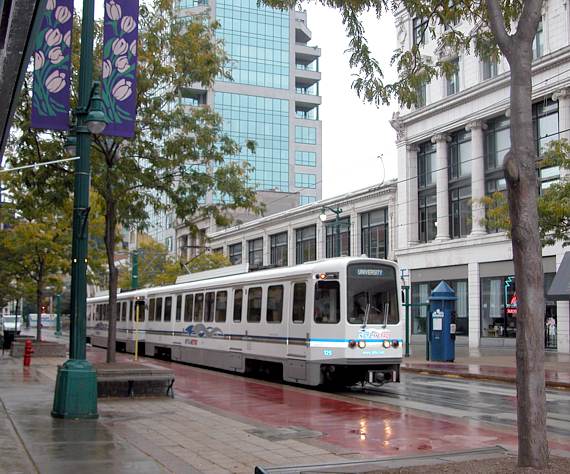
Much has been made about Houston traffic coming into conflict with the Light Rail that runs for several miles up and down Main Street between downtown and Relient Stadium (and through areas like the Texas Medical Center, Museum District, and Midtown Houston). They even did a feature on it here at LightRailNow.org. In 2004 alone there were 63 collisions with the LRT, which means more than one per week, a collision rate that is more than 25 times the national average for public transit trains that operate in street right of ways. I'll quote from LRN:
While several other cities, such as San Jose, Portland, Boston, New Orleans, Denver, and Salt Lake City, all have street-running light rail and streetcar systems, drivers in those cities for the most part seem to be able to avoid crashing into their trains. Unfortunately, that's not the case in Houston. The propensity of local drivers to smack into the new train system has even become national news.

The collision rate between cars and cars in Houston also goes without saying..as being quite high. In 2002 Houston had 12.45 traffic fatalities per 100,000 people, far higher than say, New York City (4.39). These are BAD statistics.

According to the INRIX National Traffic Scorecard Houston traffic is also quite epic, and it is the thing that many people especially know Houston for, a shame. Houston ranks #6, and by comparison, OKC ranks #40 and Dallas ranks #5 (after LA, NYC, Chicago, DC). I am personally promoting Houston to #5 because in my opinion Dallas has the best traffic out of any big city due to its overblown freeway system.

Houston traffic was also spotlighted by Budweiser's Real Men of Genius:


On a side note, for anyone interested in checking out Houston's cosmopolitan and international flavor, check out this really awesome photo set on SSC. Just to balance out the negative coverage of a city I love.

So the point is, yes, there have been collisions with LRT in Houston. I've heard a lot made out of that fact. But..look at the surrounding context of HOUSTON TRAFFIC. Again, to quote from LRN:
Furthermore, the Texas Transportation institute (TTI), which was recently hired by METRO to assess safety along the METRORail corridor, found no fundamental design flaws in the rail system itself that would contribute to the high rate of car-train collisions. However, these facts are generally ignored by local rail critics. METRO built the train down Main Street, they argue, so therefore METRO, not the city's careless drivers, is to blame.


Check out this awesome video from the Houston Metro "Danger Train." (nobody was fatally injured in any of these accidents luckily)


Houston, we have a problem. (But not any other city)

Friday, June 4, 2010

Rogers Marvel architects

I have been searching for an email address for Rob Rogers that I can send him my suggestions for how to improve the SandRidge Commons proposal. Can't find ANYTHING on the web, not even on the Rogers Marvel Architects website. If anyone knows the email address, please let me know. You can leave a comment on here or email me as many readers do at moore.energizer@yahoo.com.

Thanks, and save the India Temple!

This post (not) brought to you by the Big 12 Conference

The Big 12 announced its new host cities for future tournaments and the results are in: OKC has officially gotten the shaft. This will be a real brief post, and as much as I would like to spend hours going through data and old news clippings pulling out attendance figures from past times OKC has hosted the basketball tournament, let me just say that OKC has never done a bad job of hosting the Big 12 basketball tournament. The event, which was a huge boon for downtown the two times we were lucky enough to host it, was perhaps the closest we will ever be to hosting big time sports tournaments because the future prognosis does not look good for OKC.

The bright news is that we have secured the Big 12 baseball tourney for 5 more years or so. Realistically though, there was no competition. Omaha, Tulsa, and Austin wanted it..but neither have the same baseball setup in Bricktown that fans from every school have absolutely loved for the last ten years or so. Nobody can come close to competing for that event which honestly is not nearly as big an event as basketball and football, and we're obviously never going to host the football championship for lack of an NFL stadium anywhere in Central Oklahoma.

But basketball is the prize we should have had our eyes on and we absolutely blew it. Because of how successful both of our ventures with the tourney were, it is a shame to settle for not hosting this event. Yes, KC was also good. But there are advantages to OKC also that should have kept us in the running and the event should have been split between the two cities. Let me emphasize: MAJOR loss. I know right now, given the general euphoria in this city, it's hard to comprehend the idea of a major loss, but this is it. Perhaps the impact is lessened by our ability to flirt with hosting an endless array of big events at once, from the Grand Prix idea, to the rowing, to other sports tourneys, and so on--but the PRIZE out of any event we could possibly host was the Big 12 Basketball Tourney and we lost out. We need to examine ourselves as a city and discover what it is that we lack and how we can better position ourselves to host major "Big League City" events like this, which would put us on a map of other cities that host conference tourneys like Seattle, Atlanta, and NYC.


But maybe it doesn't even matter and we're destined to lose relevance in hosting conference events anyway. Consider that the Big 12 is looking less and less likely to exist in a few years and the surfacing of reports today that the Pac 10 has extended invitations to 6 Big 12 teams, with another two having known (well-publicized) flirtations with the Big Ten. If the Oklahoma schools end up in the SEC, OKC isn't going to have any events to host. The SEC has anchored EVERY conference tourney in Atlanta and that won't ever change. If the Oklahoma schools end up in a "Pac 16" conference as is appearing very possible, it's going to be a hard sell for OKC to host events that fans will travel to. In fact anywhere you host a tourney in a "Pac 16" conference it's going to be difficult for fans in Texas or in California. Consider the future and the trends that appear to be emerging.. what does OKC stand to get out of all of this?

Doesn't look good in terms of hosting major events at the Ford Center. And also consider this, and this is where the impact from conference realignment could be HUGE for downtown OKC: If the primary reason for keeping the Cox Center and especially its arena in tact was the preservation of the setup with two arenas "48 steps" apart, what advantage does that extend us in the future? Is there a reason to keep that setup if we are no longer competing for men's and women's tourneys across the street from each other? That land could be prime real estate, and a huge money maker for OKC, especially if anything in MAPS 3 has cost overruns beyond $17 mil. The benefit to the general public who's not concerned with the city coffers however would be in the form of possible breaking the site back up into smaller blocks and reinstating urban infill on that site, which would much better incorporate the east edge of the Myriad Gardens.

Cityshot LIII


Some little bambinos hanging out on the Walnut Street bridge on a Friday night in Bricktown.

One of those pictures that are worth a thousand words, I think.

Thursday, June 3, 2010

Traffic circles, streetcars, pedestrian malls, oh my!


I just want to congratulate anyone and everyone who participated in one of the Let's Talk Transit public forums and took their beliefs public. It's often so easy to sit behind a computer screen and type and keep typing until you've written a how-to essay on what you want to happen in OKC, but it's harder to make the time to meet people in person and go before a group of strangers including city leaders and state your case. Those who participated did just that and left COTPA with the impression that the community is interested and is watching. I want to thank COTPA as well for giving us the chance to do this through the public forums, for paying attention to everything we said, and also for giving me the opportunity to be the guest blogger. Without much further ado I'll go into more detail on a few key points:

Routes: We're being told that any routes we may see mapped out are only preliminary. I want streetcar planners to realize that we know these maps will be the starting point for their system planning, so we ARE going to analyze the routes. Just because they are "preliminary" doesn't mean they're only preliminary. On the Let's Talk Transit website, Walter Jenny made the following comment on a previous blog entry of mine:
- Identify the purpose of the streetcar. It's not to move people from Edmond to downtown, for example. It's to move people around downtown once they're there.

This got me thinking. I myself, and others as well, have said a LOT about the importance of connecting the Oklahoma Health Center to downtown but since stressing that importance I've been waffling on the issue. Blair Humphreys made his case in an OKC Central guest post that given the track miles we have to work with, it is not worth connecting the Health Center to downtown for the purpose of the lunch rush. Given the frequency of having streetcars run every 15 minutes and carrying less than 100 people in each run, he has a good point. Is the lunch rush the purpose for connecting both sides of I-235? Of course not, but the point remains.

One of the things I'm hearing a lot about is the lack of simplicity in any of COTPA's preliminary routes. A lot of people have suggested that the routes indicate not listening to the people who have clearly expressed a desire to see Sheridan, Walker, and Broadway. I contend however that the routes show COTPA is listening to everybody and not just the majority and the experts and FAILING to commit to ONE alignment through an area, and the complex web of streetcar they've drawn up does seem to touch virtually every street for at least one-two blocks. Someone needs to tell them it doesn't work that way. For example, you can't describe to an out-of-towner where they can catch the streetcar and where it goes without turning blue in the face. You also do need to COMMIT to a corridor and stick to those corridors instead of interweaving in order to please every proponent of every corridor. While I'm not certain of this route and while I realize it misses key areas such as Deep Deuce (although some Deep Deuce residents have told me they are used to walking), here is my proposal for SIMPLICITY:


That would be within the 7 miles we have to work with and within the physical constraints that each corridor seems to have. For instance, Sheridan can't have a double track going in both directions due to the heavy underground utilities that exist underneath the south half of the street (eastbound lanes). Other constraints involve the traffic circles, and others also involve the underpasses underneath the elevated BNSF railroad (they lack the clearance for streetcar cables). Sheridan however is by far the most popular corridor thus it NEEDS a streetcar line and more than the 3-4 blocks COTPA has proposed.

Not that the COTPA routes are all that bad. I think that the red route could be really awesome if slightly tailored, as such:

All I changed about the red route was instead of southbound cutting west to Robinson on 4th, I kept the streetcar going down Hudson until Park where it turns west to Robinson. By touching Hudson/Park you've got Arts District coverage that the streetcar didn't before. I like the idea of CBD coverage as well--most people's routes seem to touch all of the periphery neighborhoods that make up downtown but NOT the downtown skyscraper core. Just because an area doesn't currently have mixed-uses doesn't mean it lacks potential for streetcar vibrancy.

Traffic circles: In the $835 million 2007 General Obligation Bond that the citizens passed by almost 90%, apparently there was funding for several more traffic circles. Traffic circles have been making their entry to the downtown area over the last few years, most notably in the Midtown area on both sides of St Anthony's--10th and Walker has a traffic circle and 10th and Dewey also has a traffic circle. I love these traffic circles and not only do they make the intersections very efficient but they also go a long way toward creating defined space and anchoring an area with an interesting street form and well-maintained streetscapes (intensive planting in the middle of the traffic circle). These traffic circles are GOOD things. They are also helping to extend Classen Drive which cuts diagonally (NW/SE) between Midtown and Heritage Hills. In the Classen Drive extension there are new traffic circles proposed to go in at 9th and Hudson, 8th and Harvey, and I think stopping at 7th and Robinson. You can view the 2007 GO Bond projects here at okc.gov. Getting to the point: These traffic circles are going to affect the route and we need to figure out what the deal is with these traffic circles SOON and before going any further.

There are surely some solutions to cutting through a traffic circle as well. The OKC traffic circles have too sharp of a turning radius for a streetcar to actually navigate the curve normally but perhaps a traffic signaling system similar to crosswalk lights (embedded street lights in the pavement that flash, stopping traffic when a pedestrian pushes a button) could be used and the streetcar route could just cut through the center pavers inside the traffic circle. Granted, you would still not be able to have a streetcar curve or intersection in the middle of a traffic circle, you just might be able to transect it evenly. Maybe.

Funding: A lot has been said about the funding ever since I brought up my concern that system expansion is not feasibly going to happen any time soon due to the funding mechanism, and especially considering COTPA has yet to identify a maintenance funding mechanism for this current starter system. The belief (or illusion) shared by many behind the streetcar initiative is that future expansions will be funded by the feds who have already begun issuing streetcar grants to cities. Let me just say this: Any city that is counting on the feds for any streetcar-related capital investment is deluding itself and needs to get off its arse and fund the damn thing itself. I don't want my taxes paying for streetcar in every city when we here in Oklahoma will likely NEVER see a dime for fixed guideway transit of our own. The reality is that the feds are very strict when they evaluate transit proposals and go for bang for the buck as well as FEASIBILITY. And they have strict determining factors for feasibility which take into account density, not the potential for density.

Also consider the people we send to Washington. These guys do everything they can to thwart transit funding and they're not going to go out of their way to secure transit funding for OKC, believe me. Remember in the 1990s when OKC was about to get a LIGHT RAIL grant from the feds to go with the original MAPS projects and disgraced Congressman Ernest "I-Took" Istook put the breaks on that? Let me state it again. Consider the people we send to Washington, these guys aren't on board with transit and will never go out of their way to secure funding so that their own community can have as decent transit as everyone else. These guys are obstructionist, self-defeatist, they do not believe in the greater good for the community and thus do not believe in the future of OKC and they're going to bring us down with 'em if we decide to rely on them for future expansions of this system. /end rant

Pedestrian malls: Another really cool idea that I think we ought to consider is integrating a streetcar corridor with a pedestrian mall. The result would be a street that incorporates numerous transit types, virtually everything except cars. It would have a bicycle lane, street vendors, a pedestrian mall, and a streetcar corridor connecting to other areas of downtown. Since Robinson is already such a screwed up one-way then two-way then one-way corridor why don't we just use Robinson for this? Between Park and Sheridan (adjacent to the Myriad Gardens) is where we could do this. An alternative is using Broadway between Sheridan and 4th, PROVIDED that SandRidge keep their buildings and builds up a Broadway streetwall.

Think about it:


Cityshot LII

Bad Egg Restaurant Group

This post has been deleted. Keith Paul contacted me, the offending server has been dealt with, and everything is good--and I am back to support Good Egg restaurants, just not the Norman Iron Starr.

It pained me to recommend people avoid their restaurants, not just because of the impeccable attention they pay to their appearance as well as food, but also because of their genuine community support. I gain nothing in blaspheming them, so I just want to get rid of this post now that the situation is fixed.

-Nick

Wednesday, June 2, 2010

State funding for Tulsa roads

Breaking news..massive sinkhole in the Skelly Drive portion of I-44 that cuts through Midtown Tulsa. The sinkhole developed between Lewis and Peoria in westbound lanes of Skelly Drive. Anyone who has driven I-44 recently knows that the road is by far the worst road in all of Oklahoma, even worse than the Crosstown Expressway. I-44 Skelly Drive is especially worse when you consider the amount of traffic trying to cross Midtown Tulsa and how the road is only 2-lanes each direction. Yes, it's currently being replaced but funding has been difficult to get due to the Crosstown Expressway realignment in OKC which cynical Tulsans have dubbed the Big Dig (alluding to the depression I-40 will run through, and a famously expensive Boston I-95 project).

This sinkhole should be a wake-up call to the legislature that Tulsa is being sorely left behind for road funding. I myself am an OKC guy that can realize Tulsa is indeed getting the shaft here. The sinkhole will be filled, but who wants to drive on a road after there's already been one sinkhole? I can not think of a less safe road in all of Oklahoma. But it's great that we have a $600 million project to move I-40, as long as the highway builders get their money, that's all gravy.

Cityshot LI


Bricktown on a Friday night.

Tuesday, June 1, 2010

An ugly development

"Pathway Development Company, LLC, is building a unique and stunning $120 million, 2.4-acre development called The West Edge near Kansas City's Country Club Plaza. Set to be completed in early 2008, the mixed-use urban development can best be described as a "hillside village" of cascading structures which will house a variety of retail and commercial units, as well as a 131-room boutique hotel. A portion of the 203,000 square feet of leasable office space will become home to Bernstein-Rein Advertising, Inc."

Sounds nice. Reality:


This development looks like a U.S. Embassy complex in some warring African nation like the Congo. It's kind of difficult to have a development with no setback from the street that is not pedestrian friendly, but they have somehow managed just that. Add to the trouble that the developers went bankrupt over this hideous project in KC's Country Club Plaza and now it's an abandoned construction site, a similar fate shared by The Hill in Deep Deuce. Kansas Citians in general seem pretty upset about this project.

Just because a project is expensive and has flashy renderings does not make it a good project, nor does it make it a positive project. Believe it or not, sometimes what developers propose is a bad idea and they need to be stopped for their own good. Sometimes what they propose to do is such a bad idea it will cause great detriment to the surrounding environs as well.

This is something we need to realize about the nature of development. Sometimes we gotta OPPOSE what they PROPOSE.