The convention center boondoggle has to come to an end, or be reigned-in somehow, yet how do you reign-in something that we have no control over? The committee structure of MAPS3 virtually guarantees that there is no way to hold their feet to the fire when a convention center takes over and orders the other projects around. The individual sub-committees are made up of members hand-picked by Mayor Cornett, who by and large, is a part of this convention center cartel.
Then city staff appears to have a major, major, major role in shaping the public discourse. It was the timeline drafted by them and their consultants that moved rocketed the convention center from being the last project, as was promised during the campaign by the mayor and all MAPS3 campaign literature. That is all orchestrated by City Manager Jim Couch, whom you’d better believe wants this convention palace built, come hell or high water.
Civic activism often takes on many different shapes and colors. Oftentimes, truthfully, it’s a mere means to an end. A group has a goal, and then accomplishes its goal by whatever means necessary. That’s not what urban activists normally do. The group that is displaying “means to an end” motives and actions is the convention crowd.
These are the exact same people who came out with this ridiculous boulevard to be named “Oklahoma City Boulevard,” following Mayor Cornett’s brilliant PR suggestion (that’s sarcasm). Behind the scenes, Couch’s planning department is pushing for streetcar to follow the new boulevard. These people genuinely want the landmark corridor to come to fruition, as they understand how it would boost sense of place in our community. They want to create an active, attractive downtown.
But they want this convention center even more, and that’s going to inevitably be self-destructive to all these other goals. Deep into their power binge, they saw the opposition to putting the convention center on a high-profile tract of land adjacent to the new park, and decided to show just how powerful they really are by moving it to an even more high-profile tract of land. Check-mate, they say. This is the essence of self-destruction and immaturity.
If urban activists wanted to be immature, for example, they could shun Heritage Hills residents for the recent to-do over the Mercy redevelopment site, in which Heritage Hills preservationists had some major egg on their face. Yet, those preservationists are generally great believers in OKC and excellent people to have on your side. Yet, I don’t believe the urban activists will be as rash and immature as these oil execs and big-time lawyers calling the shots on this convention center. This is the break-down of an “Us vs. Them” dichotomy, which we all wish wasn’t emerging in this city, but let’s face it—it is, due to the divisiveness of these convention center interests and the “Momentum” that they’re drunk on.
That community togetherness and that formerly united civic vision for rebuilding our inner city IS the collateral damage of the convention center assault. How else do you get a city to prioritize a project that very few people wanted to pass in the first place?
Thursday, January 19, 2012


Tuesday, January 17, 2012
The Top Ten Things of Two Thousand 11
Top 10 things that worked and did not work in 2011 (aside from timely blog posts)…
What better way to remember 2011 than examining what worked, and what didn’t work at all (that Top 10 will be coming later). At the same time we will be offering insights on what we should continue to go with for 2012, and at the same time recommending changes to make for an even better 2012. For downtown at least, it will be hard to top 2011, realistically-speaking. Oh, it was the best of worlds, and it was also the worst of worlds (yet not as often) as the excessive waste of tremendous resources is even more frustrating than not even having those resources or possibilities to begin with. This is our chance OKC, we have to capitalize!
 This post is also dedicated to Frederick Law Olmsted, the world's greatest landscape architect of all time, or if you will, a "park-itect." Olmsted was the architect of NYC's Central Park, not to mention Yellowstone National Park, and hundreds of other landmarks. There were (or still are) a number in Buffalo, NY even, He was also the architect of one Boston's key links in the "Emerald Necklace" (the string of iconic parks that define Boston) which would later bear his name as Olmsted Park. It is impossible to talk about America's best parks without a discussion that begins and ends with the architect who was also a firm abolitionist, opposed to the very slave labor that states and cities used to build the parks he would design. Just as OKC today is a mixture of good and bad, here lies the crux of good urban design more often than not: It can come from the best of times, and it can come from the worst of times. But either way, it is true to form and true to heart. Nothing is more American than a good, well-designed city.
Top 10 Things That Worked
 1. Construction workers, thousands of them, on the Devon, Chesapeake, and SandRidge campuses (campii?) definitely worked. They all worked overtime, around-the-clock, in fact. As the big 2 energy companies in OKC continued to expand, so did the scope of construction, and the pace. Devon Tower shot up like a weed to tower over the skyline, and Chesapeake’s retail development along Classen quickly became one of the city’s premier shopping developments. Chesapeake’s new office buildings east of Classen will break from the Georgian dormer-style buildings that the first 15 or so CHK buildings resemble. They will be ultra-modern and much, much larger in footprint as well. Could a tower be in the works? Devon-related construction may continue longer than any of us expect as credible rumors are surfacing that developer Nicholas Preftakes, who has bought up much of the Arts District, is working in concert with Devon to spur some development around the new Devon World Headquarters. A mixed-use response to CHK, perhaps? The SandRidge buildings also came down as work continued inside the old KMG tower.
2. NW 9th Street, still somewhat in its infancy, continued to work up a storm in 2011. Steve Mason, and we have to believe at this point that the district has worked up a good amount of synergy revolving around other players now (particularly the Flaming Lips), stayed true to what made 9th Street first blast onto the stage in 2008: Retaining and restoring battered, blighted warehouses, garages, and shacks—turning them into showcases of the eclectic and imposing monuments to the unimposing. In 2007, when Mason began his development push, 9th Street consisted of vacant land, an abandoned warehouse, a garage with cool old cars in it (Mel’s), an abandoned garage, and some wooden shacks further down the street. By simply repairing what was already there, today you have the Flaming Lips’ “The Womb,” S&B Burger Joint, The Iguana, Shop Good, Pachinko Parlor, and that’s just on 9th—on Broadway, Mason has added more retail along with what has become one of OKC’s most popular coffee shops, Coffee Slingers. Don’t look now, but NW 9th and NW 16th have quickly become the epicenter of LOCAL retail. What if the NW 9th approach was replicated say, in Core2Shore? Just saying…
 3. Chesapeake worked wonders to bring top-flight retailers to OKC in 2011. They even offered an incentive out of their own pockets (without even asking for a TIF, which would have been controversial) for Whole Foods to open shop. Whole Foods, which went with a relatively small store footprint, was not expecting the OKC store to be a huge success. It was bigger than a huge success and now Whole Foods is reportedly eyeing locations for metro store #2. You really have to question that anti-Oklahoma bias down there in Austin if the Whole Foods corporate people had no idea that OKC would be a big success, but luckily now it appears they’re over that. Chesapeake also brought in another metro-first retailer in Anthropology, with undoubtedly more to come, including all of the local retailers that they lined their Classen Curve development with. It stands to reason that Whole Foods isn’t the only one receiving some kind of incentives from CHK—and it’s evident that CHK has big things up their sleeves, or else there is no way they would be going to the lengths they’ve gone to so far on this project. It just doesn’t make sense to hire Rand Elliott and pay off tenants for disparate parts of basically just a strip mall and a grocery store (yeeah—very nice ones, I admit). Rumors include housing being built between WF and NW 63rd and redevelopment of the old Nichols Hills Plaza, and the CHK Real Estate Binge goes much further than those properties, too. They're also behind an interesting LEED-certified "modern micro community" on NW 56th. I guess there goes the old Meadowbrook Acres 'hood...
4. OKC Talk worked (and likely prevented many people from working) in 2011. I understand the skeptics here, probably largely driven out of nervousness. OKC Talk has had a spotty past, to tell the truth, and in my opinion it used to be best to avoid. It was just typical of an online forum where sad people can hide behind anonymity and engage in flame wars, thus filling that void in their personal lives and taking it out on others without the time or patience to put up. It was a bit much to keep up with when I barely have the personal time to do right by this blog. However, OKC Talk’s Pete Brzycki has changed all that since he bought the site (for a large sum, reportedly) and maintained it to the highest level. Pete’s stewardship has turned OKC Talk, of all things, into a true force to be reckoned with in OKC politics. OKC Talk is the haven for mavens of OKC’s development and neighborhood news. Skeptical? Believe it. Big-time developers, like Bricktown’s Jim Pitman, big-time local journalists like the Oklahoman’s Steve Lackmeyer, and big-time local volunteers and activists such as most of the M3 Streetcar Subcommittee, are all not just posters on the site, but major contributors for the most part. No doubt there exists innumerable others, and we know that the site is daily reading for all of OKC’s leaders. Comments and trends that begin to resonate on this site take hold out there in the real world, in the community meetings and committee proceedings that define downtown affairs. OKC Talk has emerged as a force not just to be reckoned with, but also a force with tremendous staying power. That is in no small part due to a passionate OKC expat for whom stewardship (and funding) of this tremendous online resource is a way to give back to his hometown. Just as OKC Talk, with millions of page hits (I don’t know, maybe daily??) has made a true impact (mostly as an ultimate democratization force), OKC owes Pete a true thank-you.
 5. Downtown restaurants worked, as well. Downtown, and its many districts that form this part of the city, virtually became a huge restaurant district in 2011. Every district is now anchored by a restaurant that is either very popular, or has the potential to be. Perhaps one of the biggest restaurant openings was that of the new Hideaway Pizza on North Broadway in Automobile Alley. Another new restaurant, Joey’s Pizza (relocated from Classen), anchors the old Film Row district. NW 9th is anchored by Iguana, Mid-town is anchored by McNellie’s (still the biggest restaurant up there), Deep Deuce is anchored by the Deep Deuce Bar & Grill, and so on. More restaurants even opened up in Bricktown, including some chains like Texadelphia. Can all these restaurants be sustained, after there were already a great many going into last year, no doubt. There has never been a restaurant demand study done, so we will really begin to test that demand, I think. One positive will be a huge number of “rooftops” coming onto the market downtown, which will inject downtown with a local customer base for a change.
6. Ed Shadid definitely politicked in 2011. I was at first concerned by Ed’s rhetoric when he initially popped onto the scene during his campaign. After it became clear that Ed would be a true supporter of quality of life, there was a rally to get him elected over a well-proved economic development cartel called “OKC Momentum.” Ed handed them a landmark defeat and then continued to make splashes by taking on deals that sounded bad, and he embarrassed City Hall by shining light on decisions that made very little sense. He even accomplished a major civil rights landmark as he got sexual orientation added to the city’s non-discrimination policy. Still, anytime you embarrass high-ups in this city, there’s a chance of being counter-productive. The jury is out on the real progress Ed has made, but he has performed admirably in the role of Downtown Don Quixote, if you ask the Oklahoman at least.
 7. TIF deals worked pretty well in 2011, except when they didn’t (in the case of Bomasada). The Alliance for Economic Development, led by former assistant City Manager Cathy O’Connor, was successful in leveraging major downtown developments with TIF deals to ensure fruition AND to ensure quality standards in development. In fact, all of the recipients of these TIFs have proven their commitment to the utmost building standards. Gary Brooks, who won the OCURA bid for the former Mercy Hospital site, later on announced (long after winning the bid) that the project would be the first LEED-certified mixed-use project in the state. Richard McKown (LEVEL developer) and Ron Bradshaw (Maywood Park developer) both pledged to use real stucco, instead of EIFS, with two enormous mixed-use developments that will go a long ways toward filling in Deep Deuce, along with an ultra-sleek Aloft Hotel being developed by hotelier and local architect Jim Thompson. Now the ultimate test to see just what kind of a miracle a Cathy O’Connor TIF deal can do will be to see what happens with the Judy Hatfield’s Carnegie project (pictured).
8. OKC Momentum worked hard in 2011 (but others worked harder). For better or for worse, there was an anonymous cartel of elite interests here in OKC (or perhaps Nichols Hills, rather) that attempted to buy Ward 2. The problem was that Ward 2 could not be bought because this ward is the best-organized, most-active, and boldest ward in the entire city. Ward 2 has a history of electing trendsetters and visionaries. Patience Latting, OKC’s first and only female mayor, cut her teeth politically in Ward 2. Many excellent statewide leaders (like Bob Anthony) got their start (well, politically at least) with some modest community organizing in Ward 2. Gazette Published Bill Bleakly wrote an admirable piece about the legacy of this tremendous ward, in which he mentions the names of many people you’ve either forgotten about or never heard of to begin with, but the point is that Ward 2 always sends somebody significant to the Horseshoe. The outgoing councilor, Sam Bowman, was a helluva councilman. Talk about a true civic dignitary and a class act. OKC Momentum through hundreds of thousands of dollars, not to mention primetime ad spots on local news, and still couldn’t win the hearts and souls of Ward 2. Dr. Shadid’s huge landslide victory, despite losing fundraising and spending by a landslide, didn’t just reaffirm Ward 2’s values. But it was earth-shattering for OKC because we’ve never had a council election like that before, and the good guy won. “Momentum” used to be a harmless cliché used ad nauseum around OKC, now it is a punch line and perhaps even a dirty word, which is also profound for two big reasons: Firstly, it was time to get a new word anyway, and secondly, good people are going to stand up to bulldozing anything and everything just for progress. No more progress for progress’ sake. Frederick Law Olmsted, the finest park-itect the world has ever known, once said: “The possession of arbitrary power has always, the world over, tended irresistibly to destroy humane sensibility, magnanimity, and truth.” That’s the way anonymous elite interests prefer to carry out the business of the people when the people, especially of Ward 2, clearly have other things in mind.
 9. Quality of life improvements (including the Myriad Gardens) didn’t just work in 2011, they kicked ass. Project 180 is in deep trouble right now, they underestimated their expenses, overestimated tax revenue from Devon Tower (which was built for much, much cheaper than expected), and over-leveraged themselves on a bond deal with Devon (rather than waiting for the TIF money to accrue over time). But never mind that fiasco. I don’t care how angry you are about the cost overruns, even if we were $100 million over budget just on the Myriad Gardens alone, it would have been worth it. For me, the chance to get out and walk around and enjoy this park was elation beyond what I would have expected in my wildest dreams for 2011—you can’t help but feel like you are in Boston or Portland. This is a park for humans. It’s a beautiful park. It’s also a park that is clearly planned to make a visual impact. The old Myriad Gardens just weren’t that way. To put it in terms that everyone will understand, the trees weren’t lined up well, the paths made no sense, there was no visual definition that played off of anything. Myriad Gardens 2.0 would make Frederick Law Olmsted proud indeed. It will soon be the pride of Oklahoma when the Festival of the Arts rolls around this Spring, and 500,000+ people are instantly blown away. It doesn’t stop there. Actual (dedicated) bike lanes have been spotted on some downtown streets; I myself nearly had a heart attack when I first saw this. Also don’t forget the Oklahoma River, as Boathouse Row continued to finish impressive projects, break ground on other previously announced ones, and continue to roll out other impressive proposals (such as a new children’s building, that has been removed from their website since I last saw it??). We still have the MAPS3 Central Park and other features yet to come! Could it be that a city that lacked a single decent park could become a city chock-full of quality urban greenspaces? This in and of itself is all the difference in the world, and I believe the difference will manifest itself shortly not just with new development, but with tangible quality of life improvements. You can NEVER have too many good parks, especially when you used to have none, truthfully.
 10. SkyDance Bridge worked in 2011, even if only for the last two weeks of the year. I was skeptical of this one. It looked like we were in for another wasteful and disappointing project. ODOT goofed and then demanded that the alignment be altered, negating what would have been an axis leading straight to the Devon atrium, and then cost overruns meant that a suspension bridge (where the scissor tail feature served a structural purpose) had to become a simple truss bridge, the cheaper option, rendering the scissor tail to look like a goofy cosmetic addition in depictions. Sometimes however, you can’t always judge a project by bad architectural renderings. In real life, this project is stunning, and perhaps the truss bridge feature is even an improvement. It has undoubtedly added more jagged edges as a defining element of this bridge, accentuating the “feathers” of the scissor tail piece. By the way, the entire bridge was lit-up with shifting LED lights on the very last evening of 2011, and it was truly breathtaking. It was mesmerizing even from as far away as the I-35 bridge. Can you imagine that very view in a year (to an out of-towner) with the new OKC skyline in full view, that bridge lit up, the bridges with their LED light panels, Boathouse Row finished, those boathouses lit-up impressively, and more trees planted along that river? I’m. Having. Trouble. Seeing. Straight. So. Excited. For. The. Future. Of this.
By the way, isn't Will Hider an incredible photographer? You can also thank OKC Talk for his talent being discovered.
What better way to remember 2011 than examining what worked, and what didn’t work at all (that Top 10 will be coming later). At the same time we will be offering insights on what we should continue to go with for 2012, and at the same time recommending changes to make for an even better 2012. For downtown at least, it will be hard to top 2011, realistically-speaking. Oh, it was the best of worlds, and it was also the worst of worlds (yet not as often) as the excessive waste of tremendous resources is even more frustrating than not even having those resources or possibilities to begin with. This is our chance OKC, we have to capitalize!
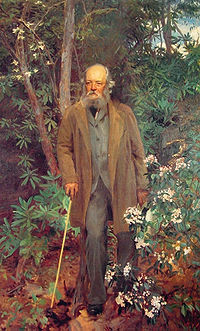 This post is also dedicated to Frederick Law Olmsted, the world's greatest landscape architect of all time, or if you will, a "park-itect." Olmsted was the architect of NYC's Central Park, not to mention Yellowstone National Park, and hundreds of other landmarks. There were (or still are) a number in Buffalo, NY even, He was also the architect of one Boston's key links in the "Emerald Necklace" (the string of iconic parks that define Boston) which would later bear his name as Olmsted Park. It is impossible to talk about America's best parks without a discussion that begins and ends with the architect who was also a firm abolitionist, opposed to the very slave labor that states and cities used to build the parks he would design. Just as OKC today is a mixture of good and bad, here lies the crux of good urban design more often than not: It can come from the best of times, and it can come from the worst of times. But either way, it is true to form and true to heart. Nothing is more American than a good, well-designed city.
Top 10 Things That Worked
1. Construction workers, thousands of them, on the Devon, Chesapeake, and SandRidge campuses (campii?) definitely worked. They all worked overtime, around-the-clock, in fact. As the big 2 energy companies in OKC continued to expand, so did the scope of construction, and the pace. Devon Tower shot up like a weed to tower over the skyline, and Chesapeake’s retail development along Classen quickly became one of the city’s premier shopping developments. Chesapeake’s new office buildings east of Classen will break from the Georgian dormer-style buildings that the first 15 or so CHK buildings resemble. They will be ultra-modern and much, much larger in footprint as well. Could a tower be in the works? Devon-related construction may continue longer than any of us expect as credible rumors are surfacing that developer Nicholas Preftakes, who has bought up much of the Arts District, is working in concert with Devon to spur some development around the new Devon World Headquarters. A mixed-use response to CHK, perhaps? The SandRidge buildings also came down as work continued inside the old KMG tower.2. NW 9th Street, still somewhat in its infancy, continued to work up a storm in 2011. Steve Mason, and we have to believe at this point that the district has worked up a good amount of synergy revolving around other players now (particularly the Flaming Lips), stayed true to what made 9th Street first blast onto the stage in 2008: Retaining and restoring battered, blighted warehouses, garages, and shacks—turning them into showcases of the eclectic and imposing monuments to the unimposing. In 2007, when Mason began his development push, 9th Street consisted of vacant land, an abandoned warehouse, a garage with cool old cars in it (Mel’s), an abandoned garage, and some wooden shacks further down the street. By simply repairing what was already there, today you have the Flaming Lips’ “The Womb,” S&B Burger Joint, The Iguana, Shop Good, Pachinko Parlor, and that’s just on 9th—on Broadway, Mason has added more retail along with what has become one of OKC’s most popular coffee shops, Coffee Slingers. Don’t look now, but NW 9th and NW 16th have quickly become the epicenter of LOCAL retail. What if the NW 9th approach was replicated say, in Core2Shore? Just saying…
3. Chesapeake worked wonders to bring top-flight retailers to OKC in 2011. They even offered an incentive out of their own pockets (without even asking for a TIF, which would have been controversial) for Whole Foods to open shop. Whole Foods, which went with a relatively small store footprint, was not expecting the OKC store to be a huge success. It was bigger than a huge success and now Whole Foods is reportedly eyeing locations for metro store #2. You really have to question that anti-Oklahoma bias down there in Austin if the Whole Foods corporate people had no idea that OKC would be a big success, but luckily now it appears they’re over that. Chesapeake also brought in another metro-first retailer in Anthropology, with undoubtedly more to come, including all of the local retailers that they lined their Classen Curve development with. It stands to reason that Whole Foods isn’t the only one receiving some kind of incentives from CHK—and it’s evident that CHK has big things up their sleeves, or else there is no way they would be going to the lengths they’ve gone to so far on this project. It just doesn’t make sense to hire Rand Elliott and pay off tenants for disparate parts of basically just a strip mall and a grocery store (yeeah—very nice ones, I admit). Rumors include housing being built between WF and NW 63rd and redevelopment of the old Nichols Hills Plaza, and the CHK Real Estate Binge goes much further than those properties, too. They're also behind an interesting LEED-certified "modern micro community" on NW 56th. I guess there goes the old Meadowbrook Acres 'hood...4. OKC Talk worked (and likely prevented many people from working) in 2011. I understand the skeptics here, probably largely driven out of nervousness. OKC Talk has had a spotty past, to tell the truth, and in my opinion it used to be best to avoid. It was just typical of an online forum where sad people can hide behind anonymity and engage in flame wars, thus filling that void in their personal lives and taking it out on others without the time or patience to put up. It was a bit much to keep up with when I barely have the personal time to do right by this blog. However, OKC Talk’s Pete Brzycki has changed all that since he bought the site (for a large sum, reportedly) and maintained it to the highest level. Pete’s stewardship has turned OKC Talk, of all things, into a true force to be reckoned with in OKC politics. OKC Talk is the haven for mavens of OKC’s development and neighborhood news. Skeptical? Believe it. Big-time developers, like Bricktown’s Jim Pitman, big-time local journalists like the Oklahoman’s Steve Lackmeyer, and big-time local volunteers and activists such as most of the M3 Streetcar Subcommittee, are all not just posters on the site, but major contributors for the most part. No doubt there exists innumerable others, and we know that the site is daily reading for all of OKC’s leaders. Comments and trends that begin to resonate on this site take hold out there in the real world, in the community meetings and committee proceedings that define downtown affairs. OKC Talk has emerged as a force not just to be reckoned with, but also a force with tremendous staying power. That is in no small part due to a passionate OKC expat for whom stewardship (and funding) of this tremendous online resource is a way to give back to his hometown. Just as OKC Talk, with millions of page hits (I don’t know, maybe daily??) has made a true impact (mostly as an ultimate democratization force), OKC owes Pete a true thank-you.
 5. Downtown restaurants worked, as well. Downtown, and its many districts that form this part of the city, virtually became a huge restaurant district in 2011. Every district is now anchored by a restaurant that is either very popular, or has the potential to be. Perhaps one of the biggest restaurant openings was that of the new Hideaway Pizza on North Broadway in Automobile Alley. Another new restaurant, Joey’s Pizza (relocated from Classen), anchors the old Film Row district. NW 9th is anchored by Iguana, Mid-town is anchored by McNellie’s (still the biggest restaurant up there), Deep Deuce is anchored by the Deep Deuce Bar & Grill, and so on. More restaurants even opened up in Bricktown, including some chains like Texadelphia. Can all these restaurants be sustained, after there were already a great many going into last year, no doubt. There has never been a restaurant demand study done, so we will really begin to test that demand, I think. One positive will be a huge number of “rooftops” coming onto the market downtown, which will inject downtown with a local customer base for a change.
6. Ed Shadid definitely politicked in 2011. I was at first concerned by Ed’s rhetoric when he initially popped onto the scene during his campaign. After it became clear that Ed would be a true supporter of quality of life, there was a rally to get him elected over a well-proved economic development cartel called “OKC Momentum.” Ed handed them a landmark defeat and then continued to make splashes by taking on deals that sounded bad, and he embarrassed City Hall by shining light on decisions that made very little sense. He even accomplished a major civil rights landmark as he got sexual orientation added to the city’s non-discrimination policy. Still, anytime you embarrass high-ups in this city, there’s a chance of being counter-productive. The jury is out on the real progress Ed has made, but he has performed admirably in the role of Downtown Don Quixote, if you ask the Oklahoman at least.
7. TIF deals worked pretty well in 2011, except when they didn’t (in the case of Bomasada). The Alliance for Economic Development, led by former assistant City Manager Cathy O’Connor, was successful in leveraging major downtown developments with TIF deals to ensure fruition AND to ensure quality standards in development. In fact, all of the recipients of these TIFs have proven their commitment to the utmost building standards. Gary Brooks, who won the OCURA bid for the former Mercy Hospital site, later on announced (long after winning the bid) that the project would be the first LEED-certified mixed-use project in the state. Richard McKown (LEVEL developer) and Ron Bradshaw (Maywood Park developer) both pledged to use real stucco, instead of EIFS, with two enormous mixed-use developments that will go a long ways toward filling in Deep Deuce, along with an ultra-sleek Aloft Hotel being developed by hotelier and local architect Jim Thompson. Now the ultimate test to see just what kind of a miracle a Cathy O’Connor TIF deal can do will be to see what happens with the Judy Hatfield’s Carnegie project (pictured).8. OKC Momentum worked hard in 2011 (but others worked harder). For better or for worse, there was an anonymous cartel of elite interests here in OKC (or perhaps Nichols Hills, rather) that attempted to buy Ward 2. The problem was that Ward 2 could not be bought because this ward is the best-organized, most-active, and boldest ward in the entire city. Ward 2 has a history of electing trendsetters and visionaries. Patience Latting, OKC’s first and only female mayor, cut her teeth politically in Ward 2. Many excellent statewide leaders (like Bob Anthony) got their start (well, politically at least) with some modest community organizing in Ward 2. Gazette Published Bill Bleakly wrote an admirable piece about the legacy of this tremendous ward, in which he mentions the names of many people you’ve either forgotten about or never heard of to begin with, but the point is that Ward 2 always sends somebody significant to the Horseshoe. The outgoing councilor, Sam Bowman, was a helluva councilman. Talk about a true civic dignitary and a class act. OKC Momentum through hundreds of thousands of dollars, not to mention primetime ad spots on local news, and still couldn’t win the hearts and souls of Ward 2. Dr. Shadid’s huge landslide victory, despite losing fundraising and spending by a landslide, didn’t just reaffirm Ward 2’s values. But it was earth-shattering for OKC because we’ve never had a council election like that before, and the good guy won. “Momentum” used to be a harmless cliché used ad nauseum around OKC, now it is a punch line and perhaps even a dirty word, which is also profound for two big reasons: Firstly, it was time to get a new word anyway, and secondly, good people are going to stand up to bulldozing anything and everything just for progress. No more progress for progress’ sake. Frederick Law Olmsted, the finest park-itect the world has ever known, once said: “The possession of arbitrary power has always, the world over, tended irresistibly to destroy humane sensibility, magnanimity, and truth.” That’s the way anonymous elite interests prefer to carry out the business of the people when the people, especially of Ward 2, clearly have other things in mind.
9. Quality of life improvements (including the Myriad Gardens) didn’t just work in 2011, they kicked ass. Project 180 is in deep trouble right now, they underestimated their expenses, overestimated tax revenue from Devon Tower (which was built for much, much cheaper than expected), and over-leveraged themselves on a bond deal with Devon (rather than waiting for the TIF money to accrue over time). But never mind that fiasco. I don’t care how angry you are about the cost overruns, even if we were $100 million over budget just on the Myriad Gardens alone, it would have been worth it. For me, the chance to get out and walk around and enjoy this park was elation beyond what I would have expected in my wildest dreams for 2011—you can’t help but feel like you are in Boston or Portland. This is a park for humans. It’s a beautiful park. It’s also a park that is clearly planned to make a visual impact. The old Myriad Gardens just weren’t that way. To put it in terms that everyone will understand, the trees weren’t lined up well, the paths made no sense, there was no visual definition that played off of anything. Myriad Gardens 2.0 would make Frederick Law Olmsted proud indeed. It will soon be the pride of Oklahoma when the Festival of the Arts rolls around this Spring, and 500,000+ people are instantly blown away. It doesn’t stop there. Actual (dedicated) bike lanes have been spotted on some downtown streets; I myself nearly had a heart attack when I first saw this. Also don’t forget the Oklahoma River, as Boathouse Row continued to finish impressive projects, break ground on other previously announced ones, and continue to roll out other impressive proposals (such as a new children’s building, that has been removed from their website since I last saw it??). We still have the MAPS3 Central Park and other features yet to come! Could it be that a city that lacked a single decent park could become a city chock-full of quality urban greenspaces? This in and of itself is all the difference in the world, and I believe the difference will manifest itself shortly not just with new development, but with tangible quality of life improvements. You can NEVER have too many good parks, especially when you used to have none, truthfully.10. SkyDance Bridge worked in 2011, even if only for the last two weeks of the year. I was skeptical of this one. It looked like we were in for another wasteful and disappointing project. ODOT goofed and then demanded that the alignment be altered, negating what would have been an axis leading straight to the Devon atrium, and then cost overruns meant that a suspension bridge (where the scissor tail feature served a structural purpose) had to become a simple truss bridge, the cheaper option, rendering the scissor tail to look like a goofy cosmetic addition in depictions. Sometimes however, you can’t always judge a project by bad architectural renderings. In real life, this project is stunning, and perhaps the truss bridge feature is even an improvement. It has undoubtedly added more jagged edges as a defining element of this bridge, accentuating the “feathers” of the scissor tail piece. By the way, the entire bridge was lit-up with shifting LED lights on the very last evening of 2011, and it was truly breathtaking. It was mesmerizing even from as far away as the I-35 bridge. Can you imagine that very view in a year (to an out of-towner) with the new OKC skyline in full view, that bridge lit up, the bridges with their LED light panels, Boathouse Row finished, those boathouses lit-up impressively, and more trees planted along that river? I’m. Having. Trouble. Seeing. Straight. So. Excited. For. The. Future. Of this.By the way, isn't Will Hider an incredible photographer? You can also thank OKC Talk for his talent being discovered.
Sunday, January 15, 2012
Culture may lose afterall

This old news clipping (from the first closing in that building) was posted on OKC Talk today, and I thought it was extremely prophetic. Wow.
Those damn hippies and their monumental downtown performing arts venues...
Saturday, January 14, 2012
Heritage Hills, a very special interest
Just a real quick observation: It seems as though the Heritage Hills fuss over The Edge @ Midtown has now gotten more legitimate attention and consideration than we poor, lowly SandRidge protesters ever got. And certainly more attention than the backlash against Chris Johnson's horrendous Bricktown Canal parking project (on that one, I admittedly did little because I couldn't even fathom the BUDC would approve it).
But let's get back to Heritage Hills. This is a neighborhood that has a history of meddling with the redevelopment of the Mercy Hospital site. Back before the 2008 bust, when OCURA went through its first round of RFPs for this site, it was once again Heritage Hills that some feel got to call the shots. Wiggin's ridiculous "Overholser Green" proposal beat out Marva Ellard's edgier "Mercy Park" proposal (to be fair, I believe Ellard resides in HH/MP) because of a concerted desire to go with the more subdued, traditional, all-residential development. As hard as it is to believe today, there was a legitimate backlash in that decision against mixed-use.
This was back when I was running okmet.org, which I used to argue for Overholser Green even. I believe back then I had a certain admiration (and willingness to believe anything) for the elite residents of Heritage Hills. I think it's a fairly normal thought process in our society to think that, "Well these are successful people, so I'm going to side with them." It's as wrong as anything. It's wrong because you're letting someone else, and their interests, decide for you--needless to say I'm over that thought process, but let's just say I fully understand how pervasive it is, especially in Oklahoma.
Now it seems that the Heritage Hills folks are at it again in opposing this project due to concerns that it will weaken their water pressure. Here you have an organized group of neighbors, regardless of whatever level of involvement the actual neighborhood association has (and I understand that they do have an official stance against this development??), who are essentially opposed to the quality infill that OKC so desperately needs because they think it will affect their morning showers. I've heard it all when it comes to urban design and infill, but this is certainly a new one.
There have also been many complaints to the city (officially recorded) that accuse this development of being Section 8 housing (rents will start at $1,000 a month, sounds like Sec. 8 to me). You know it's bad when a group of elitists are playing so fast and furious with the facts that Steve Lackmeyer has to write a blog post titled, "When facts get in the way." They've raised a storm over the density, especially. Pete Brzycki pointed out that this development is essentially equally as dense as the hospital that was originally on this site.
I'll go one further though. The Heritage Hills elitists, and their admirers (which as I've already admitted, did include me at a time I was very young and malleable) got the Overholser Green project chosen earlier. That was going to be around a 10-story condo tower. This will be 5 stories.
Not to mention, that when you live on streets that are numbered as low as 14th, 15th, 16th, etc.--there's a good chance that you may have to endure the tortuous and horrific trauma of having some stylish infill development near you. This one isn't even on their side of NW 13th, the busy four-lane thoroughfare that separates Mid-town from Heritage Hills.
For anyone who is truly interested in learning the facts on this development, which may be one of the highest-quality developments this city has seen in a while, here is an excellent fount of information (the DDRC agenda item regarding this development).

But let's get back to Heritage Hills. This is a neighborhood that has a history of meddling with the redevelopment of the Mercy Hospital site. Back before the 2008 bust, when OCURA went through its first round of RFPs for this site, it was once again Heritage Hills that some feel got to call the shots. Wiggin's ridiculous "Overholser Green" proposal beat out Marva Ellard's edgier "Mercy Park" proposal (to be fair, I believe Ellard resides in HH/MP) because of a concerted desire to go with the more subdued, traditional, all-residential development. As hard as it is to believe today, there was a legitimate backlash in that decision against mixed-use.
This was back when I was running okmet.org, which I used to argue for Overholser Green even. I believe back then I had a certain admiration (and willingness to believe anything) for the elite residents of Heritage Hills. I think it's a fairly normal thought process in our society to think that, "Well these are successful people, so I'm going to side with them." It's as wrong as anything. It's wrong because you're letting someone else, and their interests, decide for you--needless to say I'm over that thought process, but let's just say I fully understand how pervasive it is, especially in Oklahoma.
Now it seems that the Heritage Hills folks are at it again in opposing this project due to concerns that it will weaken their water pressure. Here you have an organized group of neighbors, regardless of whatever level of involvement the actual neighborhood association has (and I understand that they do have an official stance against this development??), who are essentially opposed to the quality infill that OKC so desperately needs because they think it will affect their morning showers. I've heard it all when it comes to urban design and infill, but this is certainly a new one.
There have also been many complaints to the city (officially recorded) that accuse this development of being Section 8 housing (rents will start at $1,000 a month, sounds like Sec. 8 to me). You know it's bad when a group of elitists are playing so fast and furious with the facts that Steve Lackmeyer has to write a blog post titled, "When facts get in the way." They've raised a storm over the density, especially. Pete Brzycki pointed out that this development is essentially equally as dense as the hospital that was originally on this site.
I'll go one further though. The Heritage Hills elitists, and their admirers (which as I've already admitted, did include me at a time I was very young and malleable) got the Overholser Green project chosen earlier. That was going to be around a 10-story condo tower. This will be 5 stories.
Not to mention, that when you live on streets that are numbered as low as 14th, 15th, 16th, etc.--there's a good chance that you may have to endure the tortuous and horrific trauma of having some stylish infill development near you. This one isn't even on their side of NW 13th, the busy four-lane thoroughfare that separates Mid-town from Heritage Hills.
For anyone who is truly interested in learning the facts on this development, which may be one of the highest-quality developments this city has seen in a while, here is an excellent fount of information (the DDRC agenda item regarding this development).

Thursday, January 12, 2012
Bad elitists, bad
Go get 'em, Steve. Apparently a number of Heritage Hills residents are raising concerns about the quality of The Edge project by Gary Brooks.
Look, I didn't like the project BEST, but I can admit it's a good project. I moved on from arguing about OCURA/Alliance's flawed selection process, and if I can move on from something, that's probably saying a lot.
But for Heritage Hills residents, I guess paying a whopping $1,000/mo rent for a 1 br apartment will spoil the neighborhood. Are these people pretending there aren't still a few flophouses still in operation around Mid-town??
Brooks has done nothing but reassure skeptics of his development with moves like the recent announcement that they'll pursue LEED certification (silver, as I recall). This will be the first LEED certified mixed-use project in Oklahoma, a designation that was probably going to go to Grant Humphreys' Flatiron before that project died.
I am a critical guy, that secret is certainly out. I am also going to be pretty outspoken about my criticisms, as I was with this project for a while. What I love, and I mean really love (what keeps me going), is when I can admit I was wrong and I have to eat my own words. I'm happily eating my words so far on this project, but I don't want to knock on wood since The Edge only just got the building permit this month.
Perhaps some Heritage Hills residents will also enjoy eating their words once this project is a pleasant surprise to them. I think it will be an excellent contribution to Mid-town.
Everything you could possibly want in this project is there: They made site plan concessions to incorporate the streetcar curve, this will be very transit-oriented. They added ground floor retail when the city pressed them on it. And as I've repetitively mentioned, it will be LEED. I think that the targeted demographics (young professionals looking to pay $1,000/mo for 1 really nice bedroom) is also just perfect.
Look, I didn't like the project BEST, but I can admit it's a good project. I moved on from arguing about OCURA/Alliance's flawed selection process, and if I can move on from something, that's probably saying a lot.
But for Heritage Hills residents, I guess paying a whopping $1,000/mo rent for a 1 br apartment will spoil the neighborhood. Are these people pretending there aren't still a few flophouses still in operation around Mid-town??
Brooks has done nothing but reassure skeptics of his development with moves like the recent announcement that they'll pursue LEED certification (silver, as I recall). This will be the first LEED certified mixed-use project in Oklahoma, a designation that was probably going to go to Grant Humphreys' Flatiron before that project died.
I am a critical guy, that secret is certainly out. I am also going to be pretty outspoken about my criticisms, as I was with this project for a while. What I love, and I mean really love (what keeps me going), is when I can admit I was wrong and I have to eat my own words. I'm happily eating my words so far on this project, but I don't want to knock on wood since The Edge only just got the building permit this month.
Perhaps some Heritage Hills residents will also enjoy eating their words once this project is a pleasant surprise to them. I think it will be an excellent contribution to Mid-town.
Everything you could possibly want in this project is there: They made site plan concessions to incorporate the streetcar curve, this will be very transit-oriented. They added ground floor retail when the city pressed them on it. And as I've repetitively mentioned, it will be LEED. I think that the targeted demographics (young professionals looking to pay $1,000/mo for 1 really nice bedroom) is also just perfect.
Sunday, January 8, 2012
Downtown school design?

Well here's a sneak-peak at the site layout for the new downtown elementary school. TAP Architects put this image on their website. Very interesting that it designates which will be "urban corner" frontage for the school, and how in the back (basically toward the new "Oklahoma City Boulevard") it is gated-off presumably.
Is this school building perhaps oriented toward potential development that TAP is in the know about, or is the school building oriented toward a cultural institution (the Stage Center)?
Sunday, January 1, 2012
Cityshot(s): Merry belated Christmas
For those of you who have visited the blog lately and only seen a way-too-early New Years post and no mention of Christmas, yes we do in fact celebrate Christmas at this blog. I have just been inexcusably late at getting around to it because of getting busy with family and other stuff I do while I'm home for the holidays.
That said, what better (late) Christmas gift than downtown Christmas pics? Let's remain cognizant of what a great downtown Christmas scene we used to have, but to tell the truth, I don't think downtown has ever looked better during the holidays than now. Not even in the hey day was it as spectacular and unique as today, and that's largely in part due to the lights along Automobile Alley.


And of course, Bricktown was all decked out also:


That said, what better (late) Christmas gift than downtown Christmas pics? Let's remain cognizant of what a great downtown Christmas scene we used to have, but to tell the truth, I don't think downtown has ever looked better during the holidays than now. Not even in the hey day was it as spectacular and unique as today, and that's largely in part due to the lights along Automobile Alley.


And of course, Bricktown was all decked out also:


Friday, December 30, 2011
News on NW 9th?
Was by the Iguana today and noticed that across 9th Street is a sign that S&B Burgers (currently on North May), known for its delicious greasy burgers, is hiring. The sign was directly in front of an old brick building (I think) that I'd previously heard was "perfect for a burger joint."
So I'll put two and two together. Is S&B either moving or opening a new location on NW 9th? If so, that could be a huge success. Already a decent following, plus a really well-suited business model for the 9th Street crowd.
So I'll put two and two together. Is S&B either moving or opening a new location on NW 9th? If so, that could be a huge success. Already a decent following, plus a really well-suited business model for the 9th Street crowd.
Tuesday, December 27, 2011
Coffee and snacks @ Nonna's

For all the negativity I may have expressed regarding Avis Scaramucci, which I believe was rightly deserved for the current Bricktown doldrums, I also believe in giving credit where credit is due. Just the other day I had some time to kill, so I and a friend visited the Purple Bar to catch up--I had some coffee and a few delicious orange madelines (hard to describe, but I highly recommend) and took in the incredible view from above Nonna's.
Bricktown may have run out of steam under Avis' watch, but that doesn't mean that the entire Nonna's compound, retail, bar, restaurant, and all (including the heart-warming story of an Italian emigre family from Krebs) is an OKC classic. Avis truly does things right with Nonna's, and perhaps that alone is justification to run the show.
So let me pose a question to readers, and feel free to comment and share your opinion, although I know many of you are lurkers. Is it better to "lead by example" or lead with your votes? One could argue that Scaramucci has been rather lenient on the Bricktown Suburban Design Commission. One could also argue that Nonna's, from an urban design standpoint, is the standard-bearer for Bricktown in terms of development, maybe even restaurant quality (although too many good restaurants for that one to be clear-cut).
So which is more important?
Saturday, December 24, 2011
Crazy prediction for 2012: FNC
 Steve Lackmeyer has been covering the heck out of the Yashoua-however-you-spell it indictment. The Village Voice, one of the nation's most respected alternative news outlets (think Gazette, but with history) has named Yash one of NYC's worst slumlords. The head honcho of LA-based Milbank Real Estate, and notorious absentee landlord/slumlord of OKC's once-proud First National Center, is looking at some hard prison time that might be well-deserved just for how he's ruined the Arcade level of the FNC. I'd put him in prison and throw away the key just for that (kidding, slightly). He's not an investor; he's a divestor.
The FNC is one of OKC's most iconic buildings. This property can not afford to go through another cycle of these kinds of owners. Something has to be done if we want to rescue this building.
So here it is, my crazy prediction for 2012 (a few days early nonetheless): A local group of investors, it may or may not include some of the usual suspects and/or "Allied" Alliance "Allies," will form together and make a play for ownership of the FNC. The city will get involved and try hard to put together another Skirvin-type deal, it will be difficult simply because Empowerment Zone resources have been spent already and that pot of money won't be replenished until either the Skirvin is totally paid off or it gets sold to a bigger hotel chain. I think the Skirvin is fine the way it is, but I'm also confident that the City can put together some kind of deal here. It may just be a typical TIF that the Alliance is offering up to anyone, and that could work.
But I believe we are getting closer and closer to a local investment group making a play to save the FNC. That's undoubtedly an optimistic prediction, so who knows, but one can certainly hope. As for what we might see, I have no idea. I have to believe that if it's led by local investors (who aren't the MidtownR people) the redevelopment project will be as unimaginative as possible.
Maybe even all office, considering that's back in demand right now, and these people believe that downtown can thrive as 100% office and that even constitutes "mixed-use." Regardless of whatever it becomes, I just hope to see the FNC saved one day. But the Mercantile Building in Downtown Dallas would serve as a smashing mixed-use (condo and hotel) example, and a very similar situation I believe, as well.

Friday, December 23, 2011
LEVEL update pics


Construction update on LEVEL: Friday, Dec. 23rd, 2011. The stucco was being applied to the south edifice--it's definitely a great touch, and looks even better than in the renderings. This is great news for those who were slightly disconcerted that the stucco might be mistaken in appearance for EIFS. The black-gray brick on the street level has been added to the east side, along Walnut Avenue, and boy is it sharp as well. Think Central Avenue Villas.
Even better is the idea that -shocking- we can take a developer at his word when he says he will design and build a quality project.
Tuesday, December 20, 2011
Artist ghettos and prolonged dust bowl
Back in town for a few weeks, I took to the streets today and just drove around town, catching up on the progress in certain parts of town--today I caught up on the north side. I always think it's good to step away from a situation or a place and then reexamine it later with fresh eyes. So it was today with these fresh eyes that I've come to two particularly interesting observations.

We often strive to maximize land values out of neighborhoods and districts that make up a city. I think this is a shame, because not only does it sometimes block out intrinsic value and human-focused priorities, but it also eats a hole out of the diversity that usually makes urban cities in the U.S. so awesome. It was a similar obsession with sanitizing the urban environment that leveled most of downtown in the 60s and 70s.
I am always railing about inner north improvements. My stance is that if you polish up OKC's north side, bam--you get South Tulsa or North Dallas (obviously more refined, sophisticated environments). Let's face it, OKC's built environment just isn't very "sophisticated." Today I've come to realize the good in that, however. If you fan out in all directions of NW 30th and Western, you are surrounded by the grungy, gritty things that add real culture and value yet sap sophistication to this city. It's mostly just this little pocket of run-down blocks in the north side, but I've tackled that situation in enormous detail before.
I just think whether it's the Paseo, aside from its iconic Spanish Village main street along Dewey, that offers cheap rent to the truly-quasi "starving artists" of this world, or the nearby Asian District/Military neighborhood that injects OKC with a large dose of diversity, this area contributes just as much to OKC as Nichols Hills or downtown.
Realization #2: We need trees. What are OKC's biggest needs? More density, improving corridor aesthetics, public transit, mixed-use development? No. OKC's biggest needs are trees, trees, and more trees. The dearth of urban canopy in OKC is stunning. Yes, there are some averse conditions, and yes, big beautiful oak forests aren't naturally supposed to be here. I think Denver is one of the best examples of very lush cities that aren't supposed to be lush--it can be done. More so, it needs to be done badly. NeighborWoods is a great program, but it's just not doing enough. So much more needs to be done.
The profound thing is that a lot of these areas that are identified as needing improvement could just be covered up if we had more trees. I realized this as I was on one of those bridges crossing the Oklahoma River--where you see an enormous, wind-swept "riverside" that gradually merges into the very-scenic Great Plains ranch land separating downtown from Capitol Hill. Many cities such as Fort Worth have strange expanses of greenfield like this, however they are always covered with trees, or at least along thoroughfares.
Instead of having to spread out urban development demand to fix this area and many more, why don't some of us plant some trees for crissakes? I'm not even coming at this from a tree-hugger perspective. It would just make OKC look 10000x better. Not to mention feel better when it's 105 degrees and 400% humidity outside, and that translates into real quality of life and walkability improvement. Urban shade is a good thing, not a bad thing!
So there, one positive, and one negative (but a really obvious negative that I don't imagine will tick too many of you off). That recap is just for those of you who complain that I'm 100% negative!

We often strive to maximize land values out of neighborhoods and districts that make up a city. I think this is a shame, because not only does it sometimes block out intrinsic value and human-focused priorities, but it also eats a hole out of the diversity that usually makes urban cities in the U.S. so awesome. It was a similar obsession with sanitizing the urban environment that leveled most of downtown in the 60s and 70s.
I am always railing about inner north improvements. My stance is that if you polish up OKC's north side, bam--you get South Tulsa or North Dallas (obviously more refined, sophisticated environments). Let's face it, OKC's built environment just isn't very "sophisticated." Today I've come to realize the good in that, however. If you fan out in all directions of NW 30th and Western, you are surrounded by the grungy, gritty things that add real culture and value yet sap sophistication to this city. It's mostly just this little pocket of run-down blocks in the north side, but I've tackled that situation in enormous detail before.
I just think whether it's the Paseo, aside from its iconic Spanish Village main street along Dewey, that offers cheap rent to the truly-quasi "starving artists" of this world, or the nearby Asian District/Military neighborhood that injects OKC with a large dose of diversity, this area contributes just as much to OKC as Nichols Hills or downtown.
Realization #2: We need trees. What are OKC's biggest needs? More density, improving corridor aesthetics, public transit, mixed-use development? No. OKC's biggest needs are trees, trees, and more trees. The dearth of urban canopy in OKC is stunning. Yes, there are some averse conditions, and yes, big beautiful oak forests aren't naturally supposed to be here. I think Denver is one of the best examples of very lush cities that aren't supposed to be lush--it can be done. More so, it needs to be done badly. NeighborWoods is a great program, but it's just not doing enough. So much more needs to be done.
The profound thing is that a lot of these areas that are identified as needing improvement could just be covered up if we had more trees. I realized this as I was on one of those bridges crossing the Oklahoma River--where you see an enormous, wind-swept "riverside" that gradually merges into the very-scenic Great Plains ranch land separating downtown from Capitol Hill. Many cities such as Fort Worth have strange expanses of greenfield like this, however they are always covered with trees, or at least along thoroughfares.
Instead of having to spread out urban development demand to fix this area and many more, why don't some of us plant some trees for crissakes? I'm not even coming at this from a tree-hugger perspective. It would just make OKC look 10000x better. Not to mention feel better when it's 105 degrees and 400% humidity outside, and that translates into real quality of life and walkability improvement. Urban shade is a good thing, not a bad thing!
So there, one positive, and one negative (but a really obvious negative that I don't imagine will tick too many of you off). That recap is just for those of you who complain that I'm 100% negative!
Monday, December 19, 2011
Scara-development
I wasn't really planning on extrapolating on my previous criticism of Avis Scaramucci and her leadership in Bricktown, but after seeing Steve's reference to my blog last week, now I suppose I am compelled to keep it going. Instead of going as far out there to say something wildly critical of Avis, let's just pretend that I did. "There, I said it."
But in all seriousness, maybe Avis is the leader of the Bricktown Association (or emeritus?) and Bricktown Suburban Design Commission because nobody else wants these positions? That would be sad, because here you have a district that is in dire need of leadership. There is such a multitude of issues that they could be addressing, or could have already addressed. But as it stands, Bricktown stays still. For its entire life, the Bricktown Association's response to the Bricktown parking problem has been to promote the rationalization that there isn't really a parking problem. Weak on leadership.
The Suburban Design Commission, which is tasked with maintaining urban design standards for the district, could have taken proactive action on targeting abandoned buildings, attracting new developments, assisting proposed developments, and so on. Instead of proactively making a difference in building a better Bricktown, they have been consistently contributing to the wrong direction for the district. The House of Bedlam vote was just the icing on the cake. Let's talk about building demolitions, giant inflatable dragons, and more.
So, the problem isn't anything personal I have against Avis. It's that I am disappointed that this district has had bad leadership. I don't know what it's like behind the scenes in Bricktown. I don't know if there's a power struggle. I don't know if nobody wants to lead. Maybe everyone is real chummy and pleased with Avis' leadership and sees no problem with the district's stunted progress (I'd put my money on that). Either way, it doesn't matter. What matters are the results. And they just aren't there.
So make a list of Bricktown goals. You won't get to cross very many of them off, and probably not for a while, either (all the while surrounding districts are crossing off goals like they're on sale). Then make a list of Bricktown's known problems. Parking crunch. Too many surface parking lots for pay. Losing density. Slow day-time traffic. Slum lords who sit on buildings waiting for values to rise. Lack of mixed-use. And so on.
All of those problem, except lack of mixed-use (her one development really was as outstanding as it gets, to give credit where credit IS due), Avis Scaramucci has directly (through her business interests) or indirectly (through her votes) contributed to. It turns out that she exemplifies one of them. If she's not a slumlord, then I'm not a blogger.
They have no plans to renovate the Rock Island Plow Building. In fact, as Steve informed us last week, they are boarding up even more windows THIS WEEK as I am typing this out. Furthermore, they have no plans to sell--essentially they make no bones about the fact that they're waiting for "the right time to sell," as they say. This is the ultimate indictment in my opinion.
How important is this building to Bricktown? Well, how important is wood to a woodchuck? Talk about a "Bricktown Gateway" in terms of the entrance on Reno. Furthermore, this is one of the most prominent buildings that OKC Arena crowds see as they're walking between the arena and the accompanying entertainment district that is aggressively promoted to those event crowds. When we have bball tourneys, fanbases will have a HQ bar in Bricktown. And with the planned transit hub, this location is set to become even more high-profile.
Something needs to be done. But it's not going to be done any time soon. Just accept it. What can people do? Well, I hear complaining doesn't hurt. According to my poll, almost 2/3rds of observers disapprove, most vehemently, of the B(s)UDC. This is even after absorbing a flurry of pro-Bricktown votes lately, I assume a small group of people heard about this discussion on the blogs. But what else can you do?
Not a lot. This is because when the bad interests get involved in the decision-making process, effectively preempting urban planning in a district that is little more than a massive public interest (WE built that canal, not Lower Bricktown developers, not Avis Scaramucci, not the Brewers, and NOT Chris Johnson, that is OUR canal god dammit), then the system is rigged. A rigged system is a broken system.
So one thing you can NOT count on is a rigged, broken system producing solutions that will get Bricktown back on track for where it needs to be in terms of its urban development.
But in all seriousness, maybe Avis is the leader of the Bricktown Association (or emeritus?) and Bricktown Suburban Design Commission because nobody else wants these positions? That would be sad, because here you have a district that is in dire need of leadership. There is such a multitude of issues that they could be addressing, or could have already addressed. But as it stands, Bricktown stays still. For its entire life, the Bricktown Association's response to the Bricktown parking problem has been to promote the rationalization that there isn't really a parking problem. Weak on leadership.
The Suburban Design Commission, which is tasked with maintaining urban design standards for the district, could have taken proactive action on targeting abandoned buildings, attracting new developments, assisting proposed developments, and so on. Instead of proactively making a difference in building a better Bricktown, they have been consistently contributing to the wrong direction for the district. The House of Bedlam vote was just the icing on the cake. Let's talk about building demolitions, giant inflatable dragons, and more.
So, the problem isn't anything personal I have against Avis. It's that I am disappointed that this district has had bad leadership. I don't know what it's like behind the scenes in Bricktown. I don't know if there's a power struggle. I don't know if nobody wants to lead. Maybe everyone is real chummy and pleased with Avis' leadership and sees no problem with the district's stunted progress (I'd put my money on that). Either way, it doesn't matter. What matters are the results. And they just aren't there.
So make a list of Bricktown goals. You won't get to cross very many of them off, and probably not for a while, either (all the while surrounding districts are crossing off goals like they're on sale). Then make a list of Bricktown's known problems. Parking crunch. Too many surface parking lots for pay. Losing density. Slow day-time traffic. Slum lords who sit on buildings waiting for values to rise. Lack of mixed-use. And so on.
All of those problem, except lack of mixed-use (her one development really was as outstanding as it gets, to give credit where credit IS due), Avis Scaramucci has directly (through her business interests) or indirectly (through her votes) contributed to. It turns out that she exemplifies one of them. If she's not a slumlord, then I'm not a blogger.
They have no plans to renovate the Rock Island Plow Building. In fact, as Steve informed us last week, they are boarding up even more windows THIS WEEK as I am typing this out. Furthermore, they have no plans to sell--essentially they make no bones about the fact that they're waiting for "the right time to sell," as they say. This is the ultimate indictment in my opinion.
How important is this building to Bricktown? Well, how important is wood to a woodchuck? Talk about a "Bricktown Gateway" in terms of the entrance on Reno. Furthermore, this is one of the most prominent buildings that OKC Arena crowds see as they're walking between the arena and the accompanying entertainment district that is aggressively promoted to those event crowds. When we have bball tourneys, fanbases will have a HQ bar in Bricktown. And with the planned transit hub, this location is set to become even more high-profile.
Something needs to be done. But it's not going to be done any time soon. Just accept it. What can people do? Well, I hear complaining doesn't hurt. According to my poll, almost 2/3rds of observers disapprove, most vehemently, of the B(s)UDC. This is even after absorbing a flurry of pro-Bricktown votes lately, I assume a small group of people heard about this discussion on the blogs. But what else can you do?
Not a lot. This is because when the bad interests get involved in the decision-making process, effectively preempting urban planning in a district that is little more than a massive public interest (WE built that canal, not Lower Bricktown developers, not Avis Scaramucci, not the Brewers, and NOT Chris Johnson, that is OUR canal god dammit), then the system is rigged. A rigged system is a broken system.
So one thing you can NOT count on is a rigged, broken system producing solutions that will get Bricktown back on track for where it needs to be in terms of its urban development.
New parking sites
For those who haven't heard, COTPA is selling off parking garage after parking garage, which is building up funding for...new parking garages! I have some thoughts on those, first based on comments in the Oklahoman article.
Pete White is excited about the site at NW 10th and Robinson. Jim Couch says that regardless of whether they decide to target the office needs or mixed-use needs, both would be wins as far as downtown parking goes.
Theoretically, Couch is right. However the only problem with that is that this city currently has zero public parking facilities in mixed-use districts. All of this city's parking garages have been in the office core of downtown, which is anything but mixed-use and will remain that way for a while.
The proposed sites are as follows (I went ahead and ranked the sites based on favorability overall, but I admit I haven't really thought a whole lot about ALL of the sites yet):

I think that some of these sites have a lot of strengths. Immediately rising to the top of the list are the two proposed sites that bookend the streetcar system (1 & 2), for strategic purposes. These sites (SW corner of Bricktown and 10th and Robinson), rise above the fray for a multitude of reasons.
Mixed-use: Both of these sites serve mixed-use areas that have a strong need for a parking solution, which I'll talk about more. But I do believe that serving the mixed-use areas, and just developing mixed-use in general, needs to be a higher priority. We have office towers. We have office space. Available office space. Garages that serve office workers. And so on. As far as mixed-use goes, well, it's another situation altogether. We know that this needs to be a priority. We also know that most of the downtown "renaissance" has been spearheaded by adding some mixed-use development.
Parking need: A year ago we did not think there would be any parking need for the office core. Today, it looks like there is a need that exists. But we have known that Bricktown needed a parking solution for a LONG time. That parking crunch could be solved by adding more street parking, like is going to be done along N. Broadway. Speaking of Automobile Alley, we know that there is a strong need for parking around NW 9th, where retail has a foothold downtown. These small businesses and trendy restaurants don't have the resources to deal with parking on their own. However, a block or two away, parking can be easily found. Bricktown obviously has the strongest need.
Transit synergy: It would be vital for a new downtown parking masterplan to take advantage of the new streetcar system, which will serve as a walkability extender (extending the length of "walkable trips" across downtown). So any proposed site that isn't right on the tram route should be thrown away automatically. Furthermore, the Bricktown site happens to be right where there is a proposed garage to serve the OKC Transit Hub, which will be developed out of the old Santa Fe Depot facility. The parking garage would be needed for commuter rail and Amtrak rail, and would be connected via underground tunnels. We would need to talk about how to fund that if that site isn't chosen as the next public parking garage that we now have funds to build.
Contributing to infill: Downtown needs infill. This is another established goal that public actions NEED to be contributing to solving. One of the proposed sites, the one at W. Main and Dewey-to-Shartel, would involve a number of building demolitions on a block with enormous preservation potential. W. Main is another one of those incredible old streetwalls that remain on the edge of downtown's office core. Let's preserve the density we have, and build density where we don't have it, and the CITY shouldn't be doing anything to contradict those goals at the very least. Sites that have the potential to support future development should be given priority as well.
The garages closer to the center fail to do this, although to this end, I would also not write off the site across from City Hall. I think that the Arts District, particularly the Preftakes-owned buildings, could become the next hotspot downtown. This garage could support that and also prevent other building demolitions for parking, which have been rumored from Preftakes for a while. Also as far as future development goes, we know that NW 10th is becoming a vital corridor, so I'd consider that a worthwhile site, and there is also a lot of development left to be done in Bricktown up against the tracks (including a site that Hogan is rumored to be developing soon south of Reno).
Accessibility: Access to the most efficient traffic flow will obviously be another important consideration. One thing I would remind people of is the pending demolition of the Crosstown Expressway land bridge--the replacement at-grade expressway will be right up against the proposed Bricktown garage. You don't get better access to traffic flow in and out of downtown than that. This also has the potential to serve proposed mixed-use sites along the "boulevard," provided that any of these blocks are left untouched once this convention complex gets built. This could be good and bad. If this "boulevard" is an auto highway like planned, a parking garage would just make that even worse. Instead of "Champs d'Elysses" you have essentially..E.K. Gaylord deux. NW 10th, being that emerging vital corridor, is also great from an accessibility standpoint. The other sites mostly involve a great deal of zig-zagging and circling construction sites to get to.
We will just have to watch the Alliance closely (or as close as possible) and see which direction they're thinking about going in. But while Couch is right that theoretically there are many different needs to serve in terms of parking, there aren't just all right answers--it may seem this way when you live your life in a vacuum of power and cronyism like Couch. There are wrong answers and right answers, even if only because we have office and don't have mixed-use. I would say though that it goes beyond that. Downtowns across the nation, no world, have identified the need for as much mixed-use as possible. Mixed-use is potentially going strong 24/7. When your downtown caters to office needs, it rolls up its sidewalks and closes all of its doors at 5. That's what kind of downtown we HAVE.
And here, we start looking at the differences in leadership styles. The more progressive, proactive cities are being led by transformational leaders. A transformational leader is somebody who ignores the status quo and says, "Yeah, that's how things are, but this is how things could be. This is the goal to be working toward." Meanwhile, a caretaker leader just covers their bases and propagates the status quo. These people shy away from visionary ideas. A caretaker leader would prefer to keep doing what we've been doing with parking (obviously with much success - not) whereas a transformational leader would explore the potential for a parking solution to continue turning the land use dilemma around.
Pete White is excited about the site at NW 10th and Robinson. Jim Couch says that regardless of whether they decide to target the office needs or mixed-use needs, both would be wins as far as downtown parking goes.
Theoretically, Couch is right. However the only problem with that is that this city currently has zero public parking facilities in mixed-use districts. All of this city's parking garages have been in the office core of downtown, which is anything but mixed-use and will remain that way for a while.
The proposed sites are as follows (I went ahead and ranked the sites based on favorability overall, but I admit I haven't really thought a whole lot about ALL of the sites yet):

I think that some of these sites have a lot of strengths. Immediately rising to the top of the list are the two proposed sites that bookend the streetcar system (1 & 2), for strategic purposes. These sites (SW corner of Bricktown and 10th and Robinson), rise above the fray for a multitude of reasons.
Mixed-use: Both of these sites serve mixed-use areas that have a strong need for a parking solution, which I'll talk about more. But I do believe that serving the mixed-use areas, and just developing mixed-use in general, needs to be a higher priority. We have office towers. We have office space. Available office space. Garages that serve office workers. And so on. As far as mixed-use goes, well, it's another situation altogether. We know that this needs to be a priority. We also know that most of the downtown "renaissance" has been spearheaded by adding some mixed-use development.
Parking need: A year ago we did not think there would be any parking need for the office core. Today, it looks like there is a need that exists. But we have known that Bricktown needed a parking solution for a LONG time. That parking crunch could be solved by adding more street parking, like is going to be done along N. Broadway. Speaking of Automobile Alley, we know that there is a strong need for parking around NW 9th, where retail has a foothold downtown. These small businesses and trendy restaurants don't have the resources to deal with parking on their own. However, a block or two away, parking can be easily found. Bricktown obviously has the strongest need.
Transit synergy: It would be vital for a new downtown parking masterplan to take advantage of the new streetcar system, which will serve as a walkability extender (extending the length of "walkable trips" across downtown). So any proposed site that isn't right on the tram route should be thrown away automatically. Furthermore, the Bricktown site happens to be right where there is a proposed garage to serve the OKC Transit Hub, which will be developed out of the old Santa Fe Depot facility. The parking garage would be needed for commuter rail and Amtrak rail, and would be connected via underground tunnels. We would need to talk about how to fund that if that site isn't chosen as the next public parking garage that we now have funds to build.
Contributing to infill: Downtown needs infill. This is another established goal that public actions NEED to be contributing to solving. One of the proposed sites, the one at W. Main and Dewey-to-Shartel, would involve a number of building demolitions on a block with enormous preservation potential. W. Main is another one of those incredible old streetwalls that remain on the edge of downtown's office core. Let's preserve the density we have, and build density where we don't have it, and the CITY shouldn't be doing anything to contradict those goals at the very least. Sites that have the potential to support future development should be given priority as well.
The garages closer to the center fail to do this, although to this end, I would also not write off the site across from City Hall. I think that the Arts District, particularly the Preftakes-owned buildings, could become the next hotspot downtown. This garage could support that and also prevent other building demolitions for parking, which have been rumored from Preftakes for a while. Also as far as future development goes, we know that NW 10th is becoming a vital corridor, so I'd consider that a worthwhile site, and there is also a lot of development left to be done in Bricktown up against the tracks (including a site that Hogan is rumored to be developing soon south of Reno).
Accessibility: Access to the most efficient traffic flow will obviously be another important consideration. One thing I would remind people of is the pending demolition of the Crosstown Expressway land bridge--the replacement at-grade expressway will be right up against the proposed Bricktown garage. You don't get better access to traffic flow in and out of downtown than that. This also has the potential to serve proposed mixed-use sites along the "boulevard," provided that any of these blocks are left untouched once this convention complex gets built. This could be good and bad. If this "boulevard" is an auto highway like planned, a parking garage would just make that even worse. Instead of "Champs d'Elysses" you have essentially..E.K. Gaylord deux. NW 10th, being that emerging vital corridor, is also great from an accessibility standpoint. The other sites mostly involve a great deal of zig-zagging and circling construction sites to get to.
We will just have to watch the Alliance closely (or as close as possible) and see which direction they're thinking about going in. But while Couch is right that theoretically there are many different needs to serve in terms of parking, there aren't just all right answers--it may seem this way when you live your life in a vacuum of power and cronyism like Couch. There are wrong answers and right answers, even if only because we have office and don't have mixed-use. I would say though that it goes beyond that. Downtowns across the nation, no world, have identified the need for as much mixed-use as possible. Mixed-use is potentially going strong 24/7. When your downtown caters to office needs, it rolls up its sidewalks and closes all of its doors at 5. That's what kind of downtown we HAVE.
And here, we start looking at the differences in leadership styles. The more progressive, proactive cities are being led by transformational leaders. A transformational leader is somebody who ignores the status quo and says, "Yeah, that's how things are, but this is how things could be. This is the goal to be working toward." Meanwhile, a caretaker leader just covers their bases and propagates the status quo. These people shy away from visionary ideas. A caretaker leader would prefer to keep doing what we've been doing with parking (obviously with much success - not) whereas a transformational leader would explore the potential for a parking solution to continue turning the land use dilemma around.
Tuesday, December 6, 2011
Bulldozer-happy morons strike again
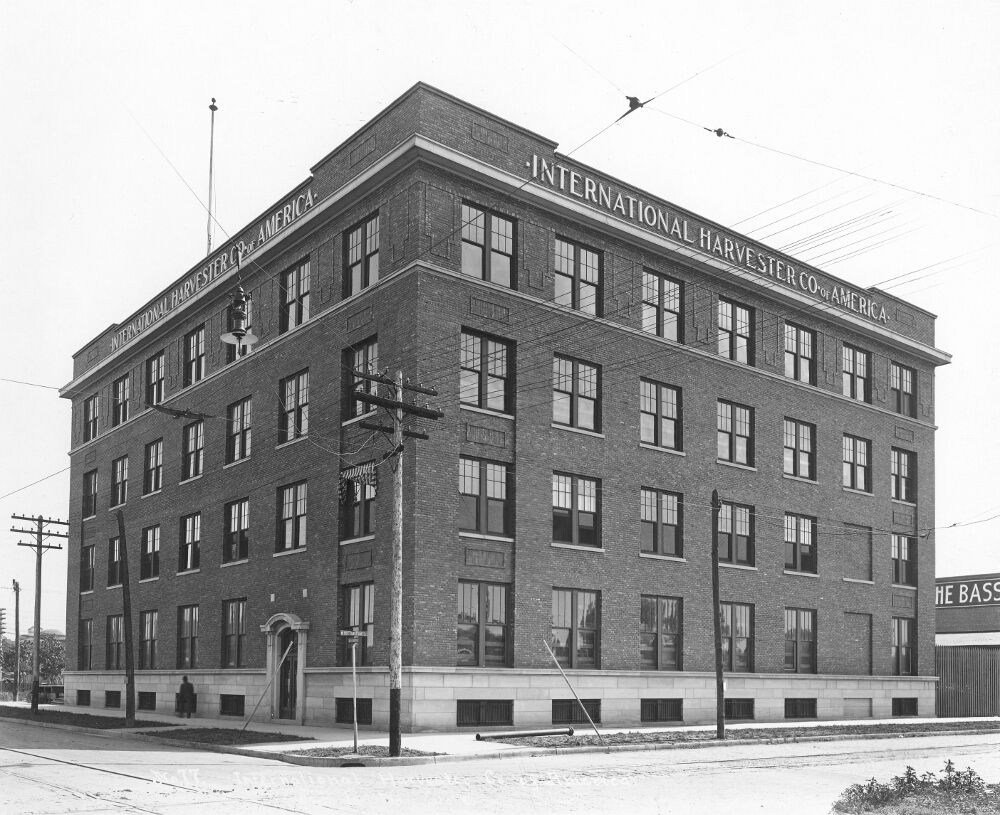
This building was targeted by demolition earlier because the convention center super-block was going there. Instead, that convention center super-block got moved to just about the only potentially worse site they could have come up with.
So why is the International Harvesters building still on for demolition? This is yet just another great old building coming down. This city is becoming demo-happy as it was in the 1970s. Deja vu. Anyone who claims to be pro-preservation is just offering up lip service.
I'm just not sure this city is interested in historic preservation, urban design, sustainable development, and quality environments. And the means in which this city throws slings at those things are ridiculously over-funded (convention center) and the means in which they claim to care about those things (streetcar, parks, streetscapes, etc) are ridiculously under-funded by comparison.
This building is in the C2S region. There is also a very good corridor of historic buildings along SW 3rd with great potential. It will also likely be leveled if certain folks have their way. I'm beginning to think C2S is a disastrous undertaking that should have never even begun, not for the bad it looks like it is going to do, and not even for the supposed good we were told would come out of it.
C2S is nothing but an urban planning folly and a sham at that.
Sunday, November 27, 2011
Incredible incompetency downs Automobile Alley project
Read more in Steve Lackmeyer's recent article about the stunning City Hall incompetency and misplaced priorities that downed what would have been a major development deal at Broadway and 13th. A large Houston-based development company that has had successful urban developments in Tulsa wanted to invest $38 million in Automobile Alley, giving it the jolt of mixed-use development it needs to continue growing.
The city shifted funds for a needed railroad quiet zone for land acquisition in Core2Shore. No wonder they started making progress on C2S so soon. We are now truly prioritizing this nonexistent area of the city AND convention centers above things that people actually want like TRANSIT and improvement to existing neighborhoods of downtown first.
This Cornett City Hall is loosing its luster every week. What it needs more than anything is for someone else to have another major success that they can take credit for again in order to retain popularity.
The city shifted funds for a needed railroad quiet zone for land acquisition in Core2Shore. No wonder they started making progress on C2S so soon. We are now truly prioritizing this nonexistent area of the city AND convention centers above things that people actually want like TRANSIT and improvement to existing neighborhoods of downtown first.
This Cornett City Hall is loosing its luster every week. What it needs more than anything is for someone else to have another major success that they can take credit for again in order to retain popularity.
Saturday, November 19, 2011
Here's a new culprit for you

Here's the thing that frustrated me about Bricktown: The amount of taxpayer dollars we have pumped into this tiny little district and the miniscule ROI that we have seen following that.
Basically it follows the exact same narrative of other public economic incentives that never work. Hey developers, we're going to throw an insane amount of cash your way by investing in this district so that your land values rise. Oh, but then we're not going to come in and direct development in ANY meaningful way at all. Corporate welfare + deregulation.
Nevermind that the PUBLIC made Bricktown, and now it has totally lost control over how that district develops. Quality standards have spiraled down hill. The Bricktown Suburban Design committee is a laughing stock. We can't even use the argument of "protecting the public investment (ie: the canal)" any long at this point. Bricktown developers and parking lords are out of control.
So there you have it, the concept of Bricktown as a failed Reaganomic dream. But why would we expect anything else? That's what the people of this city believe in. Furthermore, the woman that we put in charge of the Bricktown Suburban Design Committee is in the Bricktown parking business herself! She's also in the Bricktown land values squatting business herself.

This is the Rock Island Plow Building, at the corner of Reno and Oklahoma Avenue, overlooking the canal as well. This building, owned by Bricktown Suburban Design Committee Chairwoman Avis Scaramucci, is falling down on itself and is one of Bricktown's largest eyesores. Years have passed since Scaramucci bought this building. At the time we all hoped that she would renovate it, but I think we gave Avis too much credit at the time, and in reality she's probably just waiting to get a pay day from another interested buyer.
Does a single successful restaurant make someone the "Queen of Bricktown?" So far Avis has done nothing to prove that she wasn't one and done in terms of Bricktown development, and how did this get to be the person chairing the Bricktown Suburban Design Committee?
The problem with Bricktown is that we (the public, the city, MAPS, etc) probably invested TOO much in the district all at once. Districts don't develop instantly, yet Bricktown's land values skyrocketed as much as 300%--instantly. The development could never have kept up with that kind of a spike in land values. Therefor the people who benefited the most weren't developers that couldn't keep up, but rather property owners who could sit on properties--especially if they had enough in the bank that they could absorb the cost of long-term ownership, which sometimes included doing bare minimum improvements just to keep these buildings standing. Sometimes the bare minimum improvements actually do more harm than good in the long run, structurally and especially aesthetically.
Avis Scaramucci has embodied these problems and more, all the while getting credit as the "Queen of Bricktown" as though her leadership is all that's keeping the district together or something. Another common complaint with the district is that it is too bogged down with restaurants. Score another for Avis. Perhaps the biggest indictment is all this chumminess and lack of accountability. Maybe that's what there should be, after all.
Saturday, November 12, 2011
Really, Dowell?

I am beginning to question Rick Dowell's sense of taste. Apparently he finds the absolutely hideous Sheraton colors to be inspirational?? I don't know what else to say.
SandRidge's architects like to bulldoze a quarter of downtown but at least their new structures are architecturally acceptable, granted, the Dowell Center is a tough one to remake. The whole thing needs to be recladded, truthfully. It can be done. Look at this Indy skyscraper (One Indiana Place) as an example:
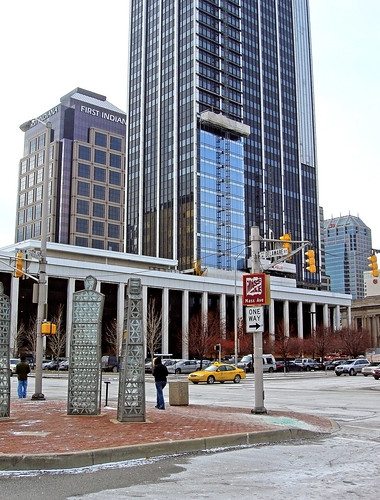
I really don't mean to be piling onto Dowell, who has done excellent work in the past. However, he doesn't understand the value of working with the community (which goes beyond just being stubborn), and this is just plain ugly. He was in cahoots with SR over the sinister demo plan for this??
My third-straight post under the label of "bad projects." But trust me, there ARE good projects out there.
Thursday, November 10, 2011
Worse than West End, more like off the deep end
Watch my years. Ten years from now, Bricktown will be nothing more than the redneck hub of downtown OKC. Mickey Mantle's and very few other upscale eateries will survive, yet they will be outposts of culture in a district dominated by metal green roofs, Bass Pro fishin shops, Toby Keith's crappy restaurant, more chains galore, House of Bedlam, and a BUNCH of highly-lucrative parking lots. The parking lots will unfortunately remain lucrative because rednecks will still be fooled into thinking Bricktown is somehow "classy" but nobody else will be fooled. The crowd at Mickey Mantle's will remain the "old days" when Bricktown was still only marginally tacky (ie., now).
The only good things that will give it a glimmer of hope (to transform into a real urban district) going forward is its proximity to Deep Deuce and the ACM. Did ACM make a bad decision in choosing Bricktown over Film Row or other downtown districts? How do they and other people TRYING to improve Bricktown feel about the grip of the parking mafia?
I think in a decade we'll see a Bricktown that, while not much different from today, is remarkably different in that it has chosen its path--that ambiguity of the district that led to constant debate/questions/hope about its future (what will it be? where will it go? etc) will be gone. It will be officially the red-headed step child of downtown OKC, but I hardly doubt it will matter. Why would OKCers miss the opportunity we HAD there when I envision Deep Deuce, Midtown, Film Row, and others will all outperform our wildest expectations.
Oh and hey, at least there might be hope for a real C2S district as well, after all.
The only good things that will give it a glimmer of hope (to transform into a real urban district) going forward is its proximity to Deep Deuce and the ACM. Did ACM make a bad decision in choosing Bricktown over Film Row or other downtown districts? How do they and other people TRYING to improve Bricktown feel about the grip of the parking mafia?
I think in a decade we'll see a Bricktown that, while not much different from today, is remarkably different in that it has chosen its path--that ambiguity of the district that led to constant debate/questions/hope about its future (what will it be? where will it go? etc) will be gone. It will be officially the red-headed step child of downtown OKC, but I hardly doubt it will matter. Why would OKCers miss the opportunity we HAD there when I envision Deep Deuce, Midtown, Film Row, and others will all outperform our wildest expectations.
Oh and hey, at least there might be hope for a real C2S district as well, after all.
BUDC votes in favor of aspiring parking overlord Chris Johnson
The Bricktown Suburban Design Committee is absolutely pathetic. Not a whole lot that's new there, but it is what it is. The bar is now officially set so low it's even lower than Lower Bricktown.
We now have a parking "garage" (basically one elevated level of parking) overlooking people and canal taxis as they pass the canal. A surface parking lot would be better. This "garage" will essentially be a surface parking lot raised above the canal.
Does anyone even take pride in this city even more? This spot of land possibly had more potential than any other plot in downtown. Since when did we just start passing sub-par suburban developments in BRICKTOWN, surface parking and all? Pathetic.
Bob Bright is a joke. Someone who has to ask whether Wanda Jackson Way is an alley or a road is a joke, especially if they were somehow appointed to serve on the committee overseeing urban design in BRICKTOWN. The others who approved this development (ALL except Tom Wilson) are also just as pathetic as this development, except also spineless.
Stay tuned and I'll tell you how I really feel at a later date.
Avis Scaramucci and Phil Miller, where were you guys, why didn't you vote? Do you all care to prevent what is happening to Bricktown, or is urban design (the name of the committee you sit on) not important after all for an "urban" district?
We now have a parking "garage" (basically one elevated level of parking) overlooking people and canal taxis as they pass the canal. A surface parking lot would be better. This "garage" will essentially be a surface parking lot raised above the canal.
Does anyone even take pride in this city even more? This spot of land possibly had more potential than any other plot in downtown. Since when did we just start passing sub-par suburban developments in BRICKTOWN, surface parking and all? Pathetic.
Bob Bright is a joke. Someone who has to ask whether Wanda Jackson Way is an alley or a road is a joke, especially if they were somehow appointed to serve on the committee overseeing urban design in BRICKTOWN. The others who approved this development (ALL except Tom Wilson) are also just as pathetic as this development, except also spineless.
Stay tuned and I'll tell you how I really feel at a later date.
Avis Scaramucci and Phil Miller, where were you guys, why didn't you vote? Do you all care to prevent what is happening to Bricktown, or is urban design (the name of the committee you sit on) not important after all for an "urban" district?
Subscribe to:
Posts (Atom)