Thursday, February 19, 2009

The problem with the Upper Canal

I was writing a response in a thread over on OkMet about extending the Bricktown Canal to the Myriad Gardens (a GREAT idea in my opinion) and I was harmoniously letting my feelings flow onto the keypad of my laptop when suddenly I realized just what the problem with the Upper Canal is. Without much further ado I'll just post what I said over there.


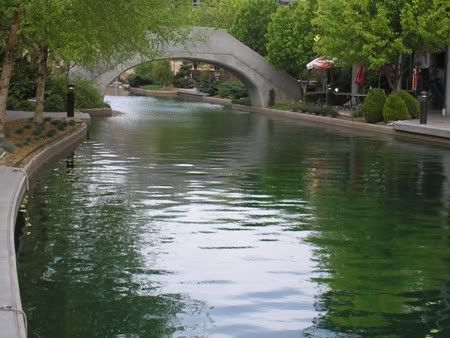
Here the water just compliments the pedestrian path and makes it interesting, provides nice views. Instead the Bricktown Canal has the freeway mentality: the path on the side is kind of like a feeder road while the canal is the main draw. It should be the other way around..in fact I wouldn't be opposed to not doing the water taxis anymore, especially if they should ever stop being profitable. But I am still totally in support of expanding the canal through the downtown area. That probably explains why a lot of the canal-front property has never been finished, despite all the potential.


"Money Machine"

This should be pretty common sense. But believe it or not, streetcars are being hailed a "money machine" for building cities. Urban development follows the transportation investments, and in almost every instance of a city getting serious on putting in light rail (LRT), streetcars, commuter rail--whatever as long as it's not the cheapo scam known as bus rapid transit (BRT)--a major explosion in urban development has followed these transit lines. Whether the city is as big and hopelessly sprawled as Phoenix, AZ..or as small and quaint as Charlottesville, VA, this is is a trend that has proven true. Rail transit is the way to go, and the investment will be more than worth it in the end. There is no reason for OKC and Tulsa to not be BUILDING (not planning or intending to plan) a better transit system right now. We've been talking about this for years now. In OKC we've been trying to get light rail in downtown for over a decade now when it was originally included in MAPS 1 (and I bet we all wish we had gone ahead with light rail back then).

What you have here is a system being put in Charlottesville, VA, population 45,049. The orange is streetcar, which connects UVA to downtown Charlottesville all the way across town. Not even kidding here. So if a picturesque Appalachian college town can do light rail or streetcar, WHY CAN'T WE?? There are well over a million people in the Greater OKC Area. If we got serious about a full-fledged system and broke ground in a week on one, there would be at least 1.5 million in the Greater OKC Area by the time the starter lines were all finished. How many highway projects will we have spent billions of dollars on by then?

Not convinced? Then read this. Last month at a transit symposium in Dallas (and trust me, Dallas transit symposiums go the same way as ones in OKC go, where consultants start off by boldly telling them their city stinks) a writer for the Dallas Observer, Jim Schutze, wrote the following:

"Streetcars did come up. The former mayor of Charlottesville, Va., home of UVA, spoke and talked about how they are the smallest city in the country with a planned streetcar, apparently from the The University of Virginia campus to a downtown area. He said the streetcar won’t be on the ground for another seven years, but, because developers believe the city means business about it, the values and actual redevelopment along the planned route have gone through the roof, a point he illustrated with some amazing photos. Strictly from a development and tax base perspective, a well-placed streetcar line looks pretty much like a money machine."
IN a city with the famed DART system and the Trinity Railway, arguably a transit brightspot in the middle of the Sun Belt, they still realize they have a long ways to go. They have brought in some people who have done incredible things with transit. I think it's incredible for a city of 45,000 people to be doing streetcars. I think it's even more incredible that for this city of 45,000 it is still so true that density will follow the transit investments. There is no need to wait for an area to achieve a certain level of density before even reluctantly deciding to go forward with rail. You just pick an area that you want to see built up and you be proactive by shaping growth yourself AND not letting growth shape your transit network (that would be reactive planning).

The Cold.

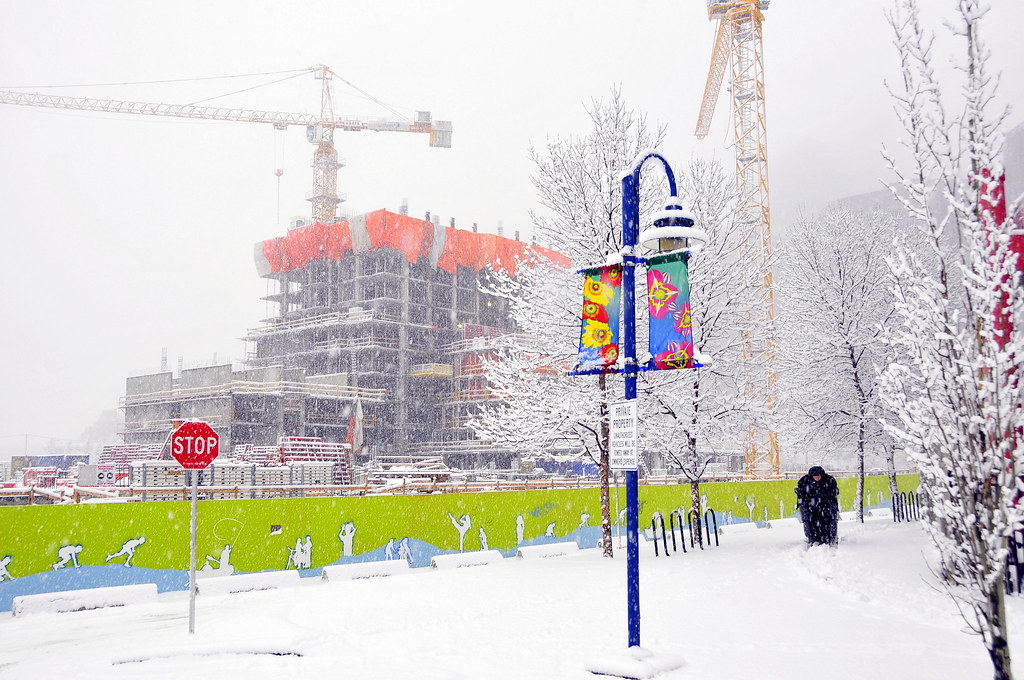
I have never known such cold, nipping wind, and incessant snow..as what we saw all of January and the first half of February here in Calgary. Yes..it's Canada, I knew that. But it wasn't supposed to get like this, I was told. Everyone around here says this is the worst winter in quite a while. To illustrate..I give you a photo of a grandma out on the Waterfront for some reason, wearing a babushka and pushing a cart. And like typical Calgary, construction moves forward at a fast pace on all of the projects around the city and people go out and brave the elements day to day. It's not bad--it's just a different lifestyle for sure than Oklahoma. One where you have a new appreciation for summer, triple digit heat, and all things Global warming.

Saturday, February 7, 2009

Faux New Deal..what does it mean for us?

What we need is a stimulus. $780,000,000,000 sounds like a lot of dough, but fortunately we're only talking in American dollars. I'll break it down, dollar-by-dollar..

  • Tax cuts ($275 billion)
This will include a $2,500 tax credit for higher education. Wow. I seriously doubt that this will actually provide very much significant relief for students paying their way through college. My parents paid over $20,000 for my first two years at OU, not including the house I shared with a few friends my soph year. How does a $2,500 tax credit begin to help my parents whose investments have tanked in the last year? Are these people serious? Also includes a $7,500 tax credit for first-time home buyers. This is basically the same as a government-issued ARM. We went after all of the banks who issued ARMs, but now we're going to do the exact same thing for the good of the economy. We're going to tell the newlywed 20-something couple that should really be renting for now to go ahead and buy that new cookie-cutter home out in the burbs even though they can't afford it in this economy, because we're going to give you a one-time tax credit on $7,500 that will expire after this year. Talk about promulgating the cause.

  • Education investments ($141.6 billion)
$120 billion in blank checks to school districts to essentially do whatever they want with as long as it can fall under the following categories: preventing cutbacks to key services, using existing federal formulas, meeting key performance measures, and my personal favorite--providing high-priority needs such as safety or critical needs, which may include education. The rest of the 141.6 goes into increasing the Pell grant by $500 (as if a majority of the population will ever see a penny of that) and "modernizing education" whatever that means. I wish someone would explain "modernizing education." I didn't realize it was education that was clearly still in the stone age. In that case, someone, please bring us out of the stone age!

  • Health care investments ($112.1 billion)
Obama has actually been so open (a rare thing for him) to allude that this will be needed in order to prepare America for government health care. I really think it might be time for America to have socialized health care, because the current system has left plenty uncovered and we know how tragic it can be when that happens in the most dire situations. Thinking prudently, we as a nation spend way more of our GDP on health care than any other western nation. Thinking principally, today we live in a world where society must be able to provide the following basic needs for its people: food, shelter, and now..medical care. Because of the exponential rise in medical costs due to unnecessary litigation, you won't get medical care unless you can afford the risk you represent to the current system. That needs to change.

  • Welfare programs ($102 billion)
This is mostly to cover the expected increase in welfare programs. The largest portion is to go towards an increase in unemployment benefits, the rest will go into Food Stamps and additional Medicaid insurance.

  • Infrastructure investments ($90 billion)
This is the small portion that is supposed to stimulate the economy and is creating all of the jobs Obama says that we'll need, or else. This is also what James Inhofe, not exactly my favorite Senator, was alluding to when he said the stimulus is 93% spending and 7% stimulation (which is the bizarre kind of statement only our beloved Senator Inhofe could make) which sounds like something a Sex-Ed-teacher-turned-Economic-Advisor would say. But I think he's spot-on in a way: So much money is being spent, but so little of it is actually intended to "stimulate" the economy. The federal breakdown is $31 billion for bringing infrastructure up to energy standards, $30 billion for highway construction, $19 billion for public works, and $10 billion for rail. To which I say.. you have to be kidding me, right? I would think that Obama of all politicians would understand the negative impact on urban planning and the entire nation for that matter that highways have inflicted, and in order to get out of this economic slump, we are to build more?

Oklahoma is only going to get $465 million of this $90 billion..that would be a big in-your-face for voting against Obama by the widest margin. We, the 28th most-populous state, are recieving 1/180th of this money. Is nobody up in arms about that? What can we even do with $465 million? That would build us like, one freeway. And you can forget any rail coming out of this. Tulsa and OKC are going to fight till the death for the money to put it to good use, and then they'll rise up and realize the Turnpike Authority gobbled it up. Phil Tomlinson, the director of the Turnpike Authority, has already told us where we can expect every penny of it to go: widening the Creek Turnpike and the Kilpatrick Turnpike. Phwew, because that will help with those nasty traffic jams that plague the Kilpatrick Turnpike.

  • Energy investments ($58 billion)
Most of this is to go toward funding an electric smart grid. I don't even know what that is, and neither do 99.4% of the population, so I'll just skip this. If Obama told me without this we would be living in the dark for 20 years, I would believe him and send frantic emails to my family's congressman.

  • Telecommunications investments ($3.85 billion)
Wireless broadband deployment grants, broadband data collection, and DTV-to-analog converter boxes. 1, I thought Al Gore already invented the Internet; and 2, I thought we already funded the DTV conversion? There isn't the possibility some of this is redundant spending? No way!

What a rip-off.

Demographics of "great cities"

I thought I would point out a few cities that would dispel the theory that great cities have great statistics backing them up. In fact, in several instances, great cities have pretty average statistics backing them up. The following information is from CityData.com. I've compared back-to-back Portland, Charlotte, Austin, Omaha, OKC, and Tulsa. They're all pretty similar, in fact no city has a clear advantage over any other, except in population, where Portland is clearly a lot bigger than Omaha and the rest just fill in the spaces. I was especially surprised by how high crime is in Portland and Charlotte.

Portland, OR


Metro population.. 2,159,720
City population.. 575,930
Population change 1990-2000.. 21%
Population change 2000-2007.. 24%
Daytime population change.. +121,743/23.0%
2000 crime index (avg is 320.9).. 636
2007 crime index (avg is 320.9).. 497.3
Poverty.. 15.1%
2007 unemployment.. 4.7%
Per capita income.. $22,643
Median house/condo value.. $257,300


Charlotte, NC


Metro population.. 1,897,034
City population.. 671,588
Population change 1990-2000.. 73.2% (540,828 - 395,823)
Population change 2000-2007.. 20.9%
Daytime population change.. +114,655/21.2%
2000 crime index (avg is 320.9).. 677.1
2007 crime index (avg is 320.9).. 648
Poverty.. 12.4%
2007 unemployment.. 4.1%
Per capita income.. $29,825
Median house/condo value.. $255,032


Austin, TX


Metro population.. 1,598,161
City population.. 743,073
Population change 1990-2000.. 39.1%
Population change 2000-2007.. 10.5%
Daytime population change.. +127,328/19.4%
2000 crime index (avg is 320.9).. 441.7
2007 crime index (avg is 320.9).. 467.1
Poverty.. 17.5%
2007 unemployment.. 3.5%
Per capita income.. $29,825
Median house/condo value.. $195,200


Omaha, NE


Metro population.. 829,890
City population.. 432,921
Population change 1990-2000.. 16.1%
Population change 2000-2007.. 11%
Daytime population change.. +76,558/19.6%
2000 crime index (avg is 320.9).. 524.3
2007 crime index (avg is 320.9).. 428.5
Poverty.. 14.7%
2007 unemployment.. 3.1%
Per capita income.. $21,756
Median house/condo value.. $126,600


Oklahoma City, OK


Metro population.. 1,262,027
City population.. 537,734
Population change 1990-2000.. 15.3%
Population change 2000-2007.. 8.1%
Daytime population change.. +94,645/18.7%
2000 crime index (avg is 320.9).. 677.4
2007 crime index (avg is 320.9).. 565.8
Poverty.. 16.2%
2007 unemployment.. 4.4%
Per capita income.. $19,098
Median house/condo value.. $122,700


Tulsa, OK


Metro population.. 955,643
City population.. 384,037
Population change 1990-2000.. 7%
Population change 2000-2007.. -2.7%
Daytime population change.. +74,836/19.0%
2000 crime index (avg is 320.9).. 600.6
2007 crime index (avg is 320.9).. 683.0
Poverty.. 14.1%
2007 unemployment.. 4.2%
Per capita income.. $21,534
Median house/condo value.. $110,200

2 posts you should check out


For those of you that don't frequently read imageNative America (Blair Humphreys' blog) and OKC Central (Steve Lackmeyer's blog)..as if anyone doesn't read those blogs..these are two posts that you should read. 1, about the aerial evolution of Bricktown from a Google Earth perspectus, and 2, a COTPA self-examination pop quiz. Put yourself in COTPA's shoes..how would you like it if you were the joke of the town?

Thursday, January 29, 2009

Cityshot X


Corner of Robinson & Sheridan, downtown OKC. I love the Colcord Hotel, great example of Sullivan School architecture.

Digesting the digest

Earlier in my post on OKC's new urban style.. an architectural digest I didn't label the pictures, leaving everyone confused if they don't know what every building in OKC is. So I'll take the time to do so as I should have in the first place.

Please refer back to the original post by following the above link. You probably know most of them, so if there is one you don't know you can probably find the one above it and locate it on this list.

1 East Village, a mixed-use project in East Norman
2 The OU's Children's Hospital finishing up construction right now in OKC
3 Fred Jones Jr Museum of Art @ OU in Norman
4 Looking down Harvey at the downtown library and the Galleria Parking
5 Crystal Bridge in the Myriad Botanical Gardens in downtown OKC
6 The former Hertz Financial Center on Northwest Expressway
7 Sam Noble Museum of Natural History @ OU in Norman
8 The new OKC Federal Building, downtown
9 Proposal for the Heights on 7th in Midtown OKC
10 Proposal for Maywood Hall, downtown OKC
12 The Stage Center in downtown OKC
13 Core2Shore prospective illustrations
14 New design schemes for Ford Center
15 Momentum Market, downtown OKC
16 OU Boathouse, Oklahoma River
17 OCU Boathouse, Oklahoma River
18 UCO Boathouse, Oklahoma River
19 Core2Shore prospective illustrations
20 Gardens at the American Indian Cultural Center, Oklahoma River
21 SkyDance Bridge over I-40 in Core2Shore
22 Proposal for OMRF's new building at the Oklahoma Health Center
23 Scultpure designed by Anthony McDermid at Maywood Park
24 Proposal for the Candy Factory renovations, Bricktown
25 OU Cancer Research Insititute, OKC
26 "Lincoln streethouse" personal residence in OKC
27 Proposal for new OKC Chamber building, downtown
28 Nonna's Euro Ristorante, Bricktown
29 Proposal for The Flatiron, downtown
30 Underground in downtown (the renovated Conncourse)
31 Proposal for Block 42, downtown (completed)
32 Proposal for Lofts @ Maywood Park (well under construction)
33 Proposal for the Carnegie Lofts in the old downtown library
34 Proposal for Dean McGee Eye Institute in Okla. Health Center
35 LiT nightclub, Bricktown
36 POPS east of Edmond on Rt 66
37 HGTV-featured interior design at Doc Blue's pad, Bricktown
38 RED Prime Steakhouse, North Broadway
39 Chesapeake Boathouse, Oklahoma River
41 Welcome sign at Will Rogers World Airport
42 Boldt Engineering Regional HQ, Broadway Extension @ Hefner
43 Devon Tower atrium, downtown
44 City Rescue Mission, west of downtown
45 Proposal for Central Avenue Villas, downtown (just completed)
46 New office building for Kilpatrick Oil Company, N Western @ Britton

Hope this clears it up for everyone.

Wednesday, January 28, 2009

Pearls of urban widsom

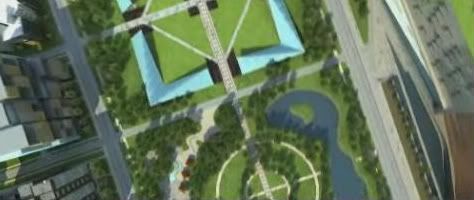
While OKC has Core2Shore, Tulsa is developing long-term plans for a neighborhood that has the potential to rival private development in OKC's C2S area. It has no NBA arena, no artificial waterfront, no convention center, and no Big Dig. It does have a Central Park (in fact that's the actual name of the park), even though it's much, much smaller than the yet-to-be-named central park plans for Core2Shore. It does call for alternate civic investment however.

The Pearl District's main organizer, developer Jamie Jamieson, has been talking to city leaders about what must be done to make this neighborhood Tulsa's version of Bricktown. You might not see it, but many visionaries definitely do. Recently finished plans call for moer improvements made at Central Park, a new canal, and an extensive pedestrian streetscape. Some streets may even be closed to vehicular traffic in order to foster the best pedestrian environment.

In all honesty, this is really a "bare-bones" revitalization proposal. The canal is absolutely necessary because the entire low-lying area is in a flood plain. There will be no development, period, without the canal.

The streetscape is necessary because the roads are completely crumbling and sidewalks are all torn up. The sidewalks are going to be necessary because we can not build a decent urban neighborhood without putting focus on the pedestrian environment. Blair Humphreys has an entire blog practically devoted to walkability in Oklahoma (a good read), which is not very good. Last year out of 500 cities ranked for walkability, OKC came in dead-last and Tulsa came in at 409. The Pearl District is going to be Tulsa's answer to the pedestrian crisis in Oklahoma.
You may be asking, what makes this different from other areas in Tulsa? Downtown Tulsa? Brady or Blue Dome? Cherry Street or Brookside? Even Uptown? The difference is that this is going to be a new urbanist neighborhood, whilst the rest of Tulsa's "urban" neighborhoods are just urban by 20th century standards. You still really need a car in order to navigate Brookside, and Uptown doesn't exactly scream bold modern architecture. In fact, I'm not quite sure what kind of architecture Uptown is supposed to be (other than something severaly in need of renovation).

But is it for real?
The bottom line for these types of visions is execution. We've seen especially in Tulsa that planners can dream and dream and nothing will ever happen. Along 81st Street (yep, not 71st Street) there are rumors of former plans of an actual monorail system linking 169 and the Oral Roberts/CityPlex development. OneOK Tower was supposed to be 60 stories tall. We all remember the Tulsa Channels, the Greenwood chamber's redevelopment proposal, Franklin Square, the proposed high-rise Westin on the Towerview site, Global Development's huge East End proposal, and the list goes on and on. I even have a post dedicated to failed Tulsa proposals, where I start out borrowing a line from Vegas: In downtown Tulsa, what happens on the drawing boards, stays on the drawing boards. Clever, right?

The Pearl District however, is for real. We know this not because Mayor Taylor has shown interest in helping (definitely not from that), but because there is actual development going on in the area right now. Jamie Jamieson is building The Village at Central Park, which is a large community of urban brownstones being built in piece-meal style (so far about 50 built, but many more planned). Pearl Place is a historic warehouse being renovated into a retail strip (this project was actually designed by an architectural firm that recently relocated to the Pearl District).

Neighborhood organizers along with city planners just finished the masterplanning for the revitalization push that is about to be underway. There is no funding yet for these proposals, but we may see the Mayor's office come up with something. The project has had it's fair share of press, from the Tulsa Whirled and news channels. There may be too much community involvement for the plans to get shelved at this point, and unlike with other proposals, nobody is speaking out about how horrible the proposal is. Perhaps they've uncovered a winning plan to muster public support for winning back the inner city: muster urban activist support and efficiently organize supporters long before anything ever goes up for a vote. As opposed to the failed Randi Miller/Bill LaFortune plan: just randomly announce a plan, tell people "Oh, and this is going to be voted on tomorrow," and let the two sides battle it out and call eachother names until it fails and people in OKC laugh at how sad Tulsa is. No pearls of urban widsom in that.

What the Pearl activists have put together is a package probably designed with suburban opposition in mind, and they've clearly outsmarted it. The canal can be stuck on a ballot and labeled "flood detention project, east Tulsa" which would have a higher likelihood of passing than "Pearl District urban tourist canal." A whole streetscape, even a pedestrian mall could just be stuck on a ballot labeled "road improvements, E 6th Street and Peoria." No need to get too specific, you might offend someone from South Tulsa, or City Councilman Roscoe Turner aka Really Old Dude on City Council.

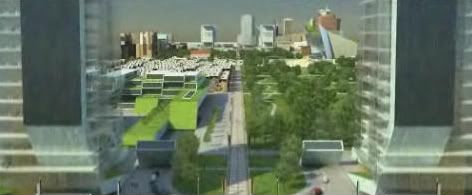
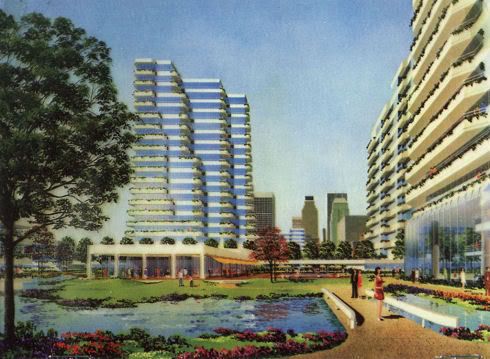
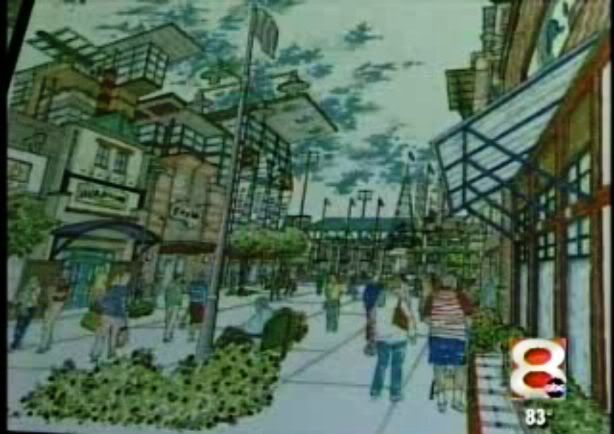
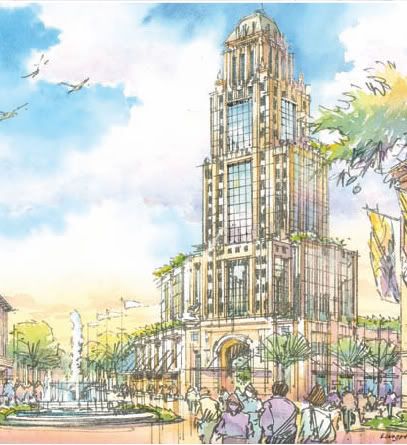
While they can make these proposals seem modest, you be the judge. Here are the actual renderings I snapped from a newscast last week.

current
proposed


current (recently completed)
proposed

Extra..


Kind of a cool deal for T-Town.

Sunday, January 25, 2009

Cityshot IX


When I came back home for the Christmas break, I journeyed down to Lawton (where my dad resides, retired from the police force there). I was also going to use Lawton as a subject for a large project I had in a city planning class of mine at U of C. The idea is to identify a neighborhood for historic preservation within set boundaries and determine the challenges for this particular area while also advocating how it could better be preserved. I don't know how anyone could be handed a question like that and not automatically think of Lawton, Oklahoma..probably next month when I've finished this project and received a grade on it, I'll post it in full on here including the pictures I took for it (if I post before then, though, it could look like I'm plagiarizing the Internet). For now I'll just say I sat down with City Planning Director, Rich Rogalski, and learned quite a lot about downtown Lawton, and also met with some architects who helped with the Fort Sill preservation. Obviously Lawton's situation is unique, as a urban renewal-aspiring army town that already tore down pretty much anything worth preserving in the 60s. The challenges are high, but the potential is higher. Good stuff, and I look forward to posting it up.

Wednesday, January 21, 2009

Crime falls in many of nation's largest urban cities


Crime has been a defining struggle of urbanization in America. As such, it has claimed the lives of thousands and the expense of billions of dollars. It is on everyone's mind. How to prevent it, how to get away from it, how to survive it, and how to get away with it. There are those of us that believe it will always be around, and those of us that believe it is caused solely by economic inequality. Crime rates fell in urban cities every year since 1993, throughout the Clinton years, and America celebrated the lowest crime rates in a generation.

However, according to the LA Times in 2001, crime surged in urban cities. Number of homicides that LAPD reported went from 479, to 520. In Chicago, the number went from 567 to 598. In Phoenix it surged from 172 to 220. One city that bucked the trend, however, was New York, where excluding the dead from 9/11, NYPD reported 559 homicides, down from 620. A criminologist at Carnegie Mellon University reported, "There doesn't seem to be a clear trend anymore."

The breakdown of a clear national trend among urban cities begs the question, what was Rudy Giuliani doing that successfully cracked down on crime in New York, that those in LA and Chicago weren't? Plus, the fact that crime has fallen dramatically in New York is a bigger deal because more people live there (8,274,527) than in LA, Chicago, and Phoenix combined (8,238,296) although the loosing trend does include many more cities than just those 3.

In 1991 the national homicide rate was 9.8 murders per 100,000 people; in 2000, when the Bush administration took over, it was down to 5.7 per 100,000, bringing it down to levels seen back "in the good old days" of the late 1950s and early 1960s.

According to the National Crime Victimization Survey, violent crime rates have fallen consistently every year since 1993, when there were a total of 4,190,000 violent crimes. In 2005 there were a total of 1,823,400 violent crimes, which shows dramatic improvement over a 12-year span. The trend has continued to today, with the exception of a brief uptick between 05-06.

Indeed, overall when it comes to crime, the Bush years were just as good as the Clinton years for urban cities. However the one marked difference between the two 8-year periods is that during the last 8 years we've seen a major breakdown of established trends from city to city. The crime trends vary uniquely for each city now, whereas they really didn't earlier.

Monday, January 19, 2009

To put things into "Calgary perspective.."

If any city gets cocky and thinks they're booming, all I have to say is check out Calgary. That will put things into perspective quickly.


Future + Existing

Existing

Is Core2Shore enough of a priority?


We know that this is OKC's big plan for reinventing itself. We know that everybody is excited about it, and we know that nobody can wait for work to get started on transforming OKC into a cutting edge metropolis. There's a mentality (as you can see in this post) that C2S is more of a long-range, hundred-year plan that will evolve over time. Honestly this mentality scares me a little. It is 2009, and in Dubai mankind has just built a tower that is 2,700 feet tall. 100 years ago the advent of the elevator allowed us to build towers taller than 15 stories..it was a marvelous day. Here in OKC we have a masterplan of a few blocks south of downtown that we plan to revitalize as our legacy for the next 100 years and somehow we expect this to keep us ahead of the pack? What the hell are we smoking?!? If we close our eyes and envision cities of the future, can we even expect our visions to be even close to how impressive and remarkable these cities of the future will be? Hopefully, not. But in OKC we certainly can. As long as certain people anticipate that C2S is a 100-years legacy sort of project, we can close our eyes and almost perfectly envision what OKC will look like. Devon Tower will have done more for our city than C2S to be hones.


The stunning architecture aside, there is no way that we can legitimately expect C2S to not come to fruition until 100 years. Metro OKC builds 3,000 new homes a year. In 1 and a half years OKC would knock out all of C2S if we focused all of our residential demand there. At a reasonable rate of 300 units a year, we could expect build-out of C2S in under 15 years, but we all know that if everything is done with the highest level of quality, it will take twice as long. Still, not 100 years. This is if we were serious about it and all. The bottom line of course is that C2S is a daring plan for an area of downtown about 7 blocks deep that is currently nothing but blight. It draws its potential from being located between the revitalized Oklahoma River and the booming downtown area. When we begin to look at C2S in a different light as our official 100-year masterplan, we suddenly take a pretty cool community development plan and turn it into a very lame and overhyped long-term proposal. Trust me, C2S is not long-term worthy.

To put it differently, how would you feel if you were told that I.M. Pei's proposed revitalized downtown was to be a 100-year masterplan? You would probably feel a little underwhelmed. When it's all said and done, we rightfully lament everything that our 1980s predecessors did. But there is one thing that can never be taken from them: They had a very grand plan, and they set out to make as much of it come to fruition as possible. They turned downtown into a maze of construction zones for a short period. Their slogan was out with the old, in with the new. The sure got the old outta here. They got a lot of the new in, too. We have them to thank for the Century Center, Cox Convention Center, Oklahoma Tower, Corporate Tower, Kerr-McGee Tower, Leadership Square, Myriad Gardens, and so on. We even have them to thank for the Devon Tower in a roundabout way, because the land Devon will be built on was originally cleared by none other than them. We also have them to thank for the nail in downtown's coffin. But we've moved on from that, and downtown is very alive today. But one thing is certain: if ONLY I.M. Pei and city planners in OKC had a little more respect for our city's old buildings, we would be praising them, not lamenting them. And if they had sat around and waited nearly as much as we have today on all of our grand plans for downtown, none of anything they ever talked about would have become reality. Instead they got serious and made most of their plans happen before the oil bust came and sent them all into bankruptcy for daring to build a modern city.

Today we talk about wanting to build a modern city, while keeping all of our remaining beautiful old buildings in tact. Are we ever going to do it? This is the bottom line: The economy is horrific right now, but soon credit is going to loosen up and there will be a lot of money for projects, and a lot of that money will go to markets that lenders can be confident in, namely OKC. A rare opportunity is coming up for OKC to build a modern city once and for all, something we've been trying to do for the last 50 years. OKC should have paid to build light rail years ago. Now is the time for action. As soon as the Ford Center improvements tax expires at the end of 2009, the one-farthing tax should be extended for another 10 years to pay for miles of RAIL streetcars, as well as the grand park in C2S (although to be sure, a lot of it will be funded from the 2007 public bond issue), the new convention center we so desperately need, further riverfront improvements, and a district-wide streetscape. We should be so fortunate to have such a brilliant masterplan in hand! But we should be able to compete with other cities, especially those that are considered "Tier 2" cities (i.e., Pittsburgh, San Antonio, Kansas City, Minneapolis). We'll never compete well with them if we don't research carefully what these other cities are doing. Do we honestly expect them to not have similar plans to reinvent themselves? They do. They all do.

Review of the last 8 years..

For a while now, the poll on the left hand is going to ask your opinion of how you feel the first 8 years of 2000 have gone for urban areas. It will be interesting to determine in which areas we've made improvements, in which areas we still have a lot of improvement to make, and in which areas we've regressed. Before going into this I will admit that my perception is that we've probably made significant strides in urban areas. We've cleaned up a lot of ghettos and revitalized almost every major urban core. We're a much better nation for the last 8 years. We may have the war, the economy, and China to worry about, but we can at least be sure, I think, that our cities are greatly improved places. But we'll see what the data says once we take a closer look.

Monday, January 12, 2009

Arena talk: Wichita

I was browsing competing urban chat boards; one that I frequently browse and have about 500 posts at is KCRag.com, which specializes mostly in the proper method to get away with smoking a joint in public in Vancouver. Which is funny because I would never have imagined it to be that hard! But for those of you that are normal (the rest of us), you'd probably find some of the details of Wichita's slowly progressing arena project to be the most interesting thing. The reason you'd be interested in this is because if you've read Steve Lackmeyer's blog you saw how Wichita is a model of downtown accessability that OKC can follow. Although to be fair, Steve did mention the crime problem in Wichita's Old Town. What's recently surfaced is this:


The above are perfectly decent historic buildings. They're beautiful in my opinion, and could be anything. "OKC logic" tells us that these 2 buildings would make perfect lofts, offices, or a night club with a coffee shop on the street (or not). And I checked in the Wichita Eagle archives, the buildings are not structurally defficient. However, "Wichita logic" is telling them that the land would be best used for the right mix of grass that is absolutely necessary to complete this beauty of public works:


Perhaps the ugliest arena project I've seen about to break ground ever. Anyway, if you'll notice in the back they've saved a historic building and incorporated it into the site plan. Those are lofts that are already restored. On that street corner right next door to the lofts are where these two buildings are that are being bulldozed for the arena project. They are indeed bulldozing these beautiful historic buildings to replace them with grass, and nothing to do with an actual arena. I just thought it was interesting how another city is about to commit a travesty that they'll probably regret in the future, especially in light of both Oklahoma's cities putting a lot of focus on their downtown arenas.

Keep Austin, what?

You've all heard of Keep Austin Weird. I even own a t-shirt. But now from Austin's conservative suburbs, comes this. Make Austin Normal and Keep Austin Corporate. It's hard not to understand the point of Make Austin Normal, explained as: "Let's see, do I want 30% off a best selling book at Barnes and Noble or do I want to pay full price at Book People? Dude, chain stores rule."

I love Barnes & Noble. I love Full Circle Bookstore even more.

Sunday, January 11, 2009

The Sooners

Son of a bitch. Well at least now we can get back to talking about urbanism.

Sunday, January 4, 2009

Ask Nebraska about OU's bad defense..

Tim Tebow can't wait to go up against OU's defense. That's funny. Nebraska, and a lot of teams OU played this year, couldn't wait to get away from OU's defense. "Oh the humanity!" was all Nebraska fans could say after the first 6 minutes of the first quarter. After that Husker Nation had only one serious question on their hands: Was that just the worst beating we've ever gotten, or not? OU's message to Nebraska: No Sooner Magic needed.

And everyone knows Florida's defense is much better than OU's. After all, they're in the SEC. But, what if the offensive production allowed isn't the best indicator to go by? Florida had 837 total tackles during the regular season, which is not bad. OU..908. Florida had 272 tackles for a loss. OU..a mere 430. Florida had 31 sacks. OU..42 sacks. This is how the defenses compare head-to-head. OU plays in a tougher conference, with ALL 4 of the nation's top QBs; Sam Bradford, Colt McCoy, Graham Harrell, and Zack Robinson.

OU killed opponents by forcing turnovers often and early. With one of the greediest defenses in college football, OU's defense focused more on forcing turnovers and then scoring before the offense could even take the field. Not that most everyone hasn't heard of OU's no-huddle offense. Unstoppable is the word many have used to describe it. No modern program until now has ever scored 700 points in a season, or scored 60+ in 5 straight games. If you don't believe that, take it from Mizzou's Jeremy Maclin: "Are you kidding me? That offense is unbelievable." Unbelievable, works too.

Still not convinced? Then take it from Texas Tech's Mike Leach. After waiting in line for his 65-21 drubbing, OU had his #1 vote in the bag. In the press conference after OU's win over Tech, Stoops was asked if he had a Heisman winner in Bradford. His response: "Absolutely."

But, why is this team so good? Undoubtedly, it has much more to do with the chip-on-shoulder attitude that OU is playing with, than with Heisman QBs, no-huddle offenses, 65-21, or even 42 sacks and 32 turnovers. Each of OU's infamous 4-straight BCS losses came in games that OU should have won. Picked heavily over LSU, favored over much-hyped USC, come on..Boise State, and West Virginia was a program in anarchy. Can you say BCS funk? The sign plastered to the wall in the OU locker room says 48-28. That says it all.

Nice to see Oklahoma growing from afar

My apologies for my prolonged absence during the last 3/4 months. I appreciated everyone who occasionally read my blog, and especially those who occasionally commented. I promise I'll make up this drought by dropping more posts from time to time. Who would have thought switching to a more rigorous Architecture School and being a thousand miles away from OKC would have resulted in less free time to blog about Oklahoma?

However, not that even in the wintery land known as Canada can we escape Oklahoma's surging prominence, especially every time we turn on ESPN. The NBA ended up being just the shot in the arm that we needed (ok, maybe not). What a way for the Thunder to do something notable by vying for the highly-coveted title of Worst Franchise Ever! And if you don't think that's notable, which do people talk about more often: the Detroit Lions, or the Cincinnati Bengals. The record currently stands at 4-30; that is 4 wins, and 30 "moral victories" (we don't call them "losses" anymore, it's like it's the Special Olympics all-of-a-sudden). And I don't blame Scott Brooks at his Thunder post-game press conferences for wanting to change the subject to OU football. David Boren needs to issue a formal statement for his schoolapologizing for stealing the NBA's "thunder."

On the bright side, OU is at the same time highly underrated and on the verge of becoming the program of the decade. Of course it doesn't hurt that OU is probably the program of the year, with football being ranked #1, and at the same time basketball being ranked #4. OSU athletics, too, are showing signs of joining the big-leagues with all of their investment in athletic facilities. Even OSU football was once ranked #7, during a 3-week period that the State of Oklahoma had two teams ranked in the Top Ten. Sports columnists and announcers alike began to refer collectively to "the Oklahomas," although OU would very much beg to differ, as there's only one Oklahoma.

Plus, we can't forget all of the new sports facilities set to break ground. Such as the $100+ million renovations that the Ford Center is in the middle of getting, and the new Drillers Stadium in downtown Tulsa. Don't forget the rest of OSU's athletic village, which will likely bring the rest of Cowboys athletics up to par with the football, wrestling, and basketball programs there. OKC's Regatta Park has become the national mecca for rowing (just ask the New York Times), which used to be mainly an East Coast sport. I'm beginning to wonder how all of this compares to other states. There is no question that Oklahoma is a 21st-century player on the national sports scene, but when it's all done, and you consider NCAA and the pros and tournaments and all of that, how does Oklahoma compare?

Proud Okies, don't forget that a recent poll by The Sporting News ranked OKC 79th on its national list of Sports Cities. Norman, ranked seperately for some reason, was ranked 45th. Stillwater was ranked 71st, also ahead of the mother city, OKC. Many controversial problems abound with this ranking however: Even though by the time they did the ranking it had been concrete that the Sonics were moving to the Ford Center, this poll excluded them giving OKC 0 professional sports teams among its criteria. "Their ranking system is flawed," said even Mayor Mick. Had OKC and Norman been listed together, as they had been for every year of the poll until 2007, it probably would have resulted in a Top 30 ranking. Had they included the Thunder, who knows.

Perception is everything, and even still, that is by far Oklahoma's biggest problem. To quote a recent NBA team owner who toured our city before voting to approve the relocation of the Sonics: "You know, this Oklahoma

Tuesday, September 30, 2008

Downtown Tulsa flashback

In fabulous Downtown Tulsa, what happens on the drawing boards, stays on the drawing boards! But what a wild ride in terms of vision! I give you a run-down of recent pipe dreams:


The competing proposal for the East End site (the developer ended up with the Nordam land over Global). This included the urban Wal-Mart we all heard about.


The ubiquitous river proposal that would solve all of Tulsa's problems. Very well may have. Would have had hundreds of residential units, tons of retail space. Would have made the river a focal point. Its baseball stadium would have had 22,000 seats, as well. Incentive package voted down by Tulsa County voters.


The 18-story tower bordering the proposed ballpark in Global's East End project. Would have included 800 units, 3 hotels, 600,000 SF of office, and more. Never really got off the ground. Global was never able to acquire all of the site.


The infamous Tulsa Channels project that made blogger headlines across the nation. The man-made islands in the Arkansas River, the environment-cooling pavilion, the canals, the 2,500 residential units, all the towers, and the single 2-lane bridge connecting it all to the "mainland."


The Greenwood Chamber's mixed-use proposal to revive the historic "Black Wall Street." Nearly got off the ground, was awaiting gov't assistance. Won't happen because the new ballpark has been proposed on top of this whole site.
___________________________________________________________

If anyone knows where I could get my hands on renderings of the old Westin at Garden Square (I must have deleted it on my Photobucket acct), the alternative Arkansas River revitalization project (that was much cheaper), or anything to further substantiate the past rumors of a Cherokee-Hard Rock Casino in downtown.. PLEASE tell me.