It's really funny, how we talk about these incredibly exciting times for Downtown OKC..and they are incredibly exciting times in Downtown OKC. The level of public investment underway in Downtown OKC is unprecedented in our history, and quite possibly in any other city aside from NYC/LA/Chicago/etc. Indeed at once we are building our landmark green space, a new convention center, one of the nation's largest streetcar systems, rebuilding every one of our public schools, investing in Oklahoma River recreational facilities, moving a highway away from downtown, redoing our NBA arena, rebuilding every downtown street, renovating the Myriad Gardens into a second landmark green space, adding one of the nation's best law schools to downtown, and more. At a break neck speed we have raised the bar for how a city does public investment in its downtown.
 So what private development is currently underway in Downtown OKC? Pause. Answer: Not a whole lot, actually. There's Devon Tower, of course.. you can't overlook that. There's SandRidge Commons, which has definitely been blown into proportions much larger than the actual scale of the development thanks to the controversy its stirred. There's NW 9th smallscale renovations that were just finished. MidTown Renaissance is moving along at a crawl on their historic restorations. And that is it. There is virtually no residential currently underway in Downtown OKC, so in effect probably around 30..down from 3,000 units underway or proposed just two years ago. We just finished a huge, huge wave that included a lot of that 3,000 (the initial wave of residential/mixed-use infill) that included the Brownstones at Maywood, Lofts at Maywood, Central Ave Villas, Block 42, Legacy at Arts Central, The Centennial on the Canal, Park Harvey, Seiber Hotel renovations, and more..too bad The Hill was the disaster we all foresaw it being. We also saw 4-5 hotel projects (Residence Inn, Hampton Inn, Colcord, Skirvin, et all). We doubled our hotel count, in fact.
So you can't say there hasn't been development in Downtown OKC and that it hasn't been booming, but when you remove our two major corporate projects.. there's nothing going on right now aside from the painfully slow restorations in MidTown..projects that began before the Maywood stuff even broke ground, and projects that still aren't even close to being finished yet. That's the reality of historic preservation, not that the extra work involved isn't by far worth the trouble.
And I can also give you a long rundown list of all of the projects that should be underway right now but aren't for whatever reason, such as The Carnegie, Bricktown Holiday Inn, Overholser Green (lol), and more..but what's the point in doing that? At this point it's just semantics and it's irrelevant, just going to get me upset anyway.
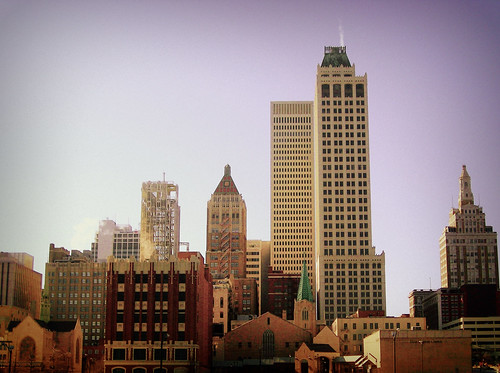
There is also a fair amount of public investment occurring in Downtown Tulsa, although existing only as a fraction comparatively to OKC. Probably comparable (maybe) to MAPS 1, but definitely pales in comparison to the overall picture here.
 First you've got the BOK Center, currently ranking as the #12 highest-grossing entertainment venue in the world. The Cesar Pelli-designed Tulsa landmark cost $196 million and 3 years to build, and seats just under 18,000 for most sports. I think the design is a huge homerun for Tulsa, because it gives them something to be known for that's not Art Deco or 50s modern, and it incorporates a lot that's "uniquely Tulsan" on the interior, such as an Art Deco terrazzo floor in the lobby, and possibly the best skyline vantage point looking through the sweeping glass wall that defines the entire edifice. Interesting fact..Cesar Pelli went to great pains to find a way to suspend the glass wall column-free so as to not block any of the skyline view from the lobby. "This is Tulsa," Pelli said of his building.
 And then next-most mentionable after the BOK Center, the new ballpark: ONEOK Field. It's kind of difficult to identify just what downtown neighborhood the new ballpark is in. They're calling it the Brady Arts District in promotional material, but I always thought of the Brady Arts District being more over by the Brady Theater and Cain's Ballroom. I would call it Greenwood, but for some reason I don't think people are saying "the new ballpark in Greenwood" because more people know about the Brady Arts District..or people are more comfortable talking about Brady than they are Greenwood, but either way, it's funny how those things pan out. And then there's the Blue Dome District which is also just a block away, in fact I would say calling the ballpark borderline between Blue Dome and Greenwood is accurate, but for promotional reasons, it's in Brady. Fair enough.
I won't go into the controversy surrounding it because I did that in the last post, and this is a positive post. (See smiley face: :]) The overall ballpark cost the taxpayers, or whoever is actually paying for it, $39.2 million, and it has seating for 6,200 to watch the Tulsa Drillers, Bedlam Baseball, and probably some college tournaments. Once you add in the cost of land acquisition planned or underway to raffle off to developers willing to take part in "complimentary infill development" the total project cost is $60 million. Compare to $34 million for the 13,000-seat Bricktown Ballpark.
 Another public project is the downtown Tulsa H.A. Chapman Centennial Green (or just "the Centennial Green), which is a small pocket park at the corner of 6th and Main amidst all the skyscrapers. The new park cost $5.1 million, $2 million of which came from Vision 2025, the rest from private donors including the H.A. Chapman foundation for which it is named.
The Centennial Green even has people, so at the end of the day, going off of that you have to assume that it was a successful project. I also feel like it's successful because it avoids issues that could relegate it to some kind of a "plaza feel" -- with the regular street frontage on both sides and the space definition from buildings that border it in the back, it feels like a proper urban space.
 They also did a complete renovation of the Tulsa Convention Center, sort of isolated from downtown in the SW corner of the IDL. The $50.5 million renovations, funded by Vision 2025, expanded the convention center--with 102,600 sf of exhibition space, 23 meeting rooms, an 8,900 seat arena, a 30,000 sf ballroom, and 227,000 sf total space.
Why is there nothing currently active infill-wise in Downtown OKC right now? Everyone says it's because of the economy. That's bunk.. and that brings us to the purpose of this post, a look at all of the development currently underway up the turnpike in Tulsa. There is no way you can tell me it has to do with the economy, because the majority of people in Oklahoma are still doing just as well as they were before the so-called recession, if not better. Maybe Downtown Tulsa is "too big to fail" and Downtown OKC isn't, who knows. Maybe all of the new residential units in DT Tulsa are being marketed towards the enormous Tulsa homeless population who will qualify for Obama's first-time homebuyer welfare, but that doesn't change the fact that Tulsa is under the exact same economic conditions as OKC.
And yet, here's some ACTIVE development going on within the IDL (Inner Dispersal Loop) in Tulsa:
 Just last week, veteran Tulsa developer Bob Eggleston struck a deal with the TDA to purchase the former Towerview site across from the BOK Center for his new One Place development. Eggleston was actually the construction manager for the BOK Center, so he's intimately familiar with that area, not to mention he has worked with one of the world's premier architects. Eggleston is also one of the guys behind the Village on Main down the river in Jenks. One Place will be a mixed-use development, at a total of $38 million. The NE corner of the site will incorporate a 120-room Hilton hotel. The rest of One Place will consist of shops, restaurants, galleries, and other mixed-uses on the ground floor--and 40 upscale residential units on the floors above. In the middle of the development will be a landscaped courtyard offering a tasteful oasis from the concrete jungle. The plan is to break ground within a year, Eggleston and hotelier Nick Massada (who built DT Houston's new high-rise Embassy Suites) are currently working on building documents and are making the determination of whether to do the hotel and mixed-use together or stagger the construction timetable, which Eggleston anticipates will be complete in 3 years.
 Also announced in the last two weeks is the purchase of the 9-story, 140,000 sf Enterprise Building at 5th and Boston. Kanbar sold the building to David Sharp for a mere $700,000 (compare to Bricktown asking prices), enabling Sharp to do a complete redevelopment of the building. The plan is to have affordable lofts on the upper floors and a complimentary retail mix on the ground floor. Sharp is working with Tulsa loft developer Will Wilkins (whose had a lot of projects in the Brady District and the Blue Dome District, and butts heads frequently with TDA). In this post on TN, Wilkins actually outlines the pricepoints and features of the loft units. The total loft units is undecided, but Wilkins estimates likely around 60 total.
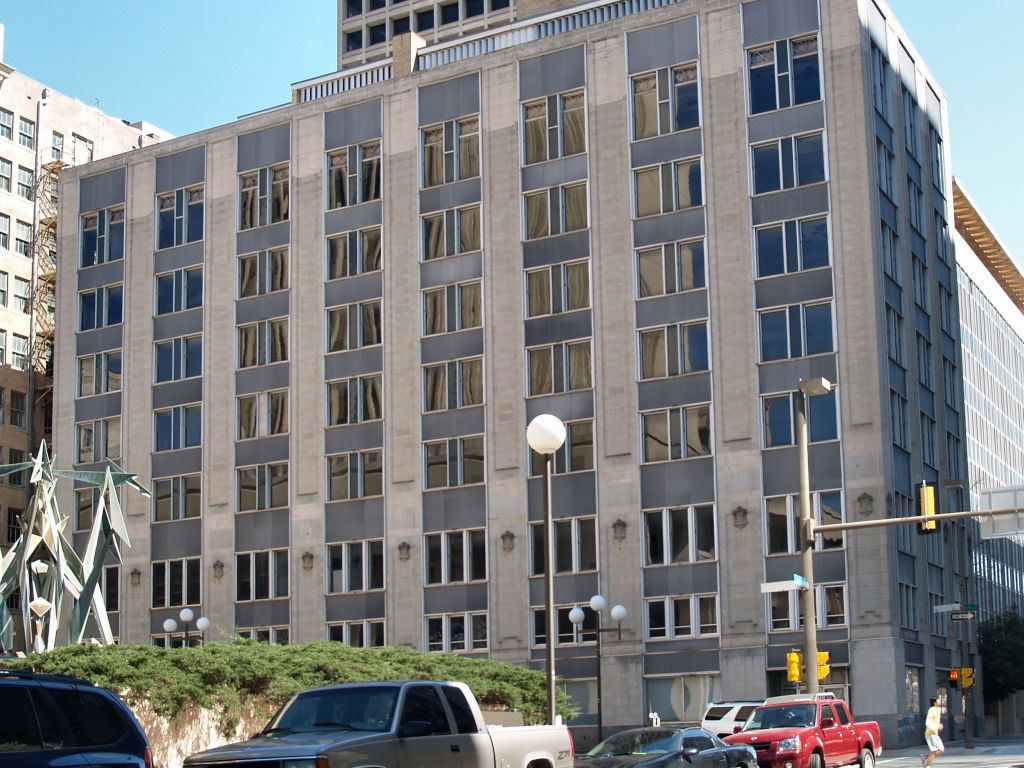
 Another recently announced project is a proposal by veteran downtown developer Tori Snyder to redevelop the old City Hall site into a boutique hotel. Snyder, with wealthy family backing for her Brickhugger LLC, has redeveloped the landmark Mayo Hotel (Tulsa version of the Skirvin), the Detroit Lofts, among other historic preservation projects. Two weeks ago from today Mayor Dewey Bartlett announced that the City got a $1 million offer from Snyder for the abandoned City Hall (Tulsa recently just moved their City Hall to the post-modern One Technology Place office building, commonly called the "Borg Cube"). The old City Hall is a great piece of 50s modernist architecture that could make a really interesting redevelopment. Last year the City paid an international real estate firm to market the site to developers, which turned up zero results at the time. Along with recommending the sale, Bartlett also envisions that the adjacent Tulsa Police HQ and separate Municipal Courts complex could also be sold to private developers. Snyder's plans for the City Hall bldg involve using the tower for 120 boutique hotel rooms and utilizing the former council chambers for a restaurant space.
On a side note, if the former government district on the west edge of DT Tulsa ends up getting completely redeveloped following the precedent of deals such as this, it will need a catchy district name.. I don't think "Government District" is really that marketing, not even in an edgy sense. How about SoBOK (South of BOK)? Just a random thought..
 One interesting idea is that of local architect Matt King to redevelop the old boarded-up YMCA building. King, with the Tulsa Foundation for Architecture, lacks investors but has drawn up 3 separate proposals out of his desire to restore the building, which he says is a great piece of 50s modern architecture, which he goes on to say evolved directly out of Tulsa Art Deco. The main plan is to turn it into a 64-suite boutique hotel, another is to convert it to residential lofts, and another is to use it as a downtown high school. The renovation project would highlight the glazed terra cotta panels lining the street level and the terrazzo floors on the interior.
 One of Tulsa's most historic Art Deco treasures may soon become residential lofts. This exciting venture, proposed by ZigZag Development, has been underway for about a year although it's unclear where it stands now in the wake of being scandalized out of TDA financing. The 80-year old, 10-story, 64,000 sf zig-zag Art Deco style building sits at 6th and Boston. Some reports say that ZigZag has shifted their priority to a 4-story infill project in the Brady Arts District near ONEOK Field, and is waiting to see how the 150 or so units coming online in the combined Mayo 420 and Mayo Hotel renovation projects are absorbed into the market. This will help them formulate their market approach for the ONG Building based on these existing examples.
 Downtowners also await the verdict in the city's condemnation proceedings over the Tulsa Club Building, owned by an out-of-state ghost property owner in California who has let the building deteriorate. The building, an Art Deco icon, would make great potential lofts..imagine the suspicious deal that the TDA could get into with this site.
Tulsans also await to see what will come of the Abundant Life Building, which is also involved in the condemnation process (which involves a trumped-up $1,000/day fine for every day a building is not up to code). The Abundant Life Bldg is a different situation though because the City is working with prominent Tulsan David Horton on a project to redevelop the bldg into the Diamond Lofts, which I mentioned in the last post as well as in this post I wrote a year ago.
 Another project is a retail opening in the Blue Dome District. The space underneath the London Underground-spin off sign is for a new t-shirt store called BoomTown Tees. This will be a welcome addition to a block that's seen a lot of new tenants, including Joe Momma's Pizza further to the right, and El Guapo's Mexican Cantina on the corner. El Guapo's, a restaurant by McNellie's owner James Elliott, features Tulsa's online rooftop bar which overlooks this new t-shirt store. There are TONS of businesses opening in downtown Tulsa, particularly restaurants that are taking advantage of the new after-5 business base (thanks to BOK)--I just chose to highlight this one because it exemplifies an entire block that's come to life, and also because it's retail. COOL retail, that sells edgy clothes..just the kind of thing that could do well in a downtown that aspires to be a destination, as well as a neighborhood.
 Another new business coming to the Blue Dome District that I have chosen to highlight is Lee's Bicycles. I chose to highlight this one because it reminded me a lot of Automobile Alley, which suddenly became the home of 2 or 3 bicycle shops--all of which have thrived on N. Broadway in OKC, largely benefiting from the dense downtown environment. Lee's is relocating from Brookside, where they got bought out by QuikTrip, now going in at 2nd and Frankfurt.
 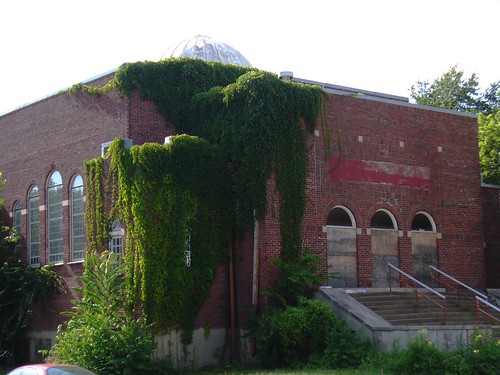 There is also a proposal along Cheyenne, between 14th and 15th on the edge of downtown, to add about 20 new townhomes. It's kind of a weird site plan with the townhomes facing an interior street inside the development and not Cheyenne, but the elevations have been altered with more windows facing Cheyenne and they should be breaking ground soon. Good project on a formerly unsightly vacant surface parking lot. The developer is the same guy proposing to redevelop a boarded-up historic synagogue across the street. Although still standing, the synagogue recently sustained some fire damage during the most recent Snowmageddon so it remains to be seen if it can really be restored or if it will have to be razed in the end.
 This is a recently announced development, still unnamed, for the ONEOK Field area. The project located at the corner of Archer and Brady will be broken down into two phases, with the NE corner first. That building will be 3 or 4 stories, and feature 67 residential units as well as retail on the ground level and structured parking in the back. The corner across Archer will be developed after that, and specifics and numbers have not been generated yet.
 Also nearby will be another new park, the John Hope Franklin Reconciliation Park--named in honor of a legendary Tulsan who was one of the forefront academics behind the Civil Rights movement. It's been nearly impossible to find any kind of renderings online for the $5 million park being funded mainly from the State of Oklahoma, and by some City of Tulsa grants as well. According to this Urban Tulsa Weekly article the State initially offered to front the entire cost as part of the Greenwood rebuilding movement, but has since fallen back on the offer only paying $3.7 million. The new park will be along Brady between Boston and Cincinnati avenues.
 The 12-story Art-Deco Atlas Life Building on Boston Avenue is being converted into a 120-room Courtyard by Marriott hotel. The $15 million redevelopment has retained a ground floor restaurant (the Atlas Grill) and has been underway throughout all of 2009, and set to open in a month. SJS Development, the company behind the project, bought the building in a deal arranged by Kanbar..SJS has experience in developing hotels out at the Stonewood Hills lifestyle center in Broken Arrow.
 A really cool just-finished project, exemplifying contemporary architecture, is the TCC Center for Creativity at 10th and Boston between downtown and uptown. The $10.5 million features 56,000 sf, was designed by Matrix Architects. The Tulsa Community College project offers to fill a niche for a downtown college campus that Tulsa is looking to fill, although that niche is more likely to be respectably filled in the future by OSU-Tulsa in Greenwood.
 The new Oklahoma Jazz Hall of Fame has recently opened up in the old Union Depot in Downtown Tulsa, behind the 667 ft-tall BOK Tower. The museum, relocating from its longtime home inside the Greenwood Cultural Center, to the old Union Depot on 1st Street between Boston and Cincinnati. The renovations were made possible with a $4 million grant from Vision 2025. The project is now finished and hosts jazz concerts every week, and on some nights jazz music spills out onto the surrounding streets in the Blue Dome, Brady, and CBD areas. It is true that New Orleans is the birthplace of jazz music, but other cities such as Kansas City, St Louis, Houston, Chicago, as well as Oklahoma City and Tulsa were very also jazz hotspots.
 Another planned addition, out of many, many awesome projects about to kick off in the Brady Arts District, is the Cain's Ballroom Museum--planned next door to the landmark ballroom at the intersection with Cameron Street, and set to open doors in 2012. The $2.5 million project is currently in the fundraising process. The Cain's Ballroom is where Bob Wills got his start, is considered the birthplace of Western Swing music, and these days frequently hosts up-and-coming bands such as a show I saw with Peter Bjorn & John. The ballroom has also had the Sex Pistols, Eric Clapton, The Police, George Harrison, and more. A list of the next month's shows is highlighted by G. Love & Special Sauce, the Arctic Monkeys, Bone Thugs N Harmony, and Blue October (and yes, these are bands you should have heard of..lol). Cain's has been named one of North America's favorite live music venues, and you had better believe it is on the National Register of Historic Places. It was built in 1924.
 Yet another Brady Arts District project in the schematic phase at the moment is the planned renovations to the historic Brady Theater. The theater located at Brady and Boulder, affectionately known by locals as the "Lady on Brady," was originally built 96 years ago. So it's on the register. Since then, two renovations have compromised the historical integrity of the building--which these renovations aim to restore. The Brady is an active performing arts center, and still hosts events each week--with guests such as Cyndi Lauper and even U2. The renovations will be a $17 million project.
 Another really awesome Brady Arts District is the Oklahoma Museum of Music and Popular Culture. The Oklahoma Museum of Pop Culture (shorter version of the title) will pay homage to the ridiculous amounts of pop culture that Oklahoma exports to the rest of the nation, most likely more per capita than any other state. Planners argue that Tulsa is the ideal host for the museum, claiming that Tulsa is the cultural capital of Oklahoma. The $33 million project anticipates $25 million in state funding, and the rest from private sources..they've already landed a $1 million donation from the Kaiser Foundation. Bob Blackburn is also behind the project. A specific site for the 45,000 sf facility hasn't been located yet, although Blackburn has said he wants it in Brady.
 And of course, this post would be incomplete without mentioning the $40 million renovations of the historic Mayo Hotel--considered the pinnacle of recent private development projects in downtown, and easily on par with the Skirvin in OKC if not grander. The Mayo Hotel, not to be confused with the Mayo Building, was a mixed-use preservation project by Tori Snyder's Brickhugger LLC. Macy Snyder and the rest of the Snyder family is also heavily involved in Brickhugger projects. A photo gallery of the building can be viewed here. The project, now finished within the last month, features 76 upscale apartments and 100 boutique hotel rooms. It also added a coffee shop, Topeca Coffee, on the ground floor. It was one of the projects receiving Vision 2025 housing loans, getting the largest piece of the pie at $4.9 million. Leasing went off with a bang, as they signed over 60 units within a week of opening.
 Another renovation almost finished, building off of the Mayo Hotel which I just mentioned, is that of the Mayo Building located on Main at 4th, across from the Mayo Hotel. The address, 420 Main, gives it the developments name..Mayo 420, which is a redevelopment project by Wiggin Properties. You OKC readers know Wiggin Properties, right? They're the guys who floundered on Overholser Green. Obviously all of their focus was in Tulsa, because this isn't a bad project--a $30 million renovation project, crafting 67 FOR-RENT apartment units out of the old 10-story building. Why couldn't Wiggin apply their rent formula to OKC, or was it so obvious to Chuck Wiggin that we would fall for the condos and he would get the bid over a better proposal that way? The Mayo 420 units start at $800 a month, around 750 sf--a pretty reasonable deal for downtown. The ground floor features the relocated Downtown YMCA facility and Billy's Restaurant. The 67 units will be finished in April.
The First Street Lofts, a $2.8 million project financed in part by a $1.3 million Vision 2025 loan, is a Blue Dome District project. This building has actually been in some form of redevelopment for the last 30 years, interestingly enough..now it's finally coming to fruition. The building had to be structurally rebuilt, as very little of the shell's structural integrity would suffice after the decades of redevelopment attempts. The project by Tulsa resident Michael Sager will have 18 high-end lofts, and on the ground floor will be a grocery, deli, and restaurant..dunno about the restaurant, but I seem to remember something about Sager landing a lease for a grocery tenant, which will be a boon to Blue Dome.
 Another project of the Snyders' Brickhugger LLC is the Detroit Lofts, located in the Brady Arts District at Archer and Detroit Ave. The Detroit Lofts will feature 16 apartments, ranging from 680 to 1,200 sf..starting at $800/mo. The project, estimated at $5.5 million, got a $769,000 million loan from the Vision 2025 downtown housing fund, the last of the fund until the account is replenished. Macy Snyder said it was the availability of the Vision funding that changed their plans, as they had just planned to use the building as warehouse space--even after the announcement of the nearby ballpark. They report that they're in negotiations with a restaurant and bar for an 8,000 sf space, and with a grocery tenant for a 10,000 sf space.
According to this Tulsa Whirled article, a fourth Brady-area housing project applied for funding but was turned down, in favor of Snyder's Detroit Ave project. The turned down project was a proposal by a University Development Group (couldn't find anything on the web..) for the Lofts on Frankfort, a $4.8 million, 20-unit project located in the East Village, between the ballpark and the east leg of the IDL (US 75/64). The group is in discussions right now with the TDA to purchase the site where they would build a 3-story mixed-use building with the 20 residential units, plus 7 ground-floor office spaces. The group has declined to discuss specifics with the media, but luckily the $769,000 would have only been used to secure parking for the development, rest of which they have financing in place for.
 It's everyone's favorite corrupt development deal: American Residential Group's Tribune Lofts II. The TDA pulled $4 million in loan money out of nowhere without announcing a request for proposals, discouraging other inquiring downtown developers who heard word of the money--gave all $4 million to ARG to do a mirror project for the Tribune Lofts. The Tribune Lofts are on Archer at Main. The first project was a rental project of modest success for 35 overpriced units which they failed to convert to condo at the incredible price of just $90,000.. now TDA wants to give ARG $4 million to fail again. This project will include 63 units, no ground-floor retail. It will be "affordable" supposedly. It's really an awesome project, all shenanigans aside. They are currently under contract to purchase the site from TDA as well for $495,000--an incredible deal, especially if you compare to Bricktown parking lot prices. Sheesh. Hmm..
Last, but not least..

 And this brings us to my favorite DT Tulsa project, which is underway, and will probably be doing fundraising for at least another year or so--although it's halfway to its goal. This is the Living Arts Center/Visual Arts Center, which is a huge arts-based project for the heart of the Brady Arts District. It started as a proposal to take the individual Matthews Warehouse and turn it into an artist community, with artist lofts, gallery space, a coffee shop, studio space for the artists, and more. Then it grew with a portion for the Philbrook Art Museum, then Kaiser got involved with a $50 million donation to the Gilcrease Art Museum that they had no room for, and then Kaiser got more involved by purchasing nearby land to the west of the development for an outdoor amphitheatre. The current project is a mix of historic preservation (Matthews Warehouse), new construction (museums), as well as green space. Kaiser has agreed to fund half of the project, but no more..the current construction date for the Living Arts Center is 2011. The total project construction cost is $18.3 million. Website here.