Sunday, September 21, 2008

What does "Big League City" really mean?

After all of the rhetoric and slogans and hoopla, now that we're a "Big League City"--so what? Do we magically feel better? Or ostensibly, can you even call us a big league city before a single game? Or for folks like New Orleans fans, will it really make a difference, or rather highlight where OKC fails to stack up?

As for the latter, I think not. OKC will stack up well compared to a lot of "big league cities" because the only thing that cities like Memphis and New Orleans have over OKC is too intangible to really make a big point out of.

As for feeling magically better, I think that we can all take immediate solice in knowing what our community is capable for doing for itself. Even during the improbable MAPS revitalization of OKC, people like the NBA were still saying no to OKC. The Hornets was not supposed to be as hugely successful. That whole debacle sure made David Stern's job a lot harder, although a lot more potentially rewarding as well. All of OKC's individual successes have been very improbable, and yet they share one more thing in common: being completely driven by community willpower. Which is a LOT more tangible than you'd think--just pull up exit poll data and compare to other cities faced with similar choices, like Tulsa.

As great as that all is, the largest good that will come out of this will start to become more of a factor once we get into the regular NBA season; Bricktown is going through a phase where it clearly needs a boost (which the last boost it got was probably the Hornets). Businesses prospered on game nights--and since the Hornets left town, we've seen less consistency in the newer businesses staying open for long. It's been harder for concepts to take off and share in the district's success.

There are a lot of reasons why this is about to change. It all has to do with more people downtown. We're beginning to see more residents downtown, and the downtown population--last I heard--was up from like 4,000 to 8,000 since 2005 or so. I anticipate that downtown's population will be around 15,000 come 2010. This means more stability for the various downtown districts because more of a local base; more "rooftops" in the neighborhood. Bricktown can become more like MidTown--which I am starting to think is more representative of downtown's own local scene than anything else (which may be why people notice a profound difference between the two).

If you live in a unit in the Regency Tower apartments or in Sycamore Square, are you more likely to go hang out in MidTown or Bricktown after work? If you live in one of the new lofts we're seeing going up in the Deep Deuce/Bricktown areas, where are you more likely to hang out after work?

Also, I think that there's an intangible benefit from simply having the NBA brand a few blocks away from anywhere in downtown. It adds more prestige to the whole scene, which may in turn increase the value of downtown housing and office space--especially during the mortgage fiasco. I think that the new Devon Tower will also have a very similar effect in adding to the prestige and value of downtown, and is a very tangible part of the new "Big League OKC".

Put simply, so far, "Big League City" has meant this. In the months and years to come, there is no telling what it will come to mean.

Friday, September 19, 2008

Cityshot VII

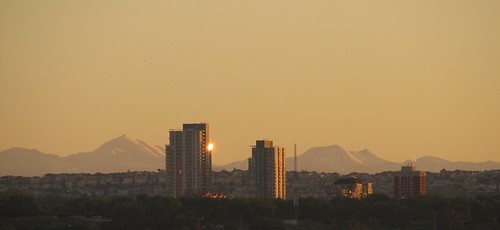
Suburbia in Calgary, Alberta.

Wednesday, September 17, 2008

OKC's new urban style..an architectural digest

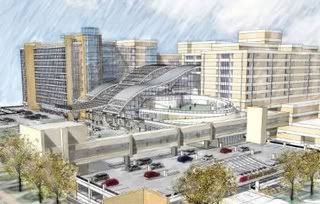
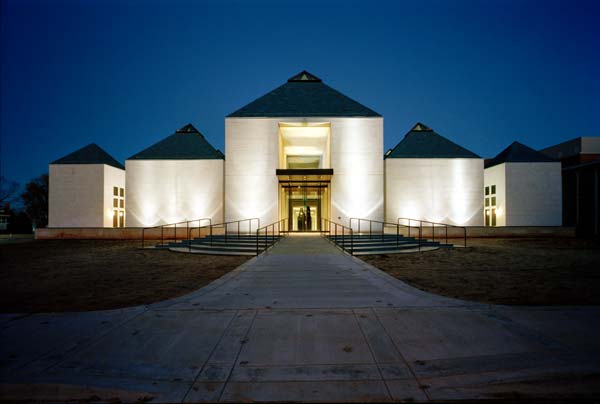
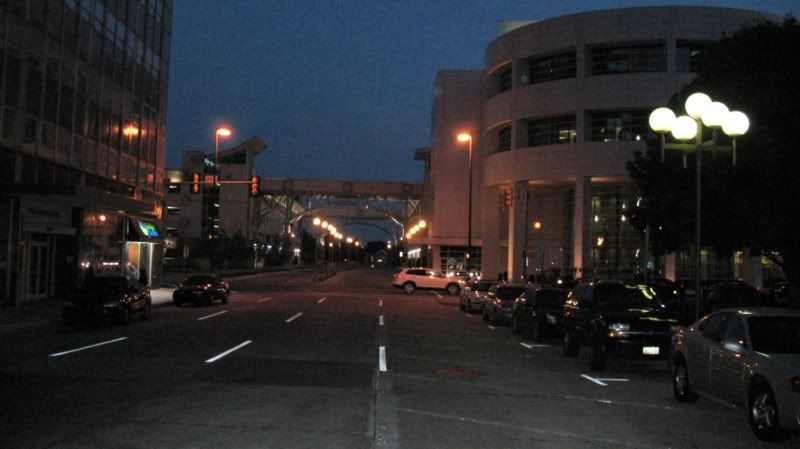
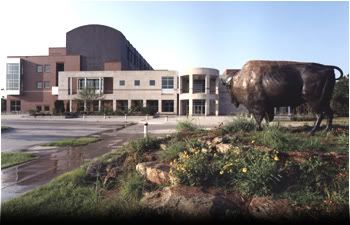
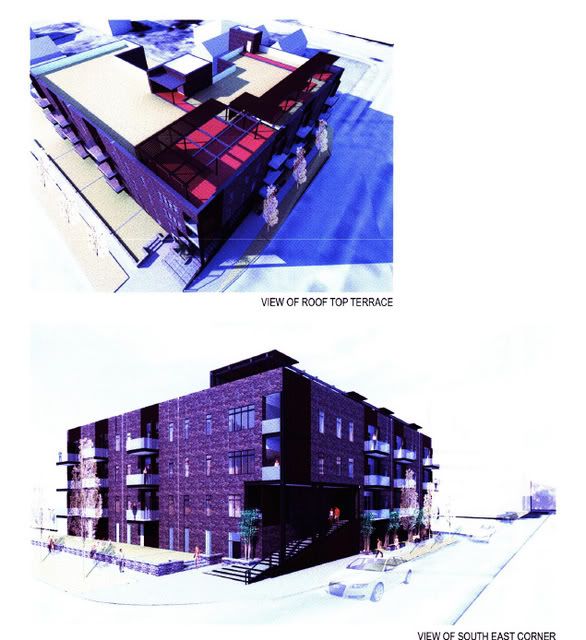
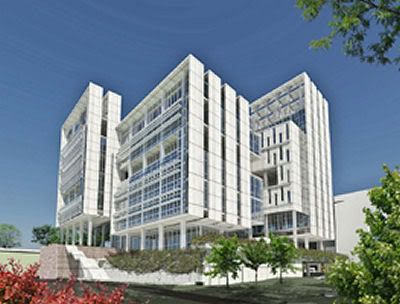
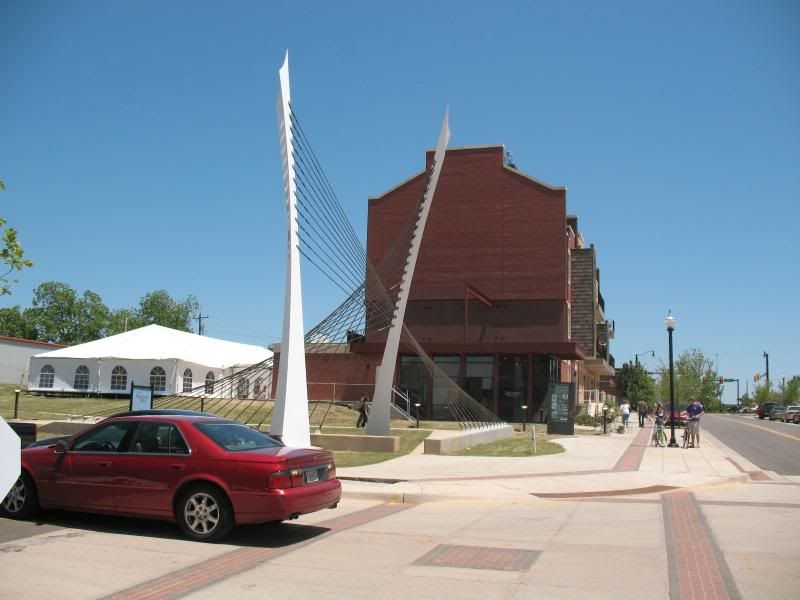
OKC seems to be gaining an abundance of fine contemporary architecture. I thought I would highlight some of that. We should do more highlighting of this from time to time. We don't seem to notice so many of our architectural masterpieces that AREN'T Art Deco or Victorian. Without much further ado, here's a handful of pics I was able to find around the Internet real quick of OKC's best examples of contemporary architecture. And let me SPECIFY that just because a building is new and all, does not make it a great example of contemporary. I'm talking about abstract, stuff that stands out..


If I forgot anything, leave a comment and let me know and I'd love to get it up ASAP. Thx.

Some intangible benefits to consider


It seems odd that the proper way to develop a downtown is through intangibles rather than concretes. What I mean by this, is in response to a recent thought-provoking post of Michael Bates' where he visited Des Moines to look at how a downtown arena there has 'transformed' their downtown area. In fact, it has not. The Iowa Events Center is a top-notch facility (though considerably smaller than the Ford Center or BOK) that hosts major concerts, some sports games, and some conventions. In a way, it serves the exact same purpose for Des Moines that the Ford Center had served OKC until the NBA came to town. The argument is that in one prime example cited as a reason we need the BOK Center (Des Moines), their arena has done little to pump life into the part of downtown in which it was built:

"The nearby area was as dead as can be -- parking ramps, parking lots, office buildings. The arena sits near the river, but turns its back to it."
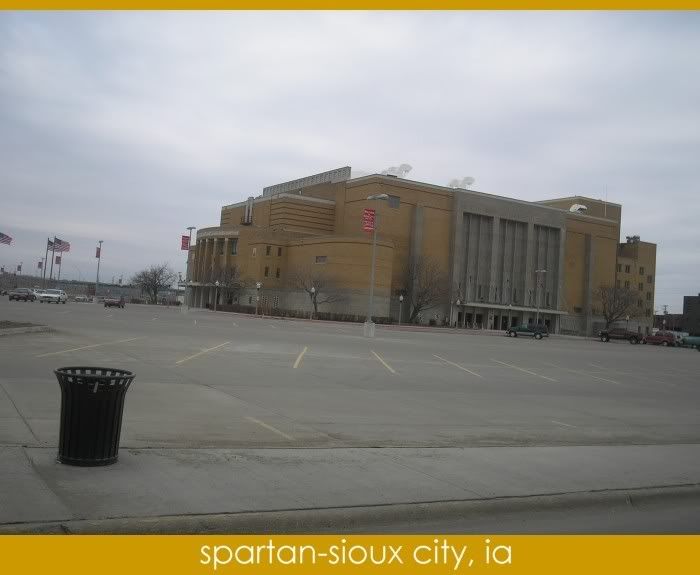
This isn't just something that has happened in Des Moines. One of my favorite all-time small towns is Sioux City, IA, with a population around 85,000. It's a very well-educated, yet somewhat gritty and urban small town nestled in the steep bluffs along the Missouri River, which creates a lot of interesting urban environments. Imagine the hills of San Francisco covered by a quaint Midwestern city. One of Sioux City's most impressive qualities is the amenities it has for a city of 85,000--such as an Art-Deco downtown arena almost as big as the Iowa Events Center. Here is a photo I took of it a few winters ago when I was spending the Holidays with family:


As you can see, the area surrounding it is also dead. And if you've ever been to the Qwest Center in Omaha, you also have the same problem--an arena envisioned to pump life into an area, but cut off from that area. Here in Sioux City, the arena is surrounded by parking on 3 sides. The back of it is what faces downtown, but that's irrelevant because it's cut off by railroad tracks. On the west and north sides it faces a bend in I-29 which essentially cuts Sioux City off from their significant civic investments along the Missouri River riverfront. As your driving down I-29, there is the arena and downtown beyond that on the right, and to the left is the Mighty Mo lined with a Casino and trails and parks that go all the way through the city, even up into South Dakota. If Sioux City were to find an alternative to the sea of parking on that site, you could almost have a development firm come in and redevelop around the arena similarly to the Ballpark Village in St Louis or the Power & Light District in KC.

But do OKC and Tulsa face these problems? I would argue not. While the Ford Center is not in Bricktown, which everyone will tell you is where people go after an event at the Ford Center, it is still smack dab in the heart of downtown. It is not cut off by a river, or a highway, or ground railroad tracks (notice how I specified that). The Ford Center did in fact propel Bricktown past being a fledgling restaurant row on the edge of downtown, into what is definitely an attraction in its own right. Today development in Bricktown is booming because of the demand for the Bricktown scene. It's a district where people badly want to live, work, play, and shop/dine. This is because someone can easily walk from the main Concourse in the Ford Center to a restaurant in Bricktown in less than 4 minutes without risking their life.

Will Tulsa follow the steps of OKC or Des Moines? I also think not. A key difference in what happened in OKC and those other cities is that in OKC there was no pre-established hotspot in downtown. Bricktown became the hotspot of Downtown OKC after the Ford Center was built, whereas before the Iowa Events Center, the Hy-Vee Center in Sioux City, or the Qwest Arena, these cities already had a "Bricktown." Omaha-Old Market, Des Moines-Court Street, Sioux City-4th Street. Downtown Tulsa's building stock is far more mature than Downtown OKC's, but it is still ALL undergoing revitalization--there is no pre-established hotspot in Downtown Tulsa, while there are many fledgling neighborhoods that are beginning to see good growth. The BOK Center is coming just in time to affect the growth of downtown, and not be left out, because downtown is a blank slate that could go in any direction. It could see nothing but growth in Blue Dome and Brady, or it could see new developments on the old City Hall site, or it could continue its growth in a N/S linear fashion and see infill in the TCC (and churches) parking empire that splits downtown and Uptown.

There are already a small handful of businesses on the west side of downtown that are opening up just for the arena buzz. This is how we build momentum, which is the main reason we built the BOK Center. Face it, Tulsa is not without event centers--the Maybee Center has done just fine for concerts and stuff, and everybody loves South Tulsa more than downtown. The goal of the BOK Center was to get people back to looking at downtown, and bring in crowds so that businesses can thrive in the heart of the city. Doesn't that sound like an important civic goal?

Thursday, September 11, 2008

Monday, September 8, 2008

Polls are In

The polls are in. McCain-Palin has made a bigger impression than anyone could have imagined and we now have a race. It's true that the difference has been Sarah Palin, BUT it's the combination of the two mavericks that's been most deadly. The two really complete each other, and McCain was truly incomplete before the convention when the Republicans were running HIM and not vice versa. Now that McCain is running the Republicans, the McCain campaign has seen a 10-point JUMP just over the weekend.

49% McCain
44% Obama

Whereas just last week (for most of last week) Obama had a 4-point lead in the polls until it had become tied on Friday. Of this doesn't just prove that McCain is very much back in the race. It does even more to prove to up and down nature of a presidential campaign. Especially this one, where substance is irrelative and the voters want to see something fresh, new, and exciting. But after 8 years of Bush, can you blame them?