Showing posts with label MidTown OKC. Show all posts

Thursday, August 9, 2012

Midtown has that new website smell

Midtown Renaissance: Full Video Coming Soon from Midtown Renaissance on Vimeo.

MidtownRenaissance (Howard/Clagg/et al.), which has recently announced a ton of really exciting deals such as a partnership with Coury Properties to renovate the Osler into an upscale boutique hotel, or their partnership with the city to build a parking garage on NW10th between the 1101 building (on Broadway) and the Frontline Church (on Robinson) - has unveiled a new website recently that is getting so much buzz it is currently down because the servers appear to be swamped. That is a very impressive new website.

For those who don't know, MidtownRenaissance is the group who has redeveloped almost all of NW 10th as well as a few properties north of that strip. Their residential properties are the toast of downtown - all completely-occupied, usually fully leased before they even finish construction, and they have done nothing but top-notch historic preservation projects such as: The Cline, The Packard, Hadden Hall, some properties west of Shartel, and so on. They also own the Plaza Court, recently redid 1212 N. Walker, and are now in the middle of renovating the Guardian Lofts (which has a fantastic new parking structure that actually contributes to the built environment), 1100 and 1101 N. Broadway, and will soon start the 430 Lofts and restoring the old Marion Hotel with structured parking across the street.

MidtownRenaissance is probably the most successful downtown developer there is, and due to their impressive track record, I would highly recommend them to anyone in the market for a new downtown rental. Oddly enough, one thing they haven't done at all is for-sale residential, and I'd be curious if they could raise the bar for that sector as well, as they have already raised the bar for the rental market. The only thing they've been unable to do is provide enough units for all the interest they've gotten - which proves one important point: That people in the market for downtown living spaces will pay for quality.

Here are some photos from their 1212 N. Walker project:


Saturday, January 14, 2012

Heritage Hills, a very special interest

Just a real quick observation: It seems as though the Heritage Hills fuss over The Edge @ Midtown has now gotten more legitimate attention and consideration than we poor, lowly SandRidge protesters ever got. And certainly more attention than the backlash against Chris Johnson's horrendous Bricktown Canal parking project (on that one, I admittedly did little because I couldn't even fathom the BUDC would approve it).

But let's get back to Heritage Hills. This is a neighborhood that has a history of meddling with the redevelopment of the Mercy Hospital site. Back before the 2008 bust, when OCURA went through its first round of RFPs for this site, it was once again Heritage Hills that some feel got to call the shots. Wiggin's ridiculous "Overholser Green" proposal beat out Marva Ellard's edgier "Mercy Park" proposal (to be fair, I believe Ellard resides in HH/MP) because of a concerted desire to go with the more subdued, traditional, all-residential development. As hard as it is to believe today, there was a legitimate backlash in that decision against mixed-use.

This was back when I was running okmet.org, which I used to argue for Overholser Green even. I believe back then I had a certain admiration (and willingness to believe anything) for the elite residents of Heritage Hills. I think it's a fairly normal thought process in our society to think that, "Well these are successful people, so I'm going to side with them." It's as wrong as anything. It's wrong because you're letting someone else, and their interests, decide for you--needless to say I'm over that thought process, but let's just say I fully understand how pervasive it is, especially in Oklahoma.

Now it seems that the Heritage Hills folks are at it again in opposing this project due to concerns that it will weaken their water pressure. Here you have an organized group of neighbors, regardless of whatever level of involvement the actual neighborhood association has (and I understand that they do have an official stance against this development??), who are essentially opposed to the quality infill that OKC so desperately needs because they think it will affect their morning showers. I've heard it all when it comes to urban design and infill, but this is certainly a new one.

There have also been many complaints to the city (officially recorded) that accuse this development of being Section 8 housing (rents will start at $1,000 a month, sounds like Sec. 8 to me). You know it's bad when a group of elitists are playing so fast and furious with the facts that Steve Lackmeyer has to write a blog post titled, "When facts get in the way." They've raised a storm over the density, especially. Pete Brzycki pointed out that this development is essentially equally as dense as the hospital that was originally on this site.

I'll go one further though. The Heritage Hills elitists, and their admirers (which as I've already admitted, did include me at a time I was very young and malleable) got the Overholser Green project chosen earlier. That was going to be around a 10-story condo tower. This will be 5 stories.

Not to mention, that when you live on streets that are numbered as low as 14th, 15th, 16th, etc.--there's a good chance that you may have to endure the tortuous and horrific trauma of having some stylish infill development near you. This one isn't even on their side of NW 13th, the busy four-lane thoroughfare that separates Mid-town from Heritage Hills.

For anyone who is truly interested in learning the facts on this development, which may be one of the highest-quality developments this city has seen in a while, here is an excellent fount of information (the DDRC agenda item regarding this development).

Thursday, January 12, 2012

Bad elitists, bad

Go get 'em, Steve. Apparently a number of Heritage Hills residents are raising concerns about the quality of The Edge project by Gary Brooks.

Look, I didn't like the project BEST, but I can admit it's a good project. I moved on from arguing about OCURA/Alliance's flawed selection process, and if I can move on from something, that's probably saying a lot.

But for Heritage Hills residents, I guess paying a whopping $1,000/mo rent for a 1 br apartment will spoil the neighborhood. Are these people pretending there aren't still a few flophouses still in operation around Mid-town??

Brooks has done nothing but reassure skeptics of his development with moves like the recent announcement that they'll pursue LEED certification (silver, as I recall). This will be the first LEED certified mixed-use project in Oklahoma, a designation that was probably going to go to Grant Humphreys' Flatiron before that project died.

I am a critical guy, that secret is certainly out. I am also going to be pretty outspoken about my criticisms, as I was with this project for a while. What I love, and I mean really love (what keeps me going), is when I can admit I was wrong and I have to eat my own words. I'm happily eating my words so far on this project, but I don't want to knock on wood since The Edge only just got the building permit this month.

Perhaps some Heritage Hills residents will also enjoy eating their words once this project is a pleasant surprise to them. I think it will be an excellent contribution to Mid-town.

Everything you could possibly want in this project is there: They made site plan concessions to incorporate the streetcar curve, this will be very transit-oriented. They added ground floor retail when the city pressed them on it. And as I've repetitively mentioned, it will be LEED. I think that the targeted demographics (young professionals looking to pay $1,000/mo for 1 really nice bedroom) is also just perfect.

Friday, September 9, 2011

Update from Lisbon Lofts

The Mode Homes people, developers of the Lisbon Lofts at NW 9th and Shartel, posted an update to their facebook about their progress. They are in the final stages of obtaining financing, which has been dragged out not surprisingly, but what did surprise me was when I had heard from a friend that they have backing from a very legitimate downtown anchor.

These renderings are a thing of beauty:


A-Alley: A distinct vibe emerges

I want to take the time to post some more photos I took last week that I think demonstrate how a very distinct vibe is developing along North Broadway. Can Automobile Alley become a "landmark" corridor for us? Admittedly, it has a ways to go, but the potential is there. It's really coming along, and it's hard NOT to speculate about how North Broadway is booming.


1100 N. Broadway continues improvements. I get the impression that Howard and Clagg and Co. are a little hesitant about finding a tenant for it, since they have been finding temporary uses for this space for the last while. OKC Cityscape was really fantastic there, and I already kind of miss the bright LEGO blocks that were affixed to the front of the building. I wonder if there is a way that they can make OKC Cityscape work as a year-round thing in this space, should it ever be able to cover its own rent. It was way more successful there than in Penn Square, where rent is quite expensive.


It's hard to not love the view down Broadway.


1101 N. Broadway is also starting to come around, I have noticed drastic improvement recently so it appears that renovations are now fully underway. This building has an interesting recent history, as I remember in '06 or '07 there was a deal to turn it into the "Chandelier Lofts" and construct a glass annex next door, to the north. When they instead just sold it off to Greg Banta, who was on a Mid-town buying rampage at the time, it was assumed it would still get developed quickly. Here's hoping that the building eventually becomes lofts, which it seems very well-suited for.


I think we can also look back on the OKC Community Foundation as a very good project, also. At the time I was annoyed that it was developed by a non-profit agency, as there WAS a report out at the time that proved 10th and Broadway was the best fit for a "major development" and I thought with the land being donated either way, it would have been a great opportunity to try for a development home run. That was before 2008 and any major development play would have at least been complicated by the economy anyway. This is a decent, quality project. I feel like the design is very conducive to the neighborhood, I just wish the Community Foundation hadn't demo'd more buildings for unneeded parking.


This sculpture, very tame and conservative in its motif, also went up at the same time as The Womb (in the background) came about. Whether this is the Community Foundation's attempt to "cover up" that loud building in the background, or compliment it with its own artistic touch, is anyone's guess. But what I do know is that when it comes to public art, the more the merrier!


Of course, how could anyone not be enamored with the loud mural covering the new art gallery called The Womb? I think everything about this gallery is brilliant, and I think it's about time we have a "big-city" gallery that seeks to push the envelope, in many different ways! This adds many new dimensions, and talk about a potential neighborhood asset. I anxiously await to see how The Womb will fit into the strong synergy budding amongst the other attractions around 9th and Broadway, such as Shop Good, Coffee Slingers, The Iguana, Sara Sara, Pachinko Parlor, et al.


What is so special about this A-Alley vibe is that it has such a great mix of locally-owned EVERYTHING. Art and culture courtesy of the Flaming Lips, awesome restaurants, a cool local coffee shop, and -GASP- actual retail (Shop Good, Sara Sara Cupcakes, Rawhide furniture, and the newly relocated antique/vintage furniture business). But another great asset will be the new Hideaway. Oklahoma family like Hideaway, and while it's image isn't exactly conservative (so it won't buck the vibe on N. Broadway), it's fairly tame and "family-safe" thus it will be a predictable draw for the mainstream.


To top it off, another nod to Steve Mason's rooftop garden. Every building in this district needs to have a rooftop deck like this, for soaking in the action from above on perfect sultry summer evenings.

Wednesday, April 20, 2011

OCURA: How important is experience?

This is the funny thing, is that somehow OCURA or the committee advising them has warped the term experience, according to reports on Steve's blog into a positive for the Henderson proposal. The Henderson proposal includes an enormous suburban setback from Walker Ave and zero retail or anything else listed as desirable in the report.

But the experience is a particularly interesting point. If one were using actual logic diagrams to pin who has experience as a developer before, I think the report would have looked so much more different. I'm not even talking about the grids that are usually routinely used in these kinds of site decisions. I'm just talking about making a decision using logic. Neither of which were clearly done here, hell, apparently the developers weren't even allowed to make a 10-minute pitch for their project.

But, the point here is experience, and who's got it.

Mike Henderson:
Successful developer, overwhelmingly suburban
Familiar with OCURA processes
Had problems meeting deadlines in past
Had financial problems in past
Integrity issue, completely changed Legacy
Questions about delivering exactly what is proposed
Requesting HUD financing for development

Dick Tanenbaum:
Successful urban and suburban developer
Successful with apartment projects
Successful with mixed-use projects
Successful with historic projects
Not requesting HUD financing for development
Builds exactly what he proposes (in this case, a suburban complex)

Chuck Wiggin:

Successful urban developer
Successful with many DT Tulsa projects
Successful with historic projects
Successful with apartment projects
Successful with mixed-use projects
Familiar with OCURA processes
Had problems in past with deadlines
Mixed history in OKC, after Overholser Green
Requesting HUD financing
Did propose changes to OG after approval

Marva Ellard:

Successful urban developer
Especially committed to historic preservation
Successful with many DT OKC projects
Successful with apartment projects
Successful with historic projects
Familiar with OCURA processes
Got out of The Hill before it went negative
Ended up being proved right by OG
Builds exactly what she proposes

So it's funny, because if you're looking at people's PAST experience, it seems like OCURA is heavily lauding Mike Henderson. A more accurate tally would look more like, scored from 1-10:

Ellard: 10
Tanenbaum: 10
Wiggin: 8
Henderson: 6

Now obviously a lot more goes into this, because I'm not going to recommend Tanenbaum's development this time. I honestly have to wonder if he thought anyone else would submit a proposal, judging by what little attention he put into his project compared to other applicants. But if you're going by experience alone, obviously Henderson actually does not have a clear lead there. Anything but, in fact.

(I like the Wiggin and Ellard proposals.)

Tuesday, April 19, 2011

"Eastern Bloc" architecture = bad?

As many know, I've been a ways from OKC lately. Indeed so much has been happening lately, as many decisions are going to be coming to a head here soon. My personal life has mostly consisted of extensive travels across Europe, then returning to the north for 3-4 days at a time to placate my professors, and then departing again. For example, I spent last week in Russia. Moscow is amazing. I got back today and I have 3 days here, leaving Thursday for the Netherlands, where I've already spent quite a bit of time in the last few months. So it's been a busy time for me. Uppsala. Stockholm. Tallinn. Helsinki. Germany. Amsterdam. Copenhagen. And in the last week, Moscow and St. Petersburg.

One of the things I am struck by is the prevalence of so-called "Eastern Bloc" architecture (or more commonly called "Commie Bloc" colloquially) not just in Russia, but everywhere in Europe. Even in Stockholm, in my opinion Europe's most advanced city by a long shot, the "Eastern Bloc" is the prevalent suburban building form. Maybe it's a cold country thing, but just the idea of it doesn't seem very attractive. Likewise, Europeans are often repulsed by the idea of America's cutesy little cookie cutter houses with just enough wasted space to pretend to be landscaped. Considering that's what I grew up in, obviously I'm not repulsed by it, as much as I wish OKC would move beyond that kind of prevailing housing style. It's just the vernacular architecture, as it would be called academically.

It's very unfortunate that I haven't had much time to weigh in on the rapidly moving developments shaping downtown OKC, or even to provide some kind of narrative of my travels on here--though I will start doing that soon, especially when I stay in one place after this upcoming Netherlands weekend trip.. But one thing that's struck me is how the "commie blocs" really aren't that bad. Actually, a lot of them are renovated and fairly nice inside. Most are usually surrounded by parks that are maintained by more than one person, obviously. In effect, imagine if one neighborhood instead bundled all of its front yards and back yards and gardens into one huge green space in front of everyone's front door.

Even in Russia, where sometimes commie bloc suburbs are the slum neighborhoods (compare to American inner cities), many blocs are actually in very desirable neighborhoods. Generally, a Russian city will be comprised about half-and-half of historic center city, architecture often ranges from baroque to art deco, and beyond which are the suburb blocs. Beyond the suburb blocs is a new phenomenon of American-style suburbs, which is surprising to see, but growing very large--indicative of a very large country with rapidly expanding resources and a penchant for flaunting that. As far as the blocs go, they themselves come in many different varieties.

There are Stalin blocs, Krushchev blocs, Brezhnev blocs, and so on. Stalin may have been the most evil man to walk the planet, but at least he hired some impressive architects. Krushchev was the one who really got the ball rolling on blocs in a huge way. Krushchev was a liberal who focused on undoing the damage done by Stalin and embarked on building quality blocs to solve the USSR's housing shortage at the time, with many families still sharing cramped flats in areas that were prime real estate. Brezhnev was a conservative who presided over the USSR at a time with terrible inflation and other economic problems beginning to manifest, and the durability of blocs built under him decreased as the size of the blocs dramatically increased. Brezhnev blocs were built with the intention of replacing them every 30 years, the only problem with that is that the Soviet Union no longer existed when that 30 year timeframe elapsed and now ownership in the blocs is too haphazardly distributed to individuals (in many fmr USSR countries the flats were just handed over to the occupants at the time) to be able to organize massive improvement projects.

So in this sense, I can't help but draw parallels to American suburbs, which are often very temporary structures as well. You build one ring of suburbs, then as that clump of cookie cutters deteriorates over 30 years, the people with the means to do so just move further out while the rest of us are saddled with this problem of unattractive and generally unusable neighborhoods.

Compared to that first ring of suburbs that have since deteriorated in OKC (think inner south side, Del City, NE OKC), do you really think that these blocs in East Berlin look that bad?


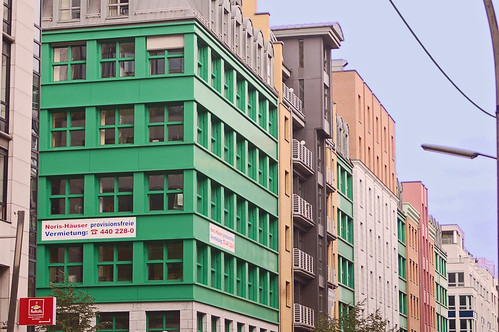
These blocs are about as archetypical as you can get, blocky style, square buildings, 5-stories, potentially ghastly colors, etc. They have been well-maintained and renovated, they are in a nice part of East Berlin, granted, but as other areas of Eastern Europe continue to improve, I'm optimistic more and more of these blocs will be renovated as such and probably sold for high rents, as is happening all over Eastern Europe already. Try getting a small studio flat inside Moscow for under $1 Million (actually, it's close to impossible).

Actually, when I see those buildings and others like them, I think that they look kinda cool and urban. They've dressed them up and given that these were actually built along a streetwall reinforcing a great street, for me it is a positive environment. There are probably some very expensive lofts, offices, or galleries in this building. Just think, what kind of adaptive reuse could someone get out of Del City-style neighborhoods?

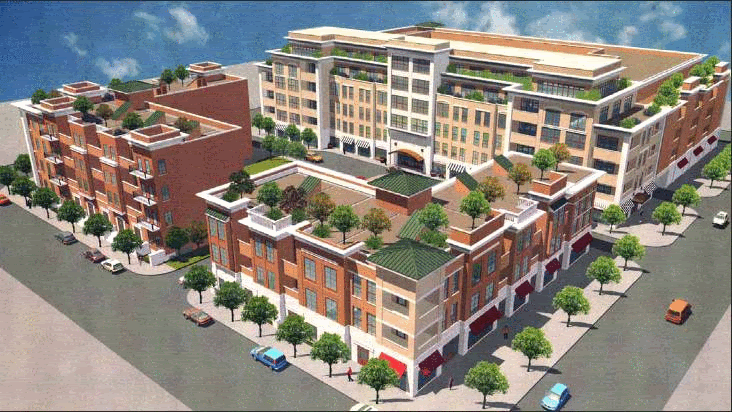
This design for the Wiggin proposal for the former Mercy Hospital site in Mid-town has been called "Eastern Bloc" architecture. Or actually, I like the OCURA committee report's euphemism for that: "Institutional." Really? It is a blocky building, with edgy urban accents, and brick masonry. If this is "Eastern Bloc" architecture, then all of Bricktown is Eastern Bloc motif. Or, excuse me, I meant to say "institutional."

Friday, April 8, 2011

Full Circle?

Just wanted to keep my badgering of Full Circle fresh, but actually, wanted to say one last thing since I am about to finally change the poll.

What will happen to Full Circle? I see three options. Stay in 50 Penn. Move north (Classen Curve). Move south (inner city/downtown). Well, I suppose there are two other cardinal directions they could move, but I'll go ahead and claim ESP by saying I have secret information that Full Circle will not locate in Bethany...no offense to Bethany.

Who knows what they will do. They all seem to be an equal shot, meaning 1/3 likelihood of staying in 50 Penn, which is not very likely, and same for moving to Classen Curve, or moving downtown. There are reasons for each. But 50 Penn ownership was recently transferred to another out of state owner. More and more of the retail court is becoming vacant. All that's left in 50 Penn now is Full Circle and Belle Isle Brewery.

50 Penn is an otherwise strong property, fully-leased for the office tower. But its days as a retail destination are truly over, despite that Full Circle has invested a lot in the location which has truly become more charming as its aged. Is the charming bookstore vibe important to them? If so, obviously an old building downtown will be better for recreating that than a new Rand Elliott-designed building in Nichols Hills.

It makes sense to move. They're in a losing situation by sticking it out in 50 Penn. Moving could be an absolutely monumental opportunity if they chose downtown, specially, Midtown or A-Alley, some of the north-downtown neighborhoods with proximity to Heritage Hills. This is somewhere that Full Circle could really thrive, and also be a catalyst for a complimentary retail mix that was far more symbiotic than 50 Penn was even in its heyday.

So what will happen? Stay? Go? Go Classen, or go downtown? Who knows. I would really hope to see them go downtown. I just think that could really create a special bookstore. There are so many great old buildings that would be awesome for Full Circle. We talk so much about how badly we want downtown retail to happen and be locally-driven at the same time. Full Circle would be a proper anchor (read: not like Bass Pro) that downtown could grow up around. Moving downtown is a move that would provide for a long, and interesting future for Full Circle. Moving further north to the newest suburban thing?

Saturday, January 29, 2011

Q&A with Chris Holliday: Coffee Talk

For those who don't know, there's a new coffee shop opening downtown. Elemental Coffee is located in the 800 block of N. Hudson in a former mechanic shop. It's actually a really cool concept. One of the proprietors, Chris Holliday, is a real coffee guru who knows his stuff. I like the blocky white look of the outside, and I understand the interior will have an interesting ambiance. Architect of Record is none other than Hans Butzer, so you know it will be very sharp.

Here's the Q&A:

1) I understand that coffee is not your day job..As a coffee buff, what was it about coffee that got you involved in trying to fill the void of it here in OKC?
I'm a natural born foodie. My life seems to revolve around eating and I really like to push my taste experiences in different directions. Coffee is both enigmatic and elegant and while we grow up knowing there is a difference between all the grocery store bags, we never really learn what makes coffees different and we are really shielded from the range of coffee's flavors. I started experimenting and researching and it simply became my hobby.

2) I read in an article that you buy 1 coffee out of every 90 that you and your business partners test--so it seems safe to say you're pretty selective and brew very high-quality coffee. What can people expect in terms of pricing?
Our retail prices range from $12.50 to $32.00 for a 12 ounce bag. This is pretty average in specialty coffee. We will probably start to offer more higher end coffees but we will introduce them slowly. Our drinks will be priced based on the coffee we use for brewing but generally inline with other specialty coffee companies.

3) My personal philosophy on coffee is that it's all about the environment, the price of a cup of coffee includes the coffee shop that you are enjoying. What type of environment for the coffee shop will you be creating?
Elemental will be a coffee and conversation place. We aim to present a sophisticated ambiance with an approachable atmosphere. There will be no doubt that we are dedicated in our approach to coffee but we also hope to make everyone feel welcomed regardless of whether they share our sentiment. Educating people about coffee can't be forced. But even the most dispassionate consumer can distinguish between horrifically prepared grocery store robusta and freshly roasted arabica that makes a clean and balanced lovingly crafted by-the-cup brew.

4) Until the coffee shop fully opens in April, how do you view the operation until then?
It will basically be a construction zone with a garage door in the alley on the South side that will be open in the early mornings as a stand up coffee bar.

5) What made you settle on Hudson Avenue, rather than some of the more notable activity hubs throughout the downtown region?
2/3's of the Elemental owners live in the Heritage Hills/Mesta Park area. MidTown is a proven and growing part of OKC.

6) What will be made of the warehouse you currently utilize on West Main? I know this is kind of off-topic and that Main is an industrial area, but how do you feel about the potential of the West Main Historic District (particularly between Western and Indiana)?
Our current location will go up for rent as soon as we vacate it. I think that part of town is still a few years away from becoming a fully utilized activity center.

7) What are some of the current local businesses that serve up Elemental Coffee?
Cuppies and Joe, Beatnix, Cafe Evoke, Forward Foods, The Wedge, Deep Fork, La Baguette and a whole host of other great shops.

8) Have you settled on a name yet for the coffee shop?
We are going to simply call it Elemental Coffee.

9) Downtown has seen some hit and misses when it comes to coffee shops. Obviously Coffee Slingers has been a success, whereas the Buzz has had landlord issues, which eventually led to the demise of Uncommon Grounds, and then BrewHaHa was just unsuccessful sadly, and so on. How do you view the opportunity for the coffee business in downtown?
I think quality served up with passion will always be successful. We have thousands of great customers all over the metro area and this is a testament for the thirst that exists in this region to be served quality products. We are going to push the quality envelop to the edge and see where it takes us.

10) One notable thing about OKC's inner city is a relative lack of Starbucks infiltration. At the surface that's always a good thing, but perhaps a stronger presence would raise coffee awareness in the city? Why are there so few good coffee shops in this city? Is that good for business?
Until recently there hasn't really been what I would call a "good" coffee shop. My assessment is that cafe operators have bought into the concept of competing with the large chain coffee shops and be content to clean up their leftovers. I believe that this short sells the consumer in this area and leaves a huge gap for those willing to deliver truly great coffees.

Sunday, October 17, 2010

Brace for the 2nd wave of housing? (fingers crossed)

The first wave of new housing projects came shortly after the completion of the first MAPS package. We saw the completion of many projects, some that had been long in the works, others that were completed shortly after being envisioned. Some of these projects include the Legacy at Arts Central, the Montgomery, Park Harvey, the Seiber, the Harvey Lofts, Block 42, Central Avenue Villas, Maywood Park, the Centennial, and more. Then what's more important is that we saw more proposals coming out constantly so that it looked as if the second wave would come right after the first wave. All in all, I recall the total number of units being proposed between 2005 and 2008 being over 2,900.


The second wave included projects that almost unanimously fell apart at once. The Cotton Exchange. Overholser Green. Bricktown Gateway. The Flatiron. Bricktown Village. The Leslie. Maywood Hall. The Heights. And many more, and that's just residential. There was maybe ONE project from this entire wave that ever came to fruition, and that was The Lofts @ Maywood Park, which has been successful in selling smaller, reasonably-priced units to a younger demographic.

Then all of a sudden there was the silence and the frustration at the silence. Voters were asked to approve $777 million in public improvements on top of billions in the forms of other public improvements being made simultaneously downtown, and the rational is that it would spur the economy by resulting in private development. If that was so, then where's the private development? The first deal that looked like it could be a spin off was OCU moving its law school downtown--a deal which fell apart over the summer as a result of OCU's change in leadership.

Then things started to change. Was it one project? Probably not, because we are fairly certain that the owners of the land bounded by 2nd, 3rd, Oklahoma, and Walnut have been mulling over an urban project for a while. They were already past soils testing, which occurs toward the conclusion of the planning phase, when they were ready to publicly announce their plans. But the announcement of Jim Thompson's Aloft Hotel could have possibly resulted in things heating up and interested parties suddenly getting a lot more interested. The design of the Deep Deuce Aloft Hotel, which is very unique from all the other Alofts which are still very decent, turned heads. To say the least. Could the bold statement architecture of the proposed Aloft have a hand in moving McKown forward? Could it have had a part in persuading McKown to make his project as truly urban as possible?

Regardless, I find it very hard to say that a major investment like this would be unaffected by a game-changing addition such as the Aloft.


Then add a few more folks to the picture. Dick Tanenbaum is getting back involved downtown, who is competing for the attention of OCURA on the Overholser Green site, may have a viable proposal to build something where another successful developer, Chuck Wiggin couldn't. That's 250 apartment units that Tanenbaum says he can break ground on, in January 2011 (very soon) provided OCURA makes the right decision. Add that to McKown's 227. Mickey Clagg is finally about to resume the snail's pace renovation of Hadden Hall, which will bring 18 units onto the market, on top of the 20 or so they finished earlier this year north of Saint Anthony's. There are a few more smaller single home projects, such as 626 West Main, the Waters' residence in Deep Deuce, several homes u/c in SoSA, and a few around the medical district. Clagg says he'll begin 1212 Walker in the next few months, as well. 21 units there.

So add it all up, and there's at least 550 or so units that are about be underway once again, which actually does come close to the first wave in scope, which I think justifies this as the second wave, albeit a few years in waiting, and much smaller than expected. Still, hard not to take 550 units--especially in a cycle in which only conservative, pragmatic projects are getting off of the ground. I think Tulsa is still building more units, and if not more units, certainly at least twice as many individual projects seem quite possible (OKC's count is offset by two gargantuan-sized projects, 250 and 227 units). Do we count The Hill once again, now that it seems somewhat back on track? Hard to tell. One thing's apparent, is that downtown development is possible, even in OKC. Yes, "in this economy" (if that cliche phrase hasn't been banished yet). What I mean by that is that development proposals are still gaining traction, as long as you have the money to do it and aren't relying on speculation, and it's also a great time to get involved because construction costs have gone way down for urban development (although I think to agree this is regional, and depends on how desperate local contractors are for bids, which in Oklahoma isn't very desperate lately). I also think development is very cyclical, and I can see signs where the economy in the states is improving overall, and we've all been preaching about how well positioned OKC is to make some moves once the overall economy begins to rebound.

I think that this is a bona fide wave of residential projects, several that seem to be affecting each other, all the way across downtown from Midtown to Deep Deuce. Why I chose to write about this is simple: This means we could see some more very interesting proposals very soon, as well. Have we seen pent-up demand for downtown housing fully satisfied with the 550 or so new units from the 2010 downtown housing wave? Last I checked the downtown apartment occupancy rate was still 97%, so that would probably be a..no. Who's to say that there aren't more interested parties out there waiting for the right time, who no doubt have been encouraged by the Deep Deuce and Midtown projects that could all begin within the next 4 months.

Friday, September 17, 2010

Oh OCURA..


I originally came out as a huge proponent of Overholser Green. I argued that it was more appropriate for the location, given that the original proposal had a historic motif that fit in well with other nearby large upscale apartment buildings on the far north edge of Mid-town, such as the Seiber and the Aberdeen, among others. I thought it was urban enough that it was also appropriate for what we're trying to create in Mid-town. I also liked that it appealed to this imaginary pool of hundreds of people out there looking for million-dollar condos downtown.

I thought such a pool of people existed..why? Because that's what OCURA said, that's what DT OKC Inc. said, that's what the Chamber said, and that's what tons of other people who knew their stuff were all saying. It made sense: In order to maximize demand at every single price point we would have to work our way down, first focus on the most upscale stuff and keep out anything under $1,500/mo because that may turn away some of this prospective demand. In hindsight it sounded so great and I was so convinced by this line of thinking that I am shocked I was not advocating for downtown to be surrounded by gated entrances and ramp up efforts to keep creative types out. After all, they bring undesirable elements, and we were truly pursuing downtown development while at the same time using an economic model not at all unsimilar to Edmond real estate. Marva Ellard was obviously right all along, well before the establishment realized it, and that's to her credit..unfortunately we'll just have to wait a while till we see her next project, hopefully.

I have obviously since changed my mind. In fact I wouldn't have if I hadn't seen the mistake of all these condos selling for almost a million dollars. I wouldn't have fallen for it in the first place had I understood basic economics, but luckily, some modicum of economic understanding does come hand in hand with learning about urban planning, architecture, and sustainability--the things I CAN talk about. You start from the ground up, always, everyone knows that, and downtown was a NEW and untested residential market for the most part.

How do we apply this knowledge to public policy? Simple, bid selection. When it comes to the big downtown projects I really believe that OCURA has never engaged in a corrupt deal. They've engaged in TONS of bad, knuckle-headed deals though. Their incompetence, perhaps unfamiliarity with their own rules, and general lackluster due diligence sure screwed Anthony McDermid as well as the people of OKC who drive past a mud field backing up to I-235 every day. It's simple though, they have always preferred $$$ condos in selecting bids, because that's what we thought we needed. And to this day, they are still operating like that due to how slow they are to catch on. Even DT OKC Inc. under its new leadership has caught on and is about to release a new housing survey that will give us some more realistic advice on how best to grow downtown. I hate surveys and I think they're a waste of time, but if it truly shows what we already know, hopefully that will be the evidence that OCURA needs to slowly reshift its strategy over the next few years. Evidently they are still grasping on to the faulty economics preached in the earlier half of this decade.

Bringing it back to Overholser Green, Chuck Wiggin is still trying to get this project off, despite that Overholser Green isn't even close to resembling what was originally approved. Even without any new news on the matter, the fact that the project is already up for its second (or third, I forget) timeline extension tells you that the project is dead and it is time to move on. There is nothing going to happen here. Give Wiggin another extension and he still can't guarantee that anything will happen, and his only response/excuse is to explain why we're in a recession--this despite that his units in the Mayo 420 project in Downtown Tulsa are selling just fine. What this is about is pride and giving too many chances to Wiggin just because he has already invested $200,000 personally into this project. I understand that, and it is important to take care of important development figures because we very much want Wiggin to continue to be involved in downtown development and he's done several great projects in the past. Sour grapes over this benefits nobody, but it could even be to Wiggin's benefit that his contract be yanked by OCURA and he be forced to move on as well, before he plunks down even more change into a project that is still doomed.

Sometimes there's nothing wrong with a site, just after reformatting a project over and over, it's just time to throw the towel in and take a step back and remove yourself from the situation. The old Mercy Hospital site is a great site, but it needs a fresh set of eyes to look it over. Enter Dick Tanenbaum, stage right. Tanenbaum, who has pulled off a ton of incredibly successful downtown apartment buildings (and learned his lesson with the unsuccessful condo conversion of the Montgomery), wants to build 250 apartment units, moderately priced, with mixed-use retail on site. And he says he can get it off the ground by early next year, in fact, he already has conceptual drawings that he can show interested parties. Ladies and gents, we have a winner.

When Wiggin claims that he should be granted an extension that he still may not be able to make any progress by even if he once again completely revamps the project to some unknown format that would be more economically feasible, which could be anything and OCURA would likely not insist on due diligence with that, and on the other hand Dick Tanenbaum can show you exactly what he wants to build and says he can get it off early next year--how can you not move on from Overholser Green? I think that nobody wins by looking at this as a Wiggin v. Tanenbaum issue. Nobody wins by looking at this as an Overholser Green v. Whatever, or even Overholser Green v. Mercy Park, issue.

The two most important points that win the argument at the end of the day in my opinion, and have been sorely overlooked are:

1. This site is holding up progress elsewhere along Walker Avenue, and it is time to get a move on and finally get something going on here. The businesses along Walker Ave, such as Midtown Deli, Irma's, etc are surviving just on the lunch crowd and have only been staying open in hopes that the residential population around there will grow and be able to support dinner hours in the future. Banta would have developed the Osler and 1212 long ago had the Mercy Hospital site been redeveloped sooner, and now that those properties are in the hands of Bob Howard and Mickey Clagg, I see no reason for them to move on those properties until redevelopment commences on that site as well. I do however see every reason for them to prioritize those projects next ASAP once someone, anyone, breaks ground on the site further up Walker. That is the project that is holding a lot of the Walker Ave projects behind.

2. Even if Wiggin does revamp his project and get it off the ground, we have no say in that if he's given a contract extension, and that's not right. Developers should be awarded bids based on the project that they will build, and it is not right for developers to present a concept just to get the competitive bid and then completely reformat the project, even if they have a good excuse. The reason Wiggin got the bid was because OCURA liked his project the best, and that should be an obligation to build THAT project. OCURA should yank his bid just for deviating from the original plan, alone. OCURA should definitely not renew his contract just so that he can deviate even further from the original plan and not even present anything new to give us an idea of WHAT he's going to build, other than promise that he is working on it. OCURA should also grow some gonads, because this is how they've always operated from the start of time.

(This post is under review and will change from time to time, and I will add pictures later, so check back.)

Saturday, August 21, 2010

Q&A with Steve Mason

I am going to start a new series of Q&A with the very people who are behind the scenes building up the inner city as we speak. Last year I first got the chance to meet Steve Mason after a post I wrote (that was featured in the Oklahoman's Monday Morning Quarterback) caught his attention. Steve, the CEO of Cardinal Engineering, is highly involved in the community, from serving as president of the OKC Community Foundation, president of the Boy Scouts Last Frontier Council, and is currently serving on the boards for the Junior League, Automobile Alley, the Downtown BID, First National Bank, the Greater OKC Chamber of Commerce, the OKC National Memorial, and more. He is also a major supporter of the arts in OKC, including deadCENTER Film Festival, and the OKC Arts Council.

His decision two or three years ago to think twice about demolishing a few "decrepit" buildings on 9th Street has turned that block into one of downtown's most vibrant hotspots. Read on to learn more about what has made his developments and his vision for an urban resurgence a smashing success, where there was only blight 3 years ago. To me, the most interesting thing in this dialogue is how Steve Mason originally intended to just flip the building 1015 Broadway and then got sucked in and developed a passion for restoring life to the inner city.


Q1: What was it that first led you to get involved with Automobile Alley, and how has it compared to what you expected when you decided to get involved?
A: 1015 Broadway was purchased as a good deal with the plan to sell it again for 25% profit in 6 months. I had planned to sell 1015 Broadway and never invest in Automobile Alley so the outcome is not what I expected.

Q2: How have you been able to continue the redevelopment of properties around 9th and Broadway during the recession, when other developers can't get financing?
A: Strong personal credit, my passion, strong demand by tenants. Mickey Clagg has had similar experience in Midtown in that what he develops rents easily. Oklahoma City and other cities' urban cores have very limited land areas vs the suburbs which make these areas very valuable when there is demand. Today there is consumer demand for the redevelopment of the core of American Cities.

Q3: Why did you choose to save old buildings that everyone advised tearing down?
A: My fall, 1978, freshman environmental philosophy course at Vanderbilt University learned about Tragedy of the Commons and read Aldo Leopold’s “A Sand County Almanac.” Sand County discusses how we should value our resources and surrounding environment which we are part of. The old buildings were such a resource. Also, 4 remodeled homes on an tree-lined street are more appealing than a new red concrete box building.

Q4: Was the uniqueness of the buildings along 9th Street what attracted the diverse range of tenants?
A: Yes. Also, the initial diverse tenants are beginning the attract more diverse tenants. The group is meeting monthly which will result in incredible synergistic outcomes on 9th street. The August block party to celebrate the opening of Shop Good was a tremendous example of what is occurring. Much like a neighborhood block party, every business participated to celebrate the opening of Shop Good.

Q5: How did Rawhide become interested in the building at 1007 Broadway?
A: Ask Angie Bailey, the owner of Rawhide [for more info]. I believe that Angie understands and wants to be part of the collective vision of approximately 60 owners, tenants, and members of government with the same shared vision for the communities of Automobile Alley and Midtown. She also likes the easy access from the Centennial Expressway for her customers and the beautiful 80 year old building. Since opening in July, her sales have far exceeded her expectations.

Q6: What do you see for the potential of adding more mixed-uses (residential and retail) to Automobile Alley?
A: I hadn’t planned to have the second floor of the homes on 9th street occupied by the same person who operates the shops on the first floor but it happened. In large cities this is typical because it is more economical and provides for a very very short commute time to work or mid day naps.

Q7: What is next for your development plans in this area?
A: Rooftop patio above rawhide which is stunning. Biff Sturgess (Office of James Burnett) with assistance from J.P. Craig (Hornbeek Blatt architects) provided a quality design.

Q8: With the likelihood of North Broadway being a streetcar route, what will that do to Automobile Alley?
A: A streetcar route would add to the vibrancy of the district and strengthen the community feel. It would encourage a guest at the Skirvin to ride the streetcar to McNellie's for lunch and Rawhide to shop.


Q9: As a supporter of local events such as deadCENTER, what does that bring to the community?
A: Diversity is very important to a successful community. DeadCenter produced 2 events in Automobile Alley in June, 2010 which added to the vibrancy of our community. The Cinco de Mayo, Shop Good parties, and Tuesday taco events have similar impacts.

Q10: What could the city do to better position Automobile Alley to be successful for others?
A: The City has been wonderfully supportive by fixing the former potholes and providing two minute police response time when an occasional harmless vagrant frightens a guest. We are fortunate that the leadership of the City of Oklahoma City understands the private sector needs, are risk takers and supportive of our needs. I expect the City will continue to listen and be supportive. Parking is a challenge which will require public and private sector cooperation, creativity, and ingenuity. I estimate that without additional parking, the north end of Automobile Alley will only be ½ built out. Diagonal parking on Broadway and adjacent streets from the YMCA to 10th street will provide 200 additional, inexpensive parking spots.

Q11: What do you think is the best edible thing currently available in Automobile Alley, including 9th Street?
A: I have 3 children, Travis, George, and Marie. I love my 3 children equally on most days. I have four current children on 9th street which I cherish equally. Depending on my mood, I vary my intake on 9th street. I think happy hour food and prices quality are wonderful at Red Prime and Pachinko. The response to Tuesday Tacos at Iguana and Wednesday burgers at McNellie’s continues to amaze me. I never expected that dollar tacos on Tuesday at Iguana would result in 30 to 60 minute waits from 6 to 8pm on a street that was empty and ugly three years ago. Taco Tuesday and Wednesday McNellie burgers are important to our districts as we continue to develop our sense of community. Both events provide an opportunity for our neighbors to socialize on a consistent basis and see our friends. Within 5 years, I expect Automobile Alley and Midtown districts to become continuous so each district is important to the other district.

Thursday, July 29, 2010

10th Street Rising

Disclaimer: This is a post I have had in the works for weeks, and in my opinion, is still incomplete. Going to go ahead and put it up since I'm not going to get the information I'm looking for, after two weeks of placing calls at the Planning Department (where the phone oft goes unanswered) and sending emails to individuals. This is put together after evaluating the 10th Street Medical Business District Final Report and combining it with my own general knowledge of what is happening in this area.


An overview of the area of MidTown OKC under the changes proposed by the Medical Business District Final Report.

First of all, the purpose of the newly-formed Medical Business District (which will be referred to as MDB), which is basically just MidTown OKC, is a corridor along NW 10th Street that links the Oklahoma Health Center to Saint Anthony's Hospital and the medical cluster around there. The idea is that 10th can grow by serving the demands of the burgeoning health industry that anchor it on each ends..and that is a large, untapped resource for growth considering the needs to remain unfilled. While the Saint Anthony's end is becoming home to a critical mass of good restaurants, there is very little in the way of that across I-235 albeit a Quizno's and hospital cafeterias (Yum).

We are also finding out that these hospitals, the Medical District in particular, would benefit from having a hotel nearby for family members of overnight patients. Something like the proposed Embassy Suites just south of the new OU Cancer Institute in the Medical District--a project that has not moved forward after 4 years of being on the boards. It is also worth mentioning that at least one of the properties owned by MidTown Redevelopment/Renaissance/Whatever (the old Marion Hotel) is a former hotel, just as it is also worth noting that Marva Ellard proposed a mixed-use project with a significant amount of boutique hotel rooms at NW 13th and Walker that OCURA put the kibosh on--Marva was at one point rumored to be intent on taking her concept somewhere else in MidTown, but there has been a recession since then.

Other needs in the way of development that have gone unmet in MidTown and in the Oklahoma Health Center are typical office and housing needs. With the city's largest concentration of high incomes, the Oklahoma Health Center would benefit from seeing some more specially-targeted housing be developed between that area and downtown--just as Saint Anthony's would benefit from more housing being made available MidTown. Only MidTown has housing available and more on the works, with absolutely nothing coming in the Medical District. Health clusters also have a huge demand for office space, as often times surgeons, and physicians, and doctors of all stripes don't office in the actual hospital unless they are specifically hospital management--this means a market for nearby Class A office space.

These developments intended to serve what already anchors 10th are intended to go in certain areas of the MDB, defined as A, B, C, D, and E.

A: The OCURA redevelopment site at 13th and Walker. This area apparently justifies its own offset area, but I'll go into the development statuses later. The intention is to do something mixed-use, but primarily residential, and tie in the nearby Heritage Hills neighborhood. They recommend 80-120 housing units.

B: Between Saint Anthony's and Classen Blvd. Infill has been stymied by land speculation driven up by perceived potential demand for office space around Saint Anthony's, and another challenge identified is the damaging "welcome" you get when entering the area on Classen, and yet another challenge are the unsightly enormous surface parking lots that plague the area. It is an area of many challenges. It calls for connected 11th St between Classen and Shartel and large-scale residential and retail redevelopment. It does not touch on the issue of contemporary infill occurring in the SoSA area (between 6th and 9th) though it does mention that the area has 45 vacant single family lots available for such projects. It suggests that Classen Blvd development have no setback and something be done with the surface parking around the Surgeons and Physicians Tower. Total development: 264 res units, 54,000 sf new office, 65,000 sf new retail.

______________________
In between B & C: The Saint Anthony campus masterplan is as follows. Notice the two new buildings, which I demarcated with red dots, and the proposed new surface parking lots, which are the yellow dots. The two new buildings are to the south of the current campus, with the larger new building proposed south of the recently finished Surgeon's Office Building at Walker and 9th (with the Starbucks on the ground level).

______________________

C: The defining feature of area C is the extension of Classen Drive, different from Classen Blvd, which diagonally cuts through MidTown, and will have new traffic circle interchanges at 9th and Hudson and 8th and Harvey, its terminus. There will also be a new traffic circle at 13th and Shartel. These traffic circles were funded by the 2007 G.O. Bond. There is also a park proposed on 10th between Hudson and Harvey, on the site formerly occupied by the Red Cross Building. The plan calls for high-density mixed use in area C, they must have forgotten about projected development counts though--or intentionally left it out due to the flexibility of high-density.


D: This area has some interesting opportunities, with the prospective commuter rail coming through here making a transit-oriented development (TOD) very possible (think Mockingbird Station in Dallas), and also the fact that it represents one of few large scale redevelopment opportunities downtown, where you can really do an RFP for a HUGE site and see what kind of mixed-use development we get out of it, though the last time we did that..we got The Hill. The report proposes creating a new N/S street adjacent to the east side of the BNSF tracks, make Oklahoma Ave two-way, activate Campbell Park (parallel to N. Broadway), realigning a 235 ramp, focus on the potential for a TOD, among other things I see here.

(Just as a side note, I would seriously question how the development appears to be inward-facing on the newly created N/S pathway..it doesn't turn its back on Broadway or Campbell Park, but I feel like it needs to have more presence in connection to the REST of downtown, Broadway, and even the MDB area. Orienting the buildings primarily toward Campbell Park would create a much stronger sense of place on Broadway to connect it to other downtown areas--and it would give Campbell Park an almost "Jackson Square-like" feeling.) The red dot marks the spot for the old Bond Bakery building.

E: This is a proposed extension of the Presbyterian Health Foundation Research Park north of 10th Street. It is suggested that the density be higher here than on the current PHF campus, and recommends that PHF try to raise density on their campus--which as it stands is not even built out to the original proposal. Also proposed a new 235 ramp for 10th Street, pedestrian and aesthetic improvements for the 10th Street bridge, and connecting the grid to the current PHF campus. Proposes 31,000 sf of new retail and 190,000 sf of new office/R&D.

TOTAL: The total numbers for MBD development, which is anticipated to be near complete in 2020 (yeah, right) are as follows: 450,000-800,000 sf of new office space, 130,000-175,000 sf of new retail space, 200-250 new hotel rooms, 1,500-2,000 new residential units. Keep in mind that the 2005 Downtown Housing Study noted that downtown could absorb as many as 8,000 new housing units by 2015 (we'll be lucky to get 2,000, in reality)--so 2,000 for the MidTown OKC area is not at all unreasonable.

Let's also keep in mind that there are a number of projects potentially in the works. We know that Mickey Clagg and Bob Howard (MidTown Redevelopment/Renaissance/Whateverthenameisrightnow) are progressing mightily on the redevelopment of several properties. A half-dozen or so smaller apartment buildings have been refurbished west of Walker, mostly by Clagg/Howard. These projects have gone off without much hoopla but have added a significant residential presence. They are also progressing on their bldgs at 10th and Robinson, with the Hadden Hall lofts nearing completion, the Packard Building nearing completion, and the Guardian Lofts very well underway. The Cline Hotel will also be residential of some sort, it appears. I have also heard that they are more actively reviewing the 1100 and 1101 buildings (at 10th and Broadway) and a number of possibilities may await these buildings, so we'll have to wait and see on that, but an announcement will probably be coming (by the end of this year, I would imagine). 1212 Walker and the Osler Lofts are also still on, just not a priority right now for them.

The city has acquired the Red Cross bldg, completed the asbestos abatement, and demolished the bldg--the site has been cleared. Interestingly though, despite being recommended by the final report to become green space, the city is pursuing RFPs for redevelopment proposals. On the other city-action redevelopment site, Overholser Green appears to be dead in its tracks. They are fixing to get a short-term extension from OCURA that I don't think they should be given, so we will have to wait even longer until OCURA can open it up with a new RFP and maybe we can get a...more committed developer in there. Wiggin Properties seems more interested in Downtown Tulsa right now, anyway. That's just my opinion, though. The Palo Duro II project, which was one of those "rendering bait and switch" projects that we love so much (compare original rendering to what was actually built, and you'll see what I mean), is also finished at Hudson and 12th. The Grateful Bean Cafe is also closing, but the building owner is just going to replace it with a different restaurant concept that can be more competitive in the new MidTown scene.

I pointed out the Bond Bakery because Gary Hasenflu, a noted historic redeveloper from KC (Cold Storage Lofts + numerous OK projects) is working on a deal to redevelop the Bond Bakery into apartments that I hope is still on the table after we rescued the historic tax credits. There is also a plan to turn the Java Dave's space into a new deli, and Java Dave's will be moving into a smaller space. Also let's not forget the housing Marva Ellard has been very successful with (Seiber Hotel), and if the rumors are true that she is interested in taking her Mercy Park concept to a different site, perhaps she would be interested in doing a TOD in the offset area D? The Campbell Park-front sites are still owned by Bert Belanger, who demo'd the old flop houses that once stood at that site. Before the recession, he said he was planning a large mixed-use development, which is obviously no longer on.

I'll end with the unanswered questions I had for the Planning Department staff which have to do with the following:

1. There has been some confusion out there regarding the public classification of Medical Business District, Inc. It appears to me as what would be called a quasi-government organization, in that it looks like a private incorporated group, but in effect acts as a development surrogate for the city. The coordinator for this group is Robbie Kienzle, a redevelopment specialist with the Planning Department. The board is made up completely of civic figures. They have an okc.gov website. Articles interchangeably refer to it as the city. Yet there are people out there adamantly insisting that MDB, Inc. is entirely separate from the city and 100% private--so could someone clear this up? Interestingly, the very number that one of these people told me to call at City Hall never answers her phone, so it's almost worth just writing the whole concern off altogether.

2. The Final Report recommends making the Red Cross site a green space project, but the MDB is pursuing private redevelopment concepts. 1, how has the response to that been; and 2, why did they opt to go with the private redevelopment over a public green space?

3. The Classen Drive extension was funded in 2007, and since it is a bond project, I don't understand why we haven't already begun with extending the road, let alone with right-of-way acquisition necessary to begin with first. When is the Classen Drive extension finally going to get underway? If these developments are supposed to be finished by 2020, and Classen Drive is the pivotal lynchpin toward redevelopment of the central swath of MidTown OKC--what's the hold-up?

4. How do we intend to route the streetcar system through the MDB? Most proposals I've seen have it running along 11th or 12th to avoid the traffic circles, but it would be possible for a streetcar to circumnavigate or more likely just transect a traffic circle, though you may have to have flashing stopping lights to clear the traffic circle of traffic before the streetcar can travel through there. Would it not be well-worth it to have streetcar contribute toward the sense of place and also as a development impetus for the 10th Street corridor--I just don't see why so much emphasis is placed on activating 10th Street as a focal point for MidTown, and then we would run the streetcar down 11th (which is not even contiguous) rather than 10th. It is one of the many things going on right now that I do not understand at all.

Sunday, June 27, 2010

Hadden Hall renovation update

Apparently the deferral of historic preservation tax credits is not holding some projects back, more evidence of the godsend saving that tax credit was. The Hadden Hall project, on 10th between Robinson and Harvey (next door to the Packard Building project) is well underway. Midtown Redevelopment/Midtown Renaissance/Whatever recently issued a statement with the following information:

18 new units in all
All 1bd/br
$700-1000/mo
December 2010 completion

That this project is just 5 months away from completion is exciting news for downtown!

Tuesday, June 8, 2010

Dear Full Circle: Please come downtown!

We've said so much about what it will take to get downtown retail on solid footing. I've exhausted the current state of retail as well as any and every study that's every been done (and ignored). What if we could get well-established local retailers to come downtown, like it once was? I think that is going to be by far our best bet for bringing downtown retail back. Well-established local retailers have already built up a reputation and a loyal customer base, so they would not have the burden of having to establish their own business and a new market at the same time.

As Marty Dillon moves forward with renovations to the Tower Theater in Uptown, there is also the likelihood that he will move his longtime family-owned MG Novelty party store to the storefronts attached to the Tower Theater--which would be a huge boon for Uptown in addition to to the theater which will be a multi-use events center. There is also an emerging retail area developing in Bricktown where Oklahoma Avenue crosses the Bricktown Canal--we've recently seen the opening of the Bricktown Candy Co, Peachwave Frozen Yogurt, and the Red Dirt Marketplace, and Envy possibly moving across the tracks--joining the existing stores like the Red Dirt Emporium and Put a Cork In It. Here you will have 6 possibly more retailers in the same block. If retail takes over the languishing Bricktown Canal area (which has gone slightly downhill while the rest of the district has made huge improvement) it will go a long ways toward putting a retail foothold back in downtown.

So, is anyone in the mood for a slam dunk for downtown retail? What if we could get Full Circle Bookstore to move downtown? We all know 50 Penn is being abandoned by all of its respectable tenants and we expect Full Circle to be no different eventually. They can't be the lone holdout in what has essentially become an upscale Crossroads, they need to start thinking about relocating, and I am sure they're already on top of it..who knows, they might even be in talks already with Chesapeake for Classen Curve Phase 2. Personally though, I think Full Circle needs to buck the trend and avoid going to Classen Curve like everyone else. Full Circle NEEDS to do something outside the box in order to maintain its unique identity, and I can't see Rand Elliott preserving that. Full Circle needs downtown, not Classen Curve, not anywhere else. The advantages that downtown and only downtown can offer Full Circle are as follows:

1. The appearance of a legitimate bookstore in a building that looks comfortable and "worn in."
2. Proximity to an emerging demographic of young professionals calling OKC home instead of fleeing from here.
3. Proximity to OCU and the thousands of college students that will study in downtown within a few years (OCU Law, ACM, OBU MBA, etc).
4. Following the example of the other examples of great bookstores..Elliott Bay Book Co in Seattle, Powell's in Portland, Harvard Book Store, Book People in Austin, and so on. This could get Full Circle on lists of greatest bookstores.
5. The opportunity to be at the center of the community and trailblaze the return of downtown retail, and benefit from being first to the scene.
6. Better proximity to all of the affluent areas of OKC, including SW OKC and Norman, not just the north side. There is not a single bookstore between downtown and Norman, despite tons of affluent and educated areas. 73170 is highest income ZIP code in OKC metro.
7. How could you pass up the potential of the following building:

And it would be across the street from this:


I think Full Circle CAN sell some books here, if you ask me. I think this has potential to be incredibly successful. Downtown OKC Inc needs to bring everything they've got to the table in order to lure Full Circle. The MidTown Redevelopment guys need to do whatever it takes to make it happen. Downtown enthusiasts need to mount a good email campaign to Full Circle. Full Circle shoppers need to mention it to them every time they are in the store.

Monday, May 3, 2010

A thousand questions

So many questions, so little time. In lieu of a full post (currently working on an exhaustive retail post), I think for this week I'll just post some questions that are burning in my mind. If anyone would venture some answers, feel free.

I am afraid that if it's questionable, in "this current economy" (I disagree with that..) and in the current malaise that is private development in downtown OKC, you have to assume the worst..that each of these possible projects are negligible. I want to be wrong. Or here's a much more optimistic possibility: Maybe everyone is waiting to see what's going to happen with MAPS 3 before they put any more investment into downtown? Too much up in the air right now. There is an amazing amount of change going on, but it's virtually all public sector and instead of invigorating the private sector, the private sector seems to have taken a breather.

So here goes, no particular order:

1 Is OKC still doing anything to attract more retail? Did the ULI panel give the city some ideas? Is the city willing to subsidize a "Core to Shore boulevard" retail development?

2 Has anyone besides myself realized the demolition spree that this city is on? Multiple buildings on 10th Street, the SandRidge proposal, Bricktown Steffen Creamery bldg, and more. Now it looks like the next may be a row of shops at Classen and NW 30th. Oh and the site Bradshaw cleared at Broadway/12th. The more I think, the more examples I come up with.

3 How has first-floor leasing been going? Legacy and Park Harvey were huge successes in that regard. What about the Maywood Lofts? Chuck Ainsworth's Candy Factory project? I'm sure there's some I'm forgetting. I know there is no first-floor retail yet in the Candy Factory "Lofts" or in Maywood Lofts' spaces..

4 I'm curious what Steve Mason's been up to. He's always up to something cool.

5 The Maywood Brownstones have changed hands. So does that free Ron Bradshaw up to do some more projects? Hopefully something more economically feasible. And what does this mean for Maywood Park? Will the brownstones be finished out as originally planned? (dozens more were originally planned)

6 When I was last in Bricktown I saw a ton of site work going on around the Steel Yards project. Is that going forward, or is something else entirely going on?

7 Did the ULI knock some sense into the city, or is Mayor Mick still intent on building the convention center adjacent to the Core to Shore park? It might make or break MAPS 3. Not really, but still--why be intent on making the worst out of the top-dollar ticket item?

8 What is the deal with Chesapeake? I realize we will never find out, but it's worth speculating. So much construction equipment between Classen and the tracks, on top of several blocks that I'm guessing they cleared. They've also been clearing a half dozen apartment buildings off of Grand Blvd between Western and 63rd. There was an apartment building on 63rd in front of Nichols Hills Plaza they also just razed. No announcement from Chesapeake as usual. What is going on? We already know Whole Foods is going in where they tore down the funeral home earlier this year.

9 Ron Bradshaw (I think it was him) bulldozed that site at like.. NW 12th and Broadway. What will come of that? Another site that was bulldozed just to sit for decades? We all thought we'd see development of that site by now, no surprise--no development. Maybe something is still planned, or is he no longer developing?

10 What is going on at Saint Anthony's Hospital? I'm hearing a lot about two possible new mid-rise buildings at the hospital, including a new emergency ward--and in addition to that, I'm hearing about a group of doctors interested in building a new doctor's office building (significant midrise as opposed to lowrise from what I hear).

11 What's the deal with some of these downtown developments that you hear nothing about? Like The Carnegie. The First National Building renovations? The CityPlace Lofts (in the upper floors)? Will Lower Bricktown ever be finished (is Randy Hogan going to be 'let off' or will OCURA ever take the land back)?

12 Our friend Nicholas Preftakes... 'nuff said.

13 Are some property owners actually trying to make sure that the downtown streetcar does not go in front of their property? Words can not describe how misdirected I think such a move would be. Streetcar = good. Usually the argument against it is "I'm too cheap to pay for it," and not.. "It better stay off of my lawn!"

14 Would a downtown grocer even be successful? Crescent Market closed. The deli is still open, thankfully. People really do a lot of talking about what downtown needs and yada yada--when someone comes in are they supporting them? It's a valid question I've heard raised by many. I've asked people what businesses they think are in need of support, nobody wants to specifically name a business that's doing badly, but maybe we really do need a downtown endangered list..if it would help.


Not to be all negative, unexpected answers that have come up..

1 Is Bricktown EVER going to have some decent retail? Apparently, yes--in June. The people behind the Red Dirt Emporium are opening a "public market" type space in June that will feature a collection of local vendors with different kinds of booths. It will also hopefully act as an incubator for new retail in Bricktown, where people who make shirts or food or whatever--can start out with a booth here and then get their own store as they expand. The market will be located on the canal level of the Jackson Building in upper Bricktown--the interior will be very avant garde, very Bricktown. Can't wait to see it.

2 Will SandRidge be opposed? Yes, big-time. An awesome group has formed with the mission to "Keep Downtown Urban." Preservation Oklahoma has filed a public appeal against SandRidge Energy's plans to raze north downtown leaving only SandRidge Tower standing. Today during lunch they held a "Building Hug" ceremony downtown, gathering about 40 participants, as well as spectators and news reporters. They gave out free "Keep Downtown Urban" t-shirts as well.

3 Can development happen during this economy? Yes. Look at Paseo, look at the Plaza District--not only is there significant redevelopment going on, but these are also by far some of the highest-risk (as far as lender's are concerned) development areas of the city. Low risk development: Bricktown, or Memorial Road. High risk: Plaza District (because there aren't active precedent indicators that a project will be successful). Look at the transformation the Plaza has undergone during a bad economy, and look at the local retail tenants that have miraculously popped up. Plaza has a truly awesome retail scene in my opinion. Maybe the low expectations lent themselves to a surprisingly successful district? Maybe the ridiculously high expectations are what's problematic in Bricktown.

Think about it, OKC.